
Speed Bump and Speed Hump Options by Setting
Asphalt speed bumps
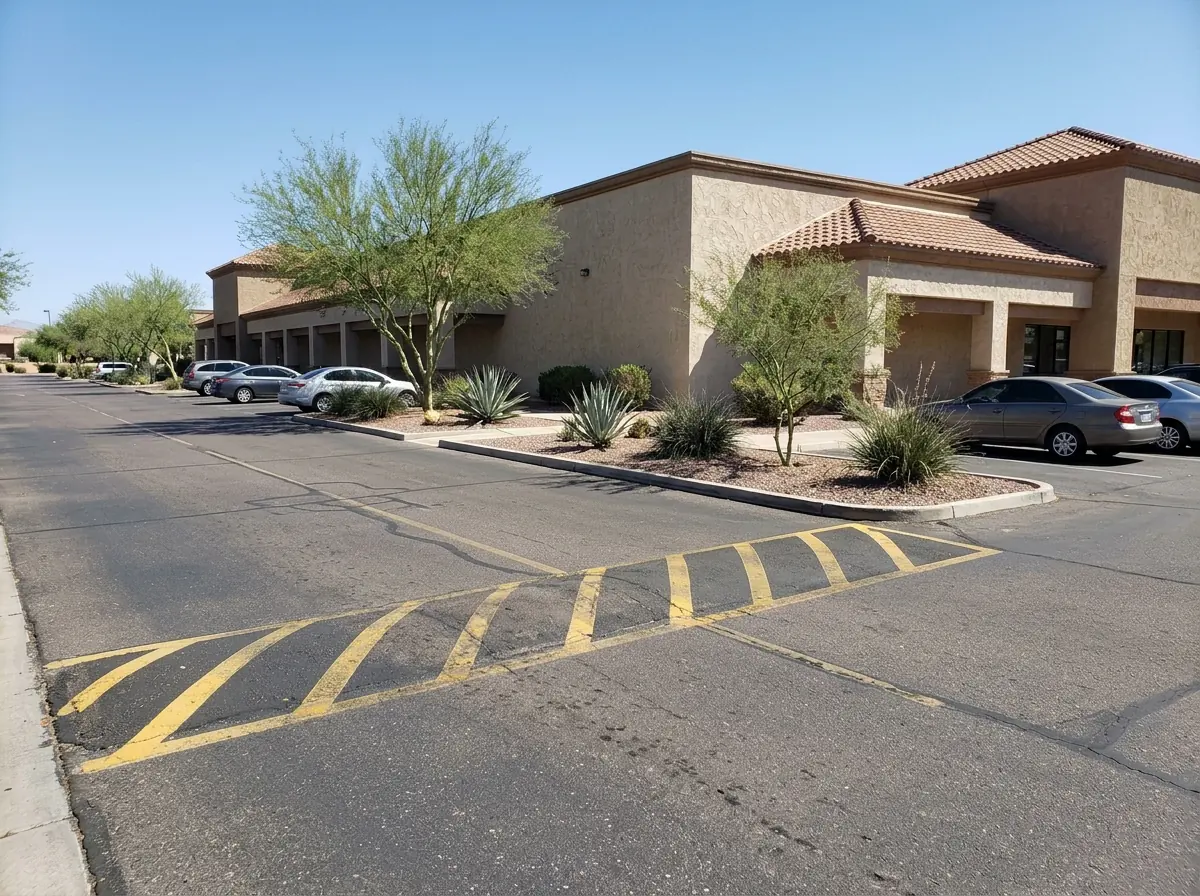
A speed bump is the short, sharp one. FHWA's traffic calming guide describes it as 1 to 2 feet long in the direction of travel and as much as 6 inches high, the kind found in parking lots and commercial driveways, not on public roads. Its place is where cars should barely roll: a store entrance, a lot aisle, the lane behind a row of carports. Ask for paint or reflective markings so drivers see it in time.
Speed humps on private streets
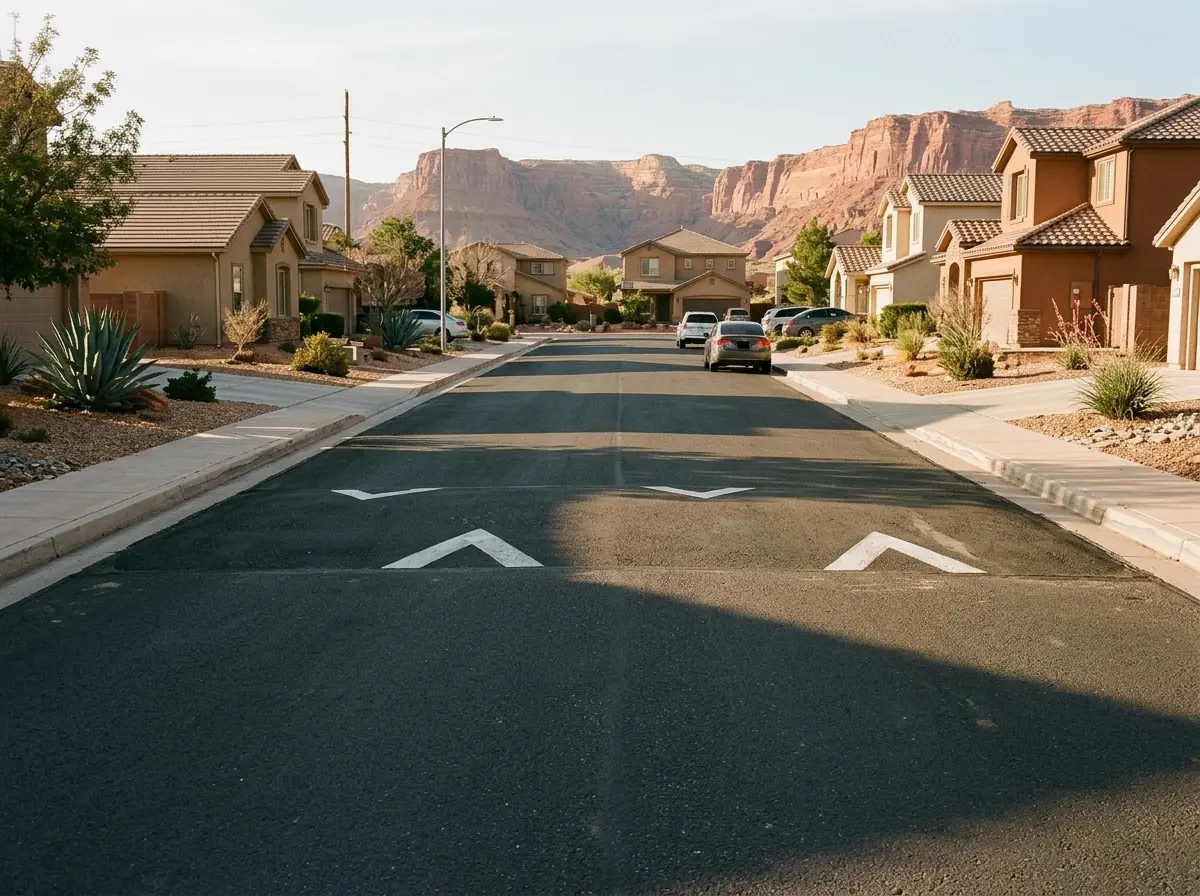
A speed hump is longer and gentler, made for streets. The ITE standard hump is 12 feet long and 3 inches high, with some built up to 4 inches. Drivers cross at about 15 to 20 mph, and past about 200 feet beyond it, speeds creep back up by roughly 0.5 to 1 mph every 100 feet. That is why streets get them in a series. FHWA's sample design starts each hump with a saw cut and a milled taper so the new asphalt ties into the street at its edges. ITE spaces them 260 to 500 feet apart to hold most traffic between 25 and 30 mph.
Speed tables and raised crosswalks
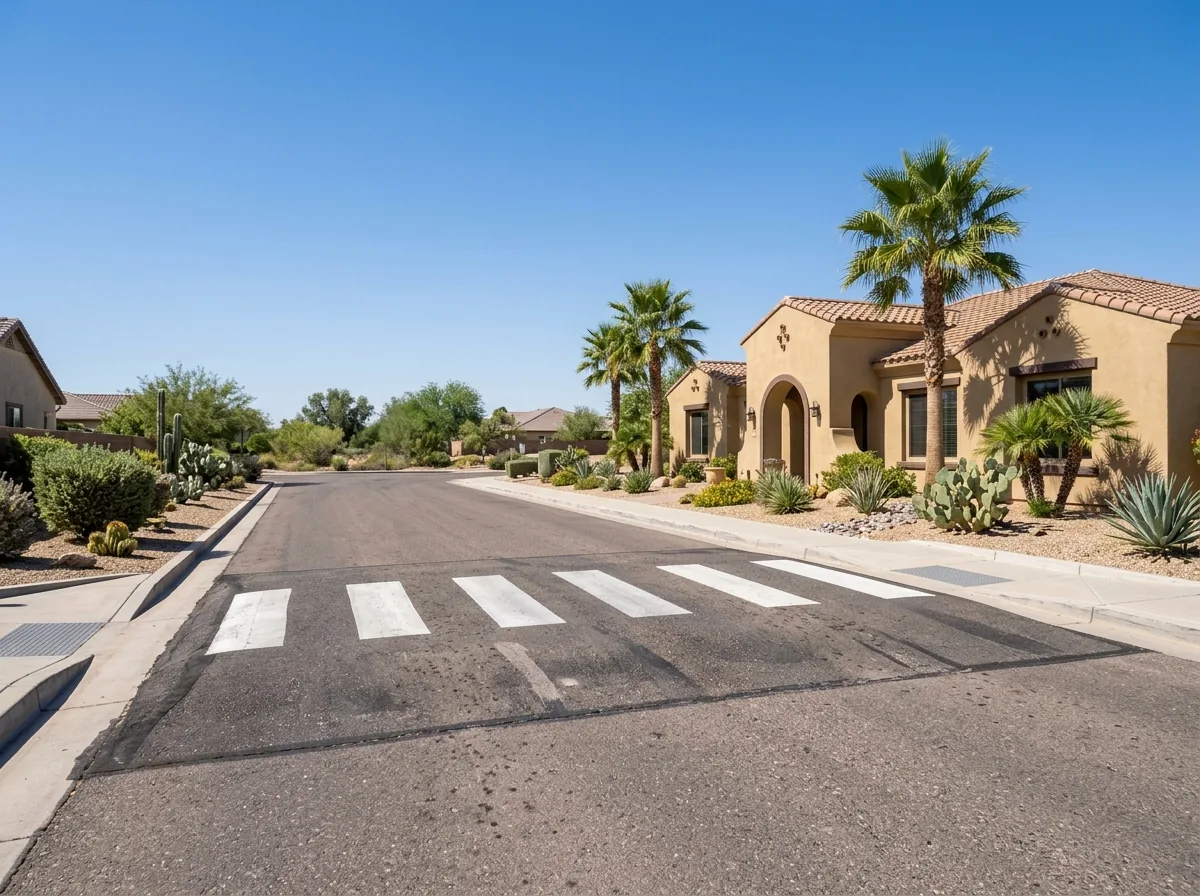
A speed table is a hump with a flat top long enough for a car's whole wheelbase. Most agencies build them 3 to 3.5 inches high and 22 feet long: a 10-foot plateau with 6-foot ramps on each side. Cars cross at about 25 to 35 mph, and taller, longer test versions handled fire trucks and buses better, so FHWA points to tables for routes those vehicles use. Put a crosswalk on top and it becomes a raised crosswalk, which makes people on foot easier for drivers to see. FHWA lists those at 3 to 6 inches above the street.
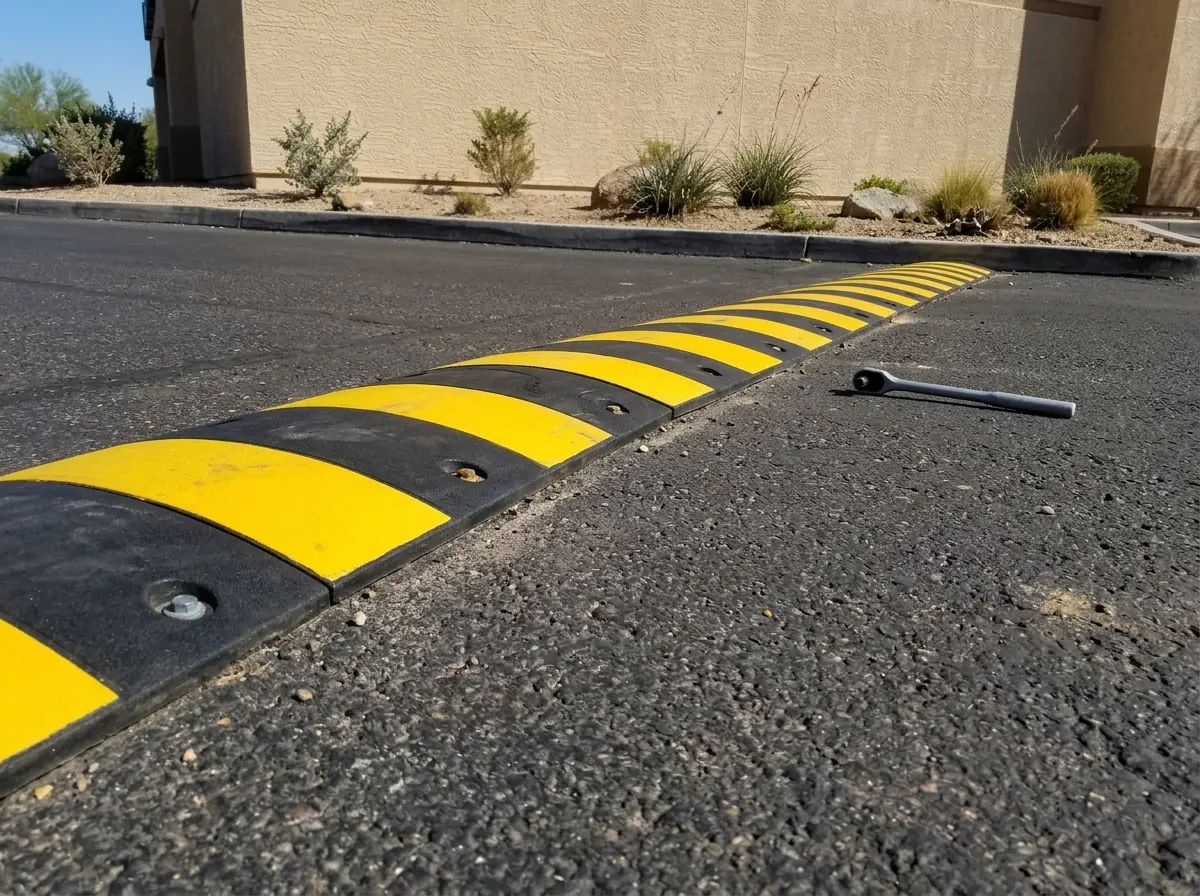
Bolt-down rubber bumps
Rubber or plastic bumps come in sections that are bolted into the pavement rather than built from it. They can be moved or taken out, which helps when a lot owner wants to test a location first. On fresh asphalt, ask how long the contractor waits before drilling, and whether the anchors will be sealed against water.
Why St. George homeowners and property managers call St. George Asphalt Co.
- The estimate costs you nothing and commits you to nothing
- Ask for thickness, base depth and tear-out on the written bid
- Your job goes to one paving contractor, never a lead auction
- Property owners pay nothing for the introduction
Speed Hump Placement Limits on Private Streets
FHWA's guide sums up the design limits most agencies follow for humps and tables. They are a fair checklist for a private street or HOA road too:
Speed limit
Humps fit streets posted at 30 mph or less.Grade
ITE recommends humps only on grades of 8 percent or less; some agencies stop at 5 or 6 percent.Curves and corners
Mid-block, not near an intersection or on a curve tighter than a 300-foot radius.Driveways
Tables sit at least 5 feet from a driveway.Drainage
A hump usually stops 1 foot short of the curb so gutter water can pass. On a street where water runs down the center, a hump may not work at all.Emergency routes
A fire truck loses about 3 to 5 seconds per hump, and an ambulance carrying a patient up to 10. Humps are generally not suited to a main emergency route; FHWA suggests a speed table or speed cushion there instead.
On a private road that doubles as a fire access road, the fire code bans traffic calming devices unless the fire code official approves them. Private road paving covers that rule.
Speed Bump Questions to Ask the Contractor
Profile
Ask for the length, height and shape (flat-top or rounded) in writing, matched to the type above.Markings and signs
Paint, reflective markings and warning signs: ask which are in the price.Drainage gap
Ask where water will go at each end of the bump.Old pavement
A bump built on cracked, crumbling asphalt can break up along with it. Ask whether the spot needs asphalt patching first.
See HOA road paving when the speed humps are part of resealing the whole street.