
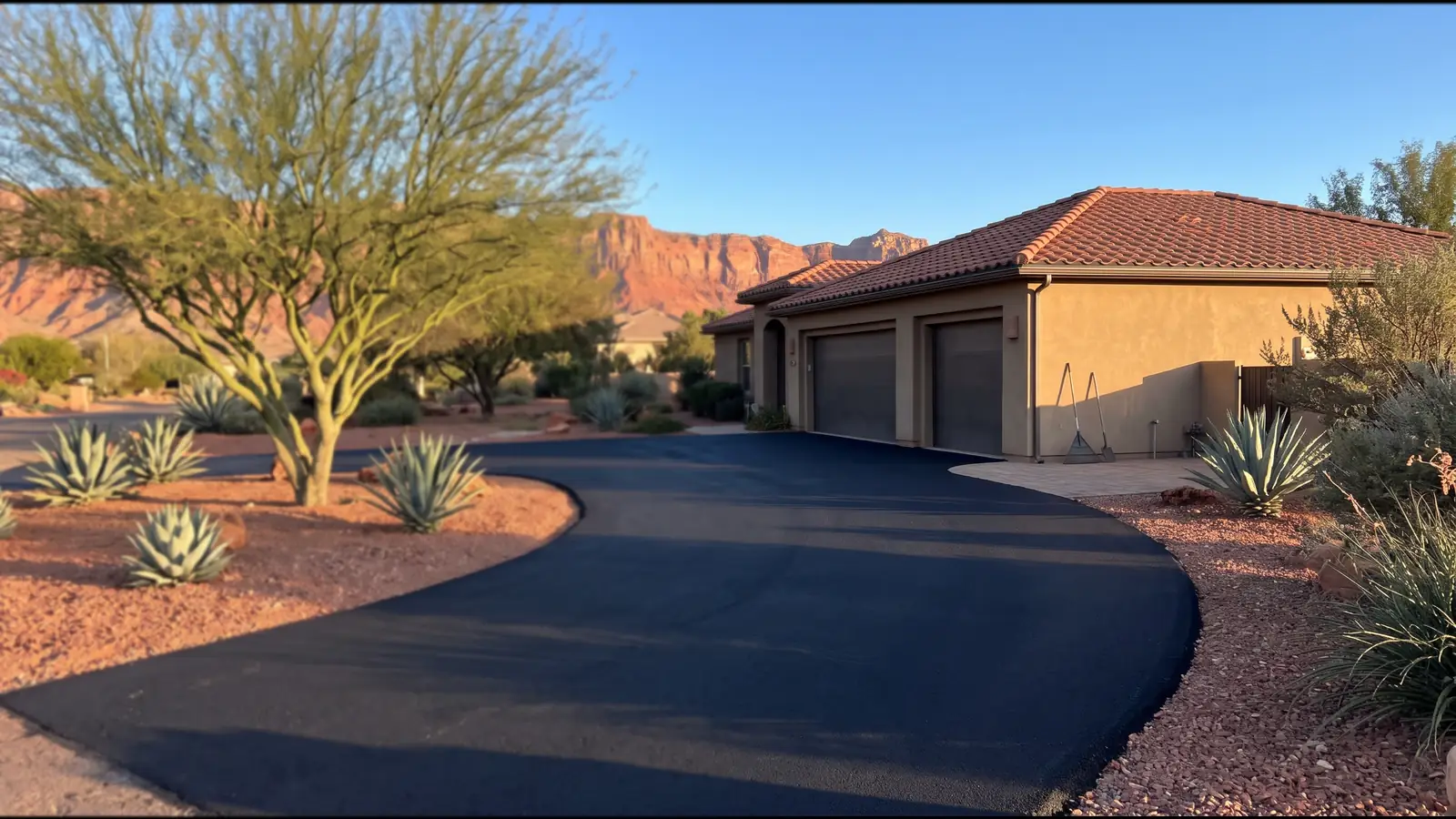
Crack Sealing and Crack Filling by Crack Type
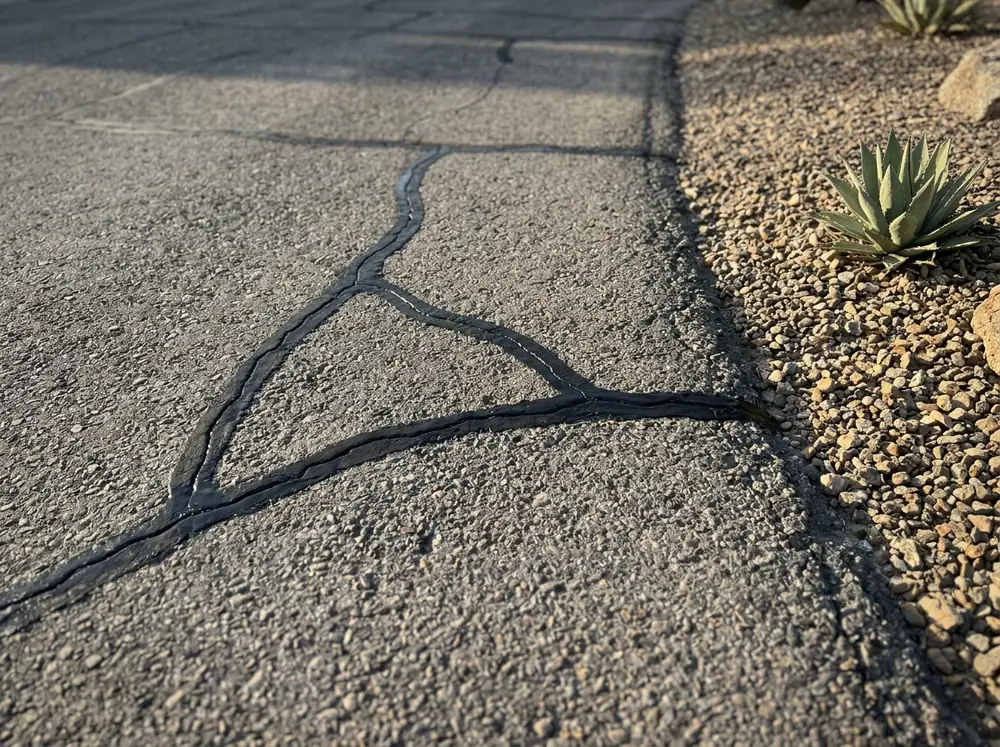
Narrow, non-moving cracks (crack filling)
Crack filling is for cracks that barely move, under 0.1 inch of opening and closing over a year. Long cracks along a pavement edge and cold joints between paving passes usually fall in this group. Prep is lighter: debris is blown out, often with a hot air lance, and the filler is poured slightly over the top and squeegeed to a wipe about 1 inch wide on each side. Because these cracks hardly change width, filling can be done in any season. Hairlines thinner than 0.1 inch are generally left untreated.
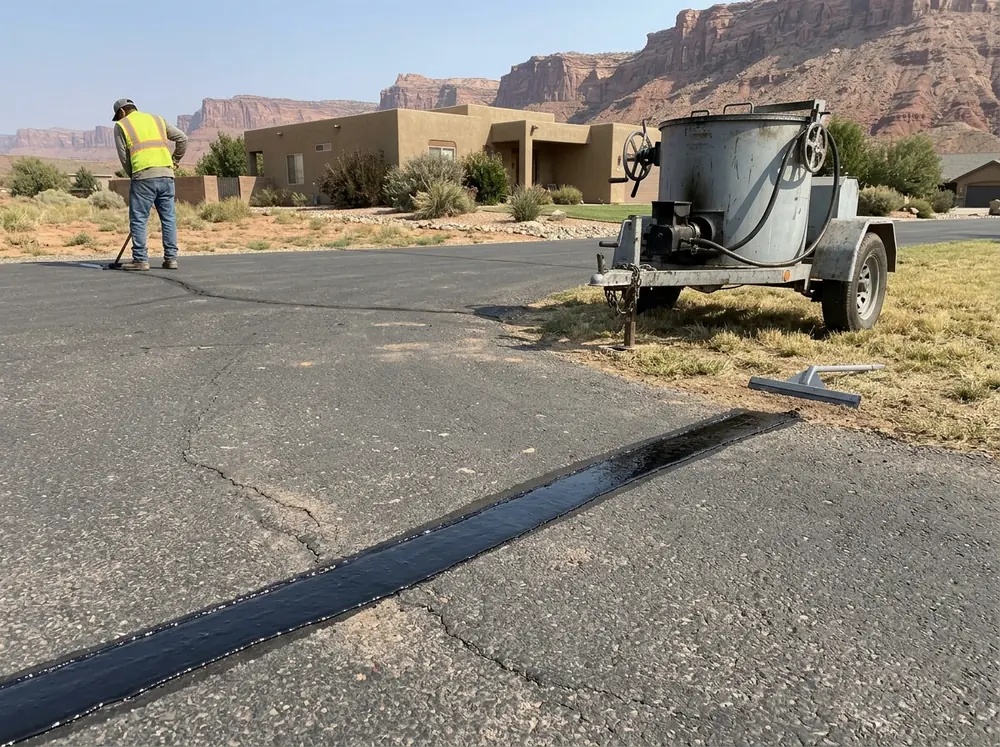
Routed working cracks with hot-pour sealant
A working crack opens and closes 0.1 inch or more over a year. Most run across the pavement. These get the full sealing treatment:
- Reservoir: routed or sawn at least 1/2 inch wide and 1/2 inch deep, slightly wider than the crack.
- Clean and dry: the channel is blown out before sealing.
- Sealant: a hot-poured elastomeric material that stretches far without tearing.
- Width range: cracks about 1/4 to 3/4 inch wide.
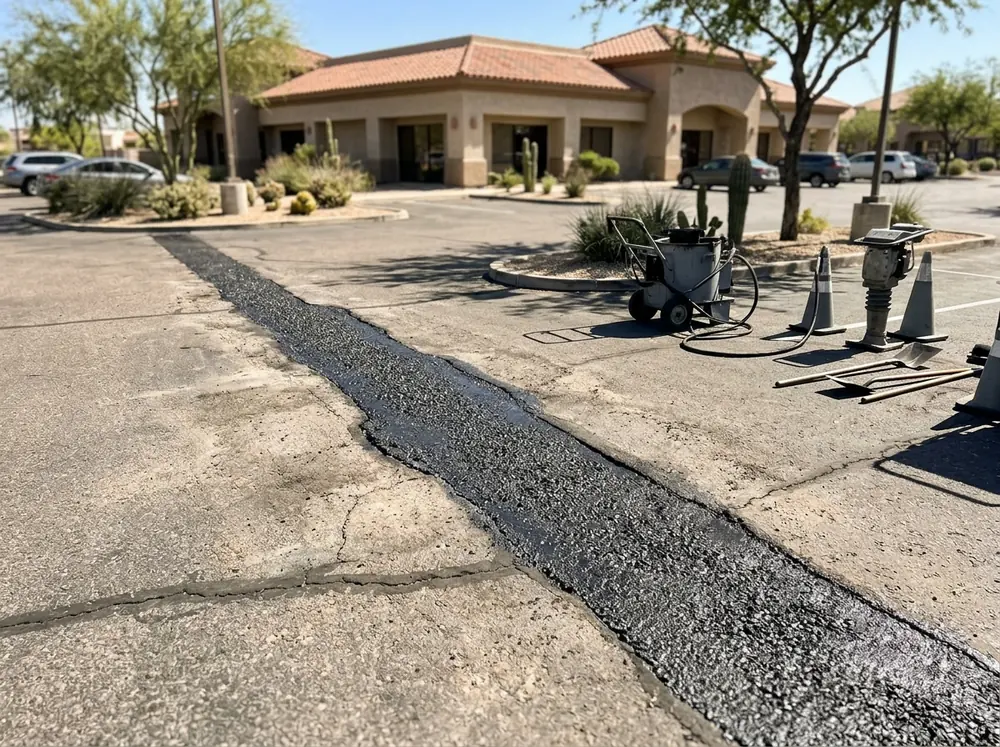
Wide cracks and mastic repair
Once a crack is wider than about 1 inch, highway guidance treats it as a repair job, not a sealing job. Mastic fills that gap. It is a hot-applied, polymer-modified asphalt mixed with aggregate, made for wide cracks, fatigue cracking and sunken, broken areas, and poured at around 380°F from a heated kettle. If the wide cracks connect into a web of small blocks, that is alligator cracking, which the asphalt repair page covers.
Joints where asphalt meets concrete
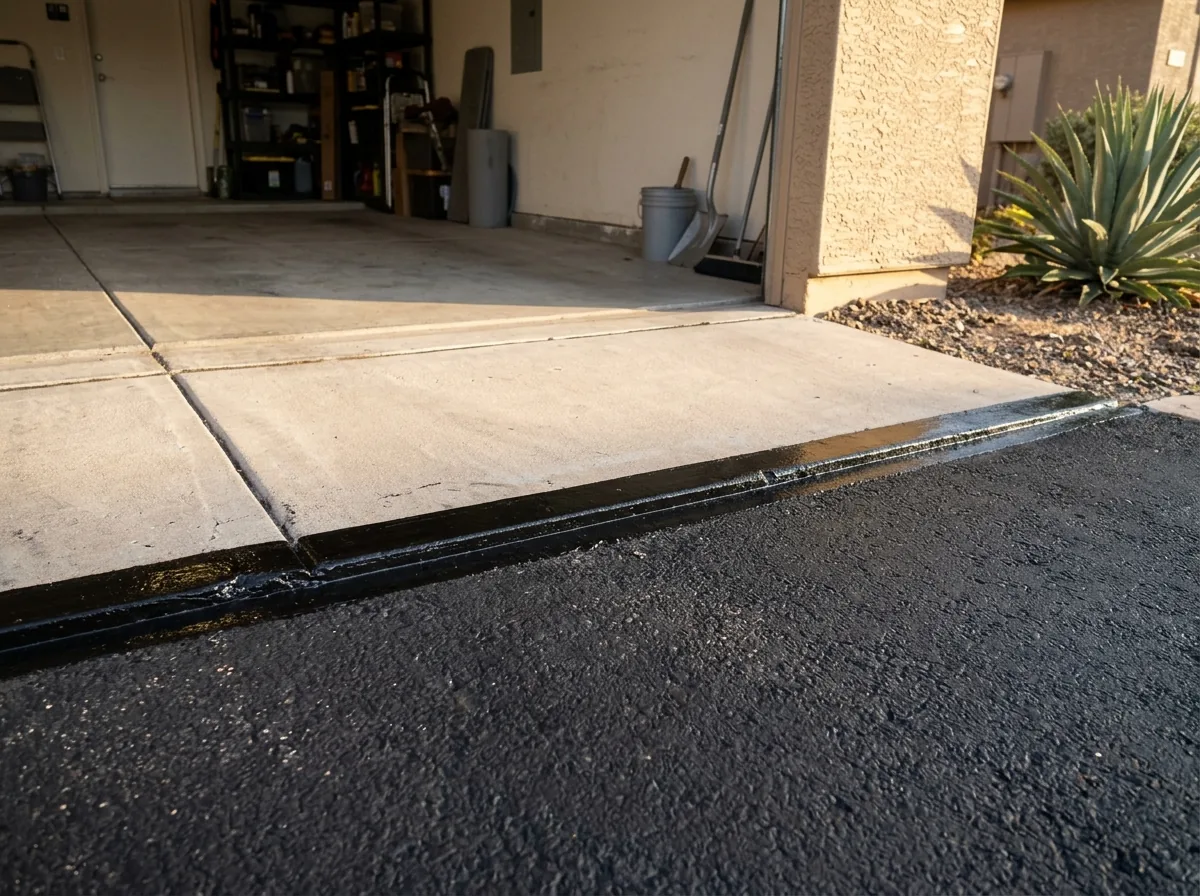
Driveways meet concrete at the garage slab, the gutter and sometimes a walkway, and the seam between the two is a common place for water to get in. Water is the reason to close it: Fixr traces most driveway cracks to poor drainage and water building up in the asphalt. Mastic product sheets list work around solid structures such as gutters, drains and manholes, so a wide seam can take mastic while a tight one takes standard sealant. Ask which the bid uses at each joint.
Why St. George homeowners and property managers call St. George Asphalt Co.
- The estimate costs you nothing and commits you to nothing
- Ask for thickness, base depth and tear-out on the written bid
- Your job goes to one paving contractor, never a lead auction
- Property owners pay nothing for the introduction
Why Timing Matters for Crack Sealing in St. George
Heat is what St. George is known for, yet its winter nights still freeze. Weather records show daytime highs almost never stay below freezing, while lows hit 32°F or colder on about 96 nights a year, mostly December through February. That is enough freeze and thaw to matter. Fixr explains the mechanism: water that freezes and thaws inside a crack widens it, and the crack grows as more water and dirt work in. An open crack heading into winter is the one to seal.
Missouri DOT guidance says to seal working cracks when they are near their widest, which is in spring, fall or winter. Cracks close up in summer heat, so sealant poured into a narrow July crack has to stretch further when the crack opens again in January. In St. George the practical window is fall, ahead of the freezing nights, or a mild stretch in spring. Filling non-moving cracks can happen whenever it's convenient.
Crack work also comes first in a bigger job. Cracks are treated before a sealcoat, a chip seal or an overlay goes on, since a coating over an open crack leaves the crack in place; HomeGuide is explicit that chip seal is not a repair method.
Questions to Ask About a Crack Sealing Bid
Seal or fill?
Which cracks get routed and sealed, and which are only cleaned and filled.Cleaning
How the cracks are cleaned and dried before material goes in.Material
Hot-pour sealant for working cracks, mastic for the wide ones, and which product is on the bid.Price unit
Per linear foot or per job. Cost guides put typical crack work at $1 to $3 per foot.Finish
Material squeegeed flush with the surface in a narrow band, not left in thick ridges that cause trouble for a later overlay.
See asphalt patching for cracks that have already broken out into potholes.