
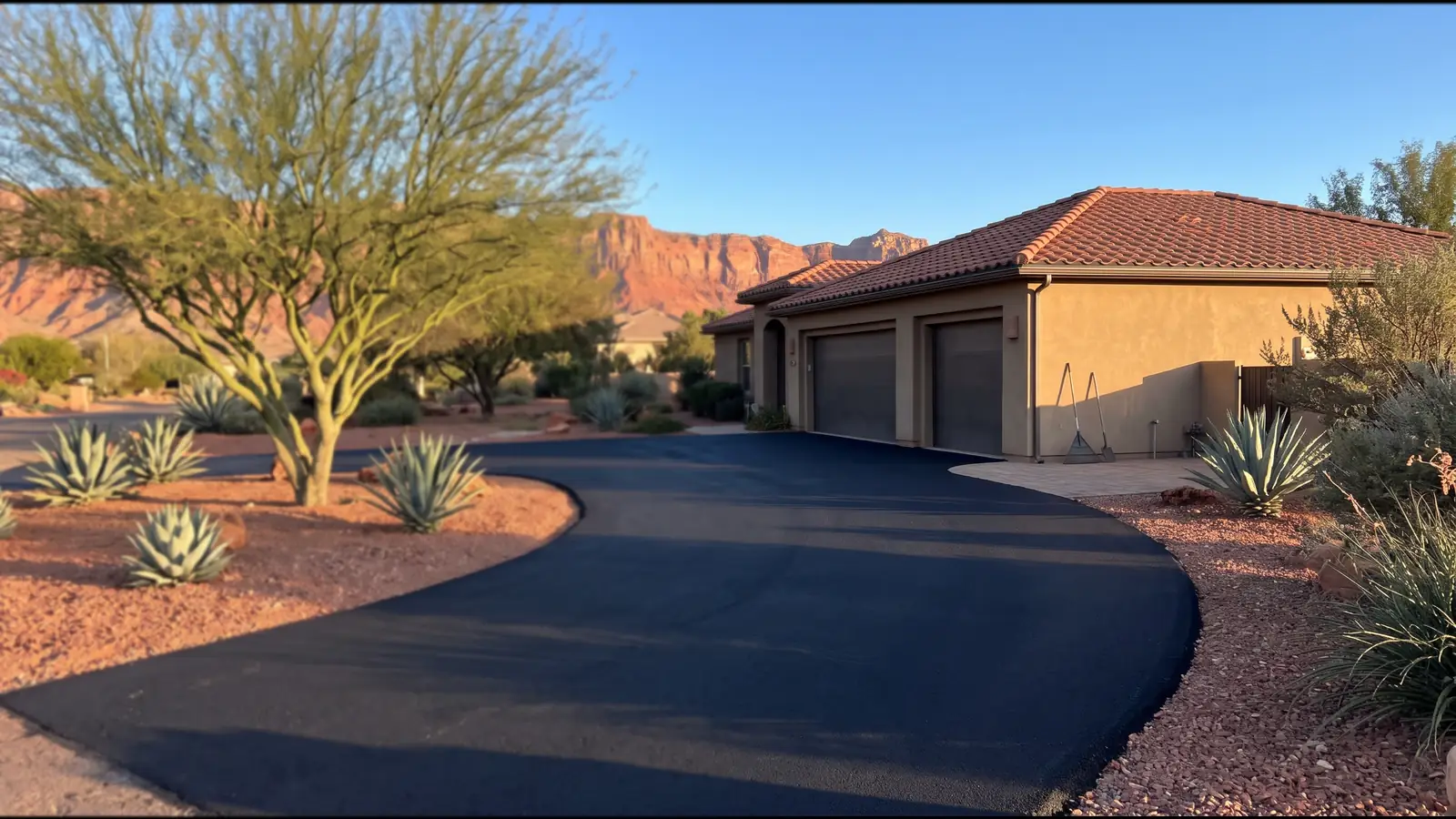
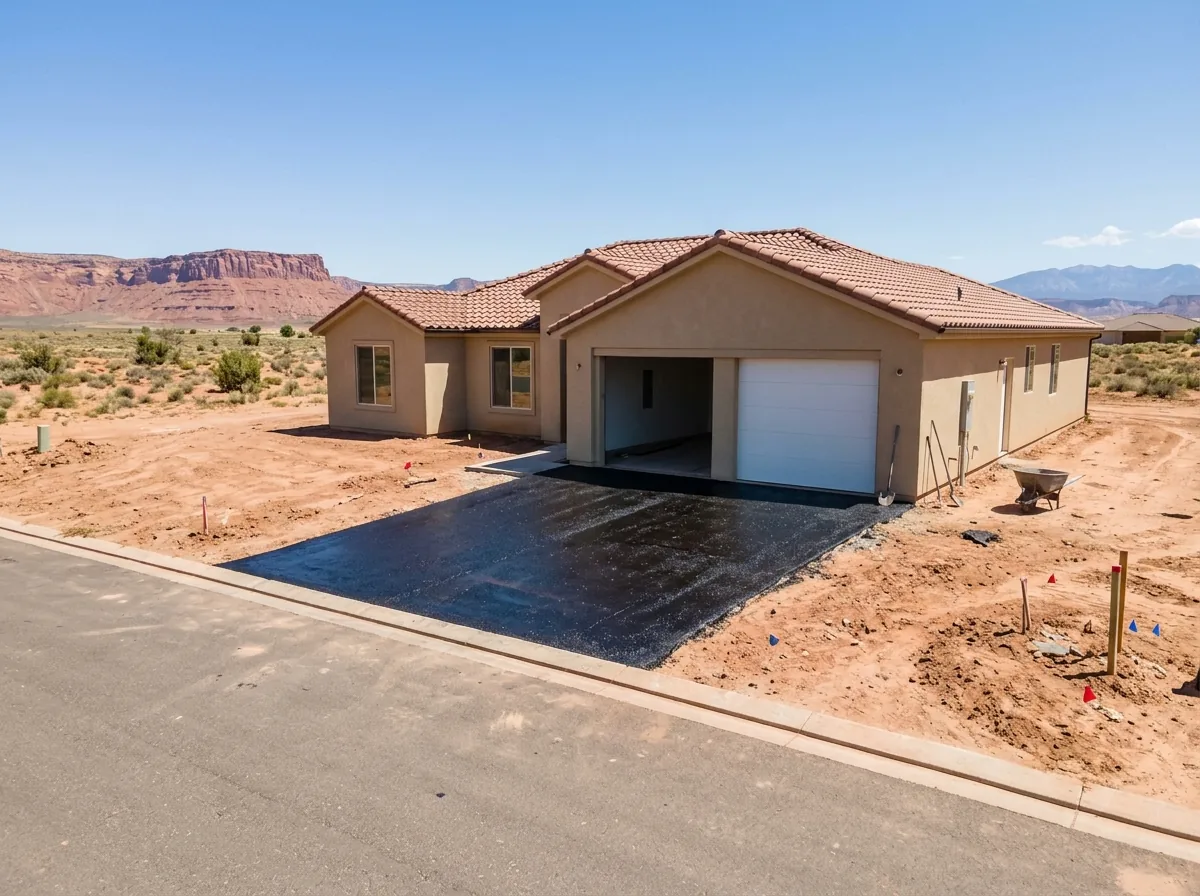
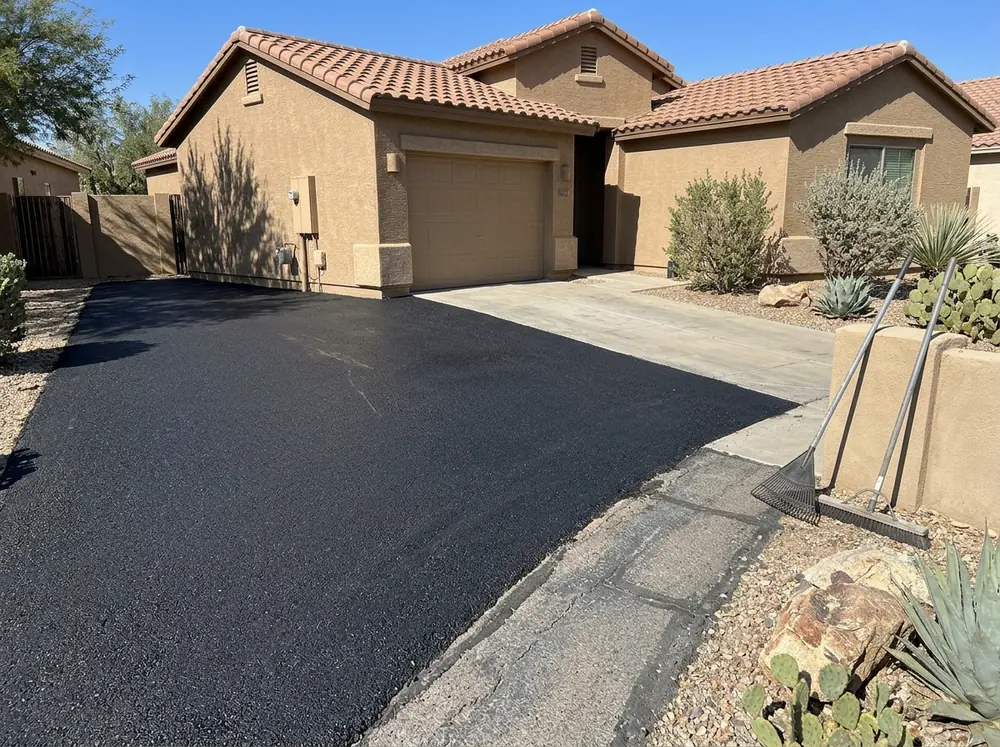
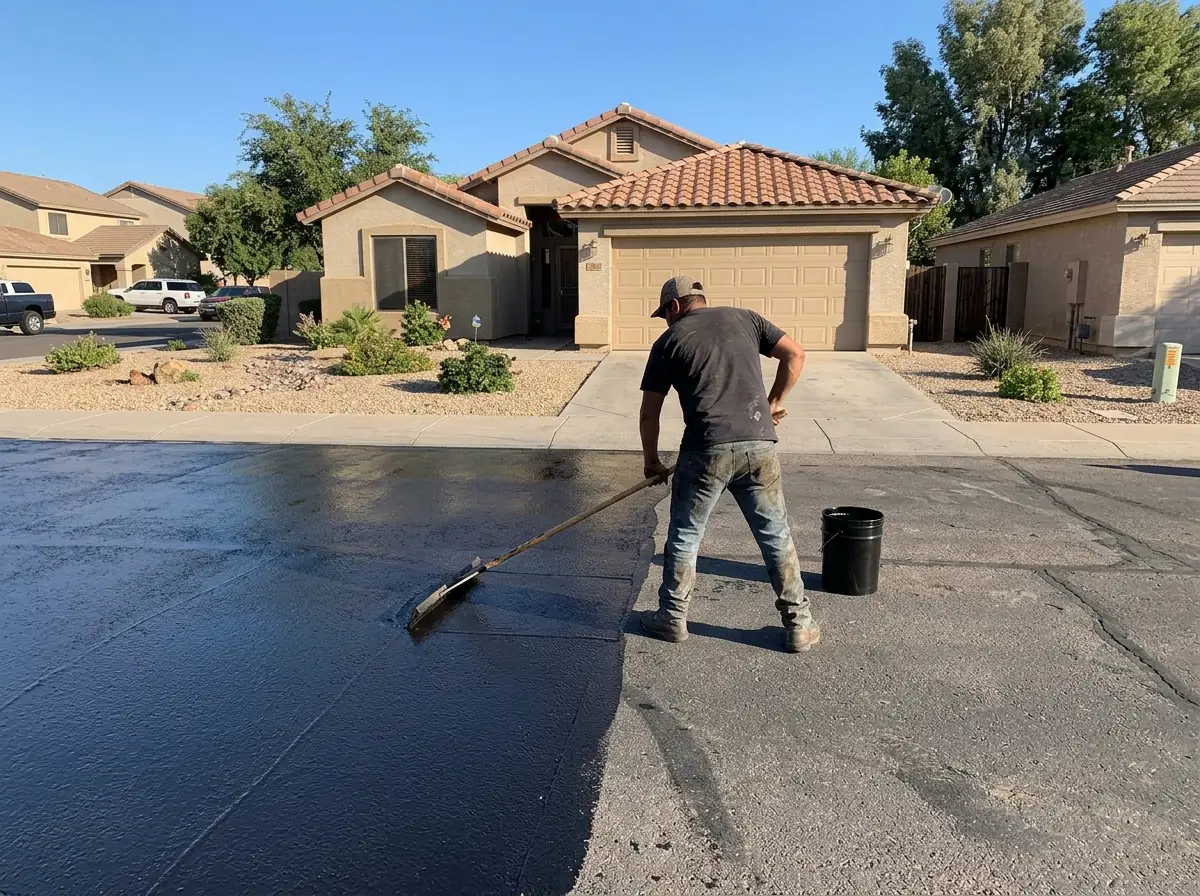
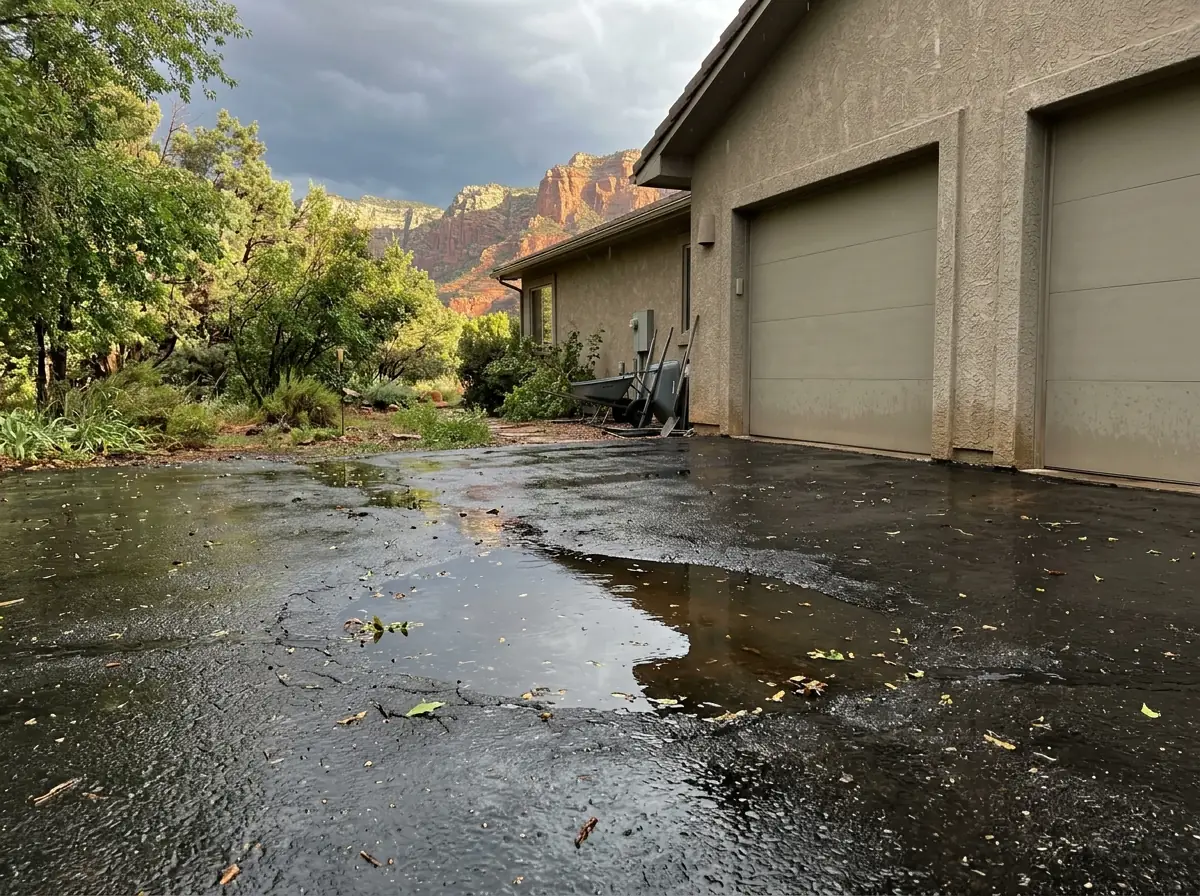
Residential Asphalt Paving in St. George
Most homeowner calls are about a driveway: a new one on a bare lot, an old one past saving, or a sound one that just needs crack fill and sealer. The jobs below run from the biggest ticket down to routine upkeep, with the price ranges the national cost guides publish.
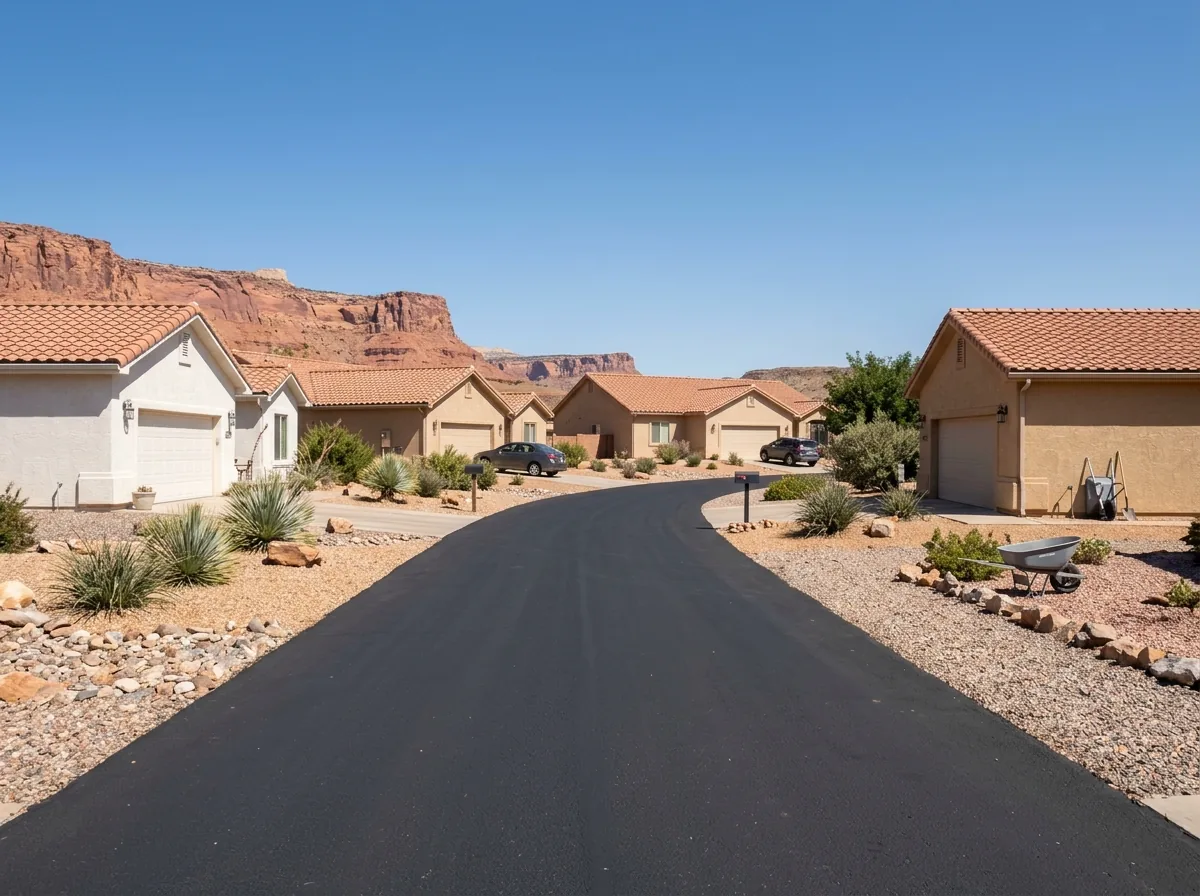
New Asphalt Driveway Installation
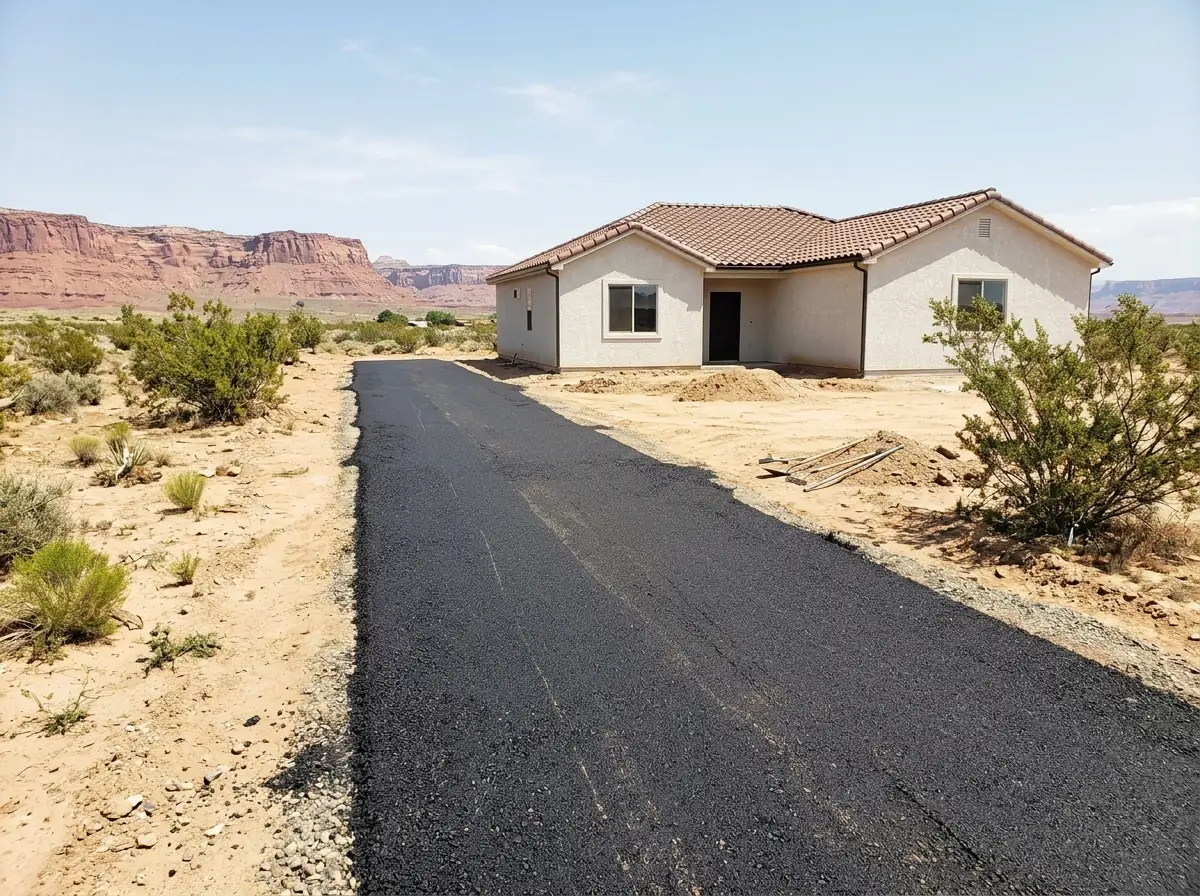
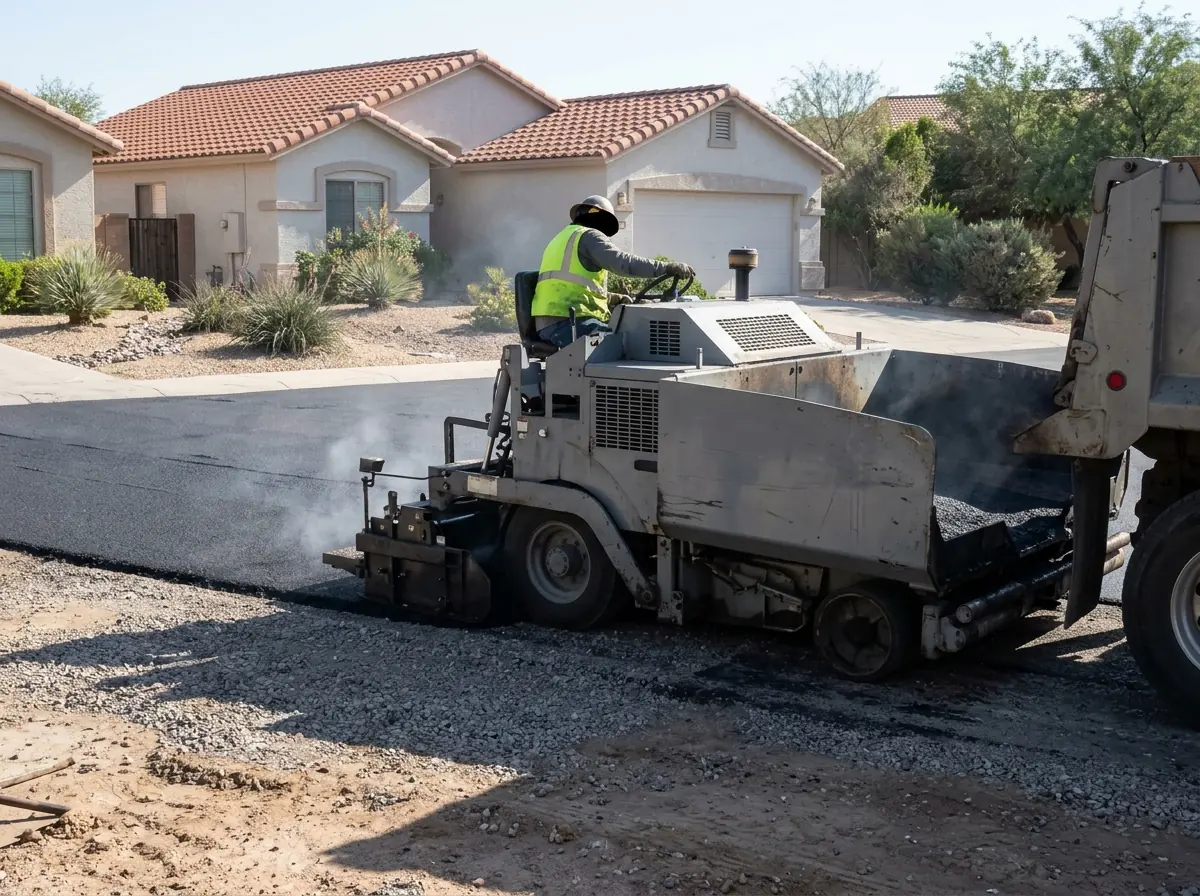
A new asphalt driveway is mostly what you can't see. HomeGuide's spec for a home is 6 to 8 inches of compacted gravel base under 2 to 3 inches of compacted asphalt, and Angi sets 2 inches as the floor, which works out to about 80 square feet per ton of mix. New installs run $7 to $13 per square foot nationally. By size, Angi prices a 200 square foot pad at $1,400 to $2,600 and an 800 square foot driveway at $5,600 to $10,400. Ask that the estimate state the base depth and how it will be compacted, not only the asphalt thickness.
See asphalt driveway paving for sizes, slopes and the base a new drive needs.
Asphalt Driveway Replacement (Remove and Replace)
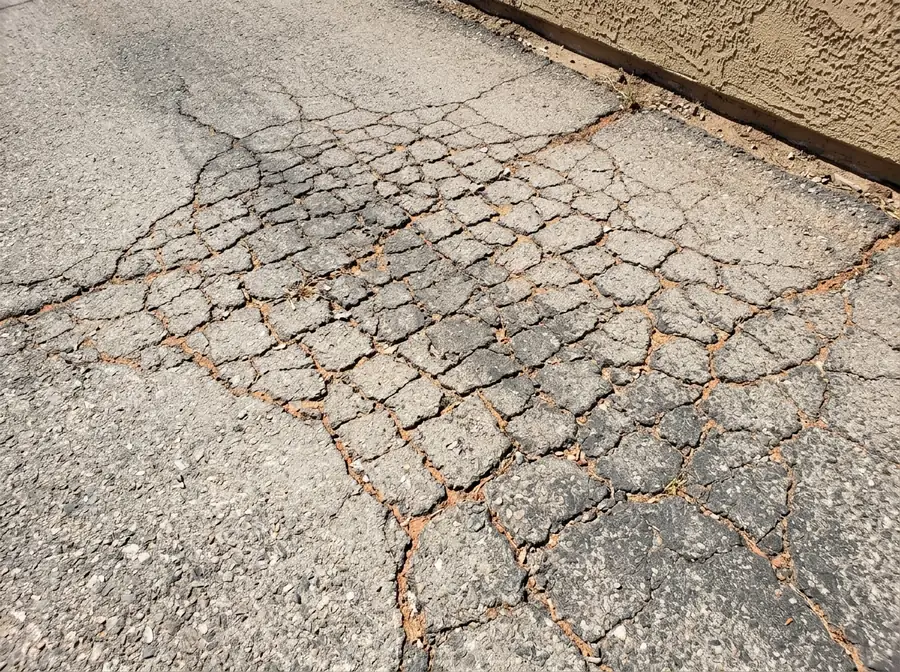
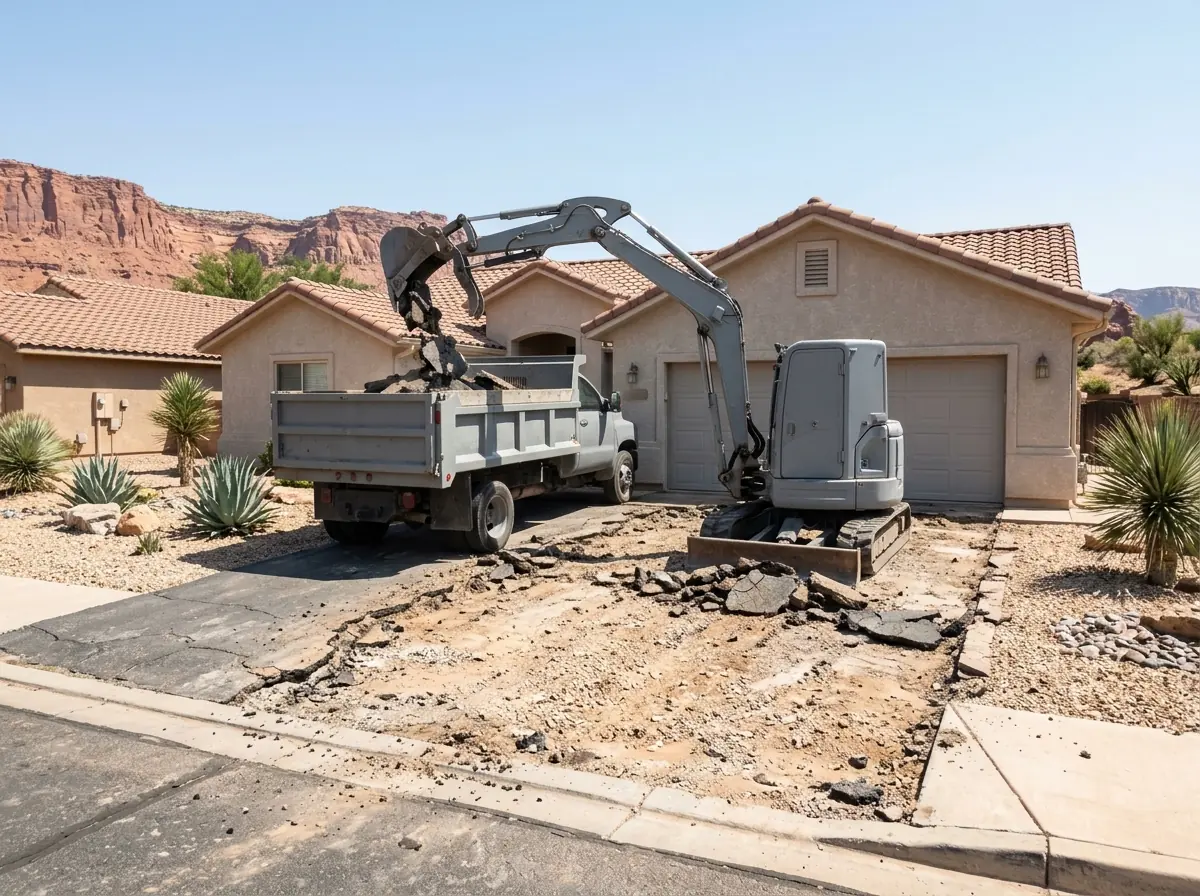
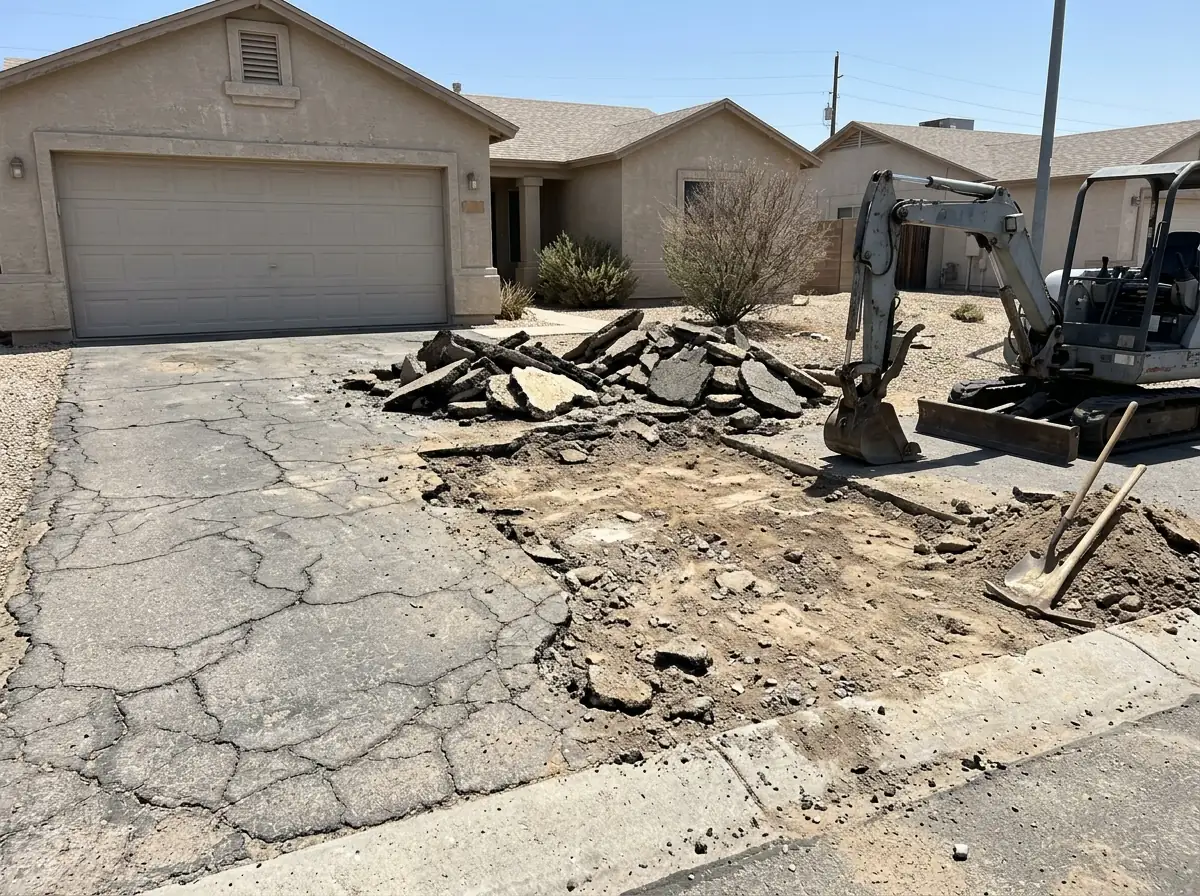
When a driveway is sinking, broken into pieces across large areas, or the base has failed, a new layer on top only copies the damage upward. Remove and replace means tearing out the old asphalt, repairing or rebuilding the base, and paving fresh. Angi lists replacement at $8 to $15 per square foot. Most of the gap over a new install is the $1 to $2 per square foot it takes to break up, load and haul away the old surface.
More on tear-outs, contracts and license checks: asphalt driveway replacement.
Gravel-to-Asphalt Driveway Conversion
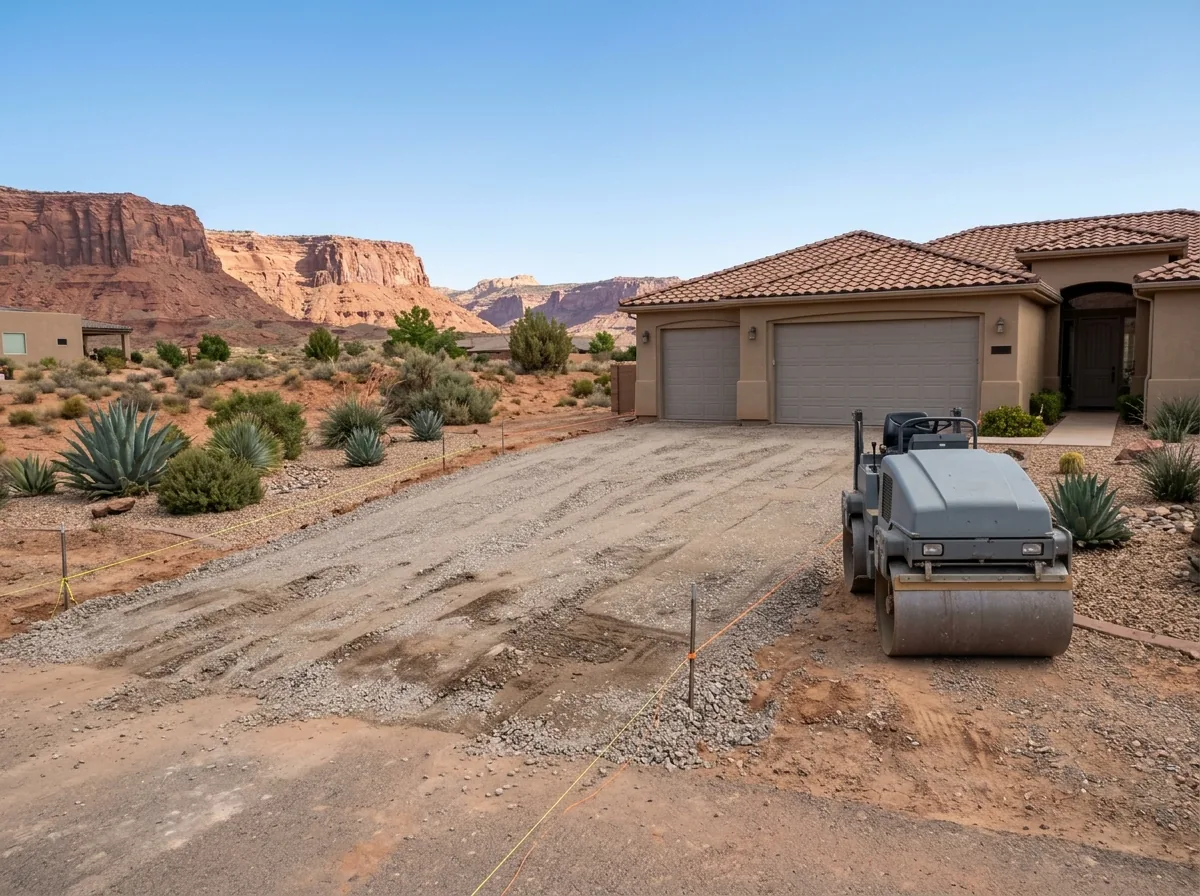
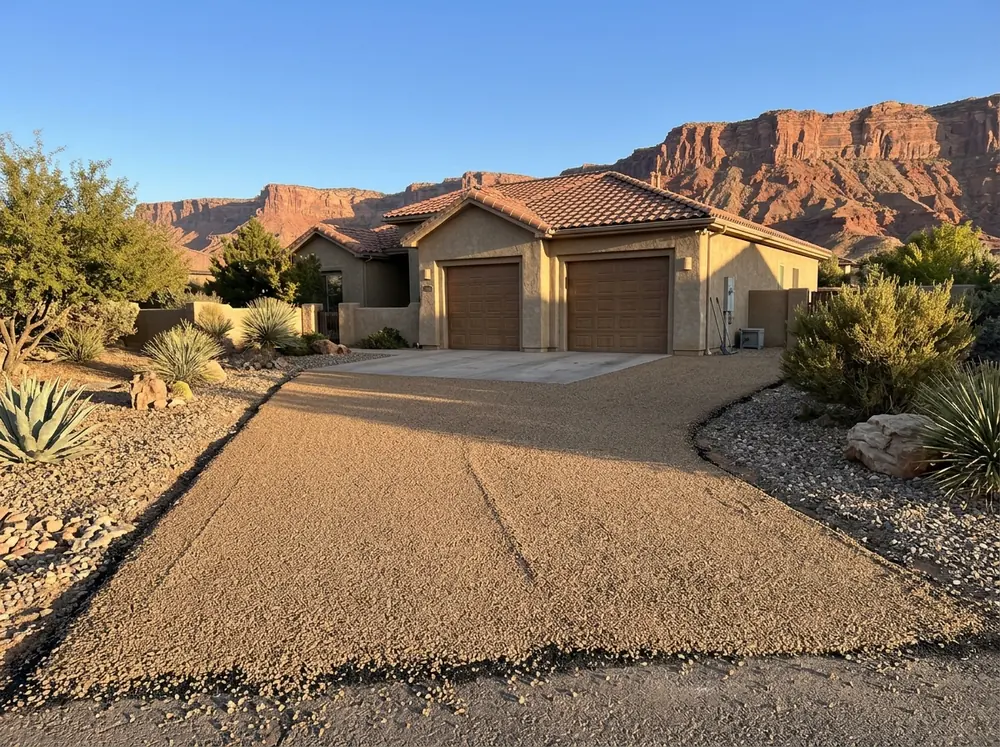
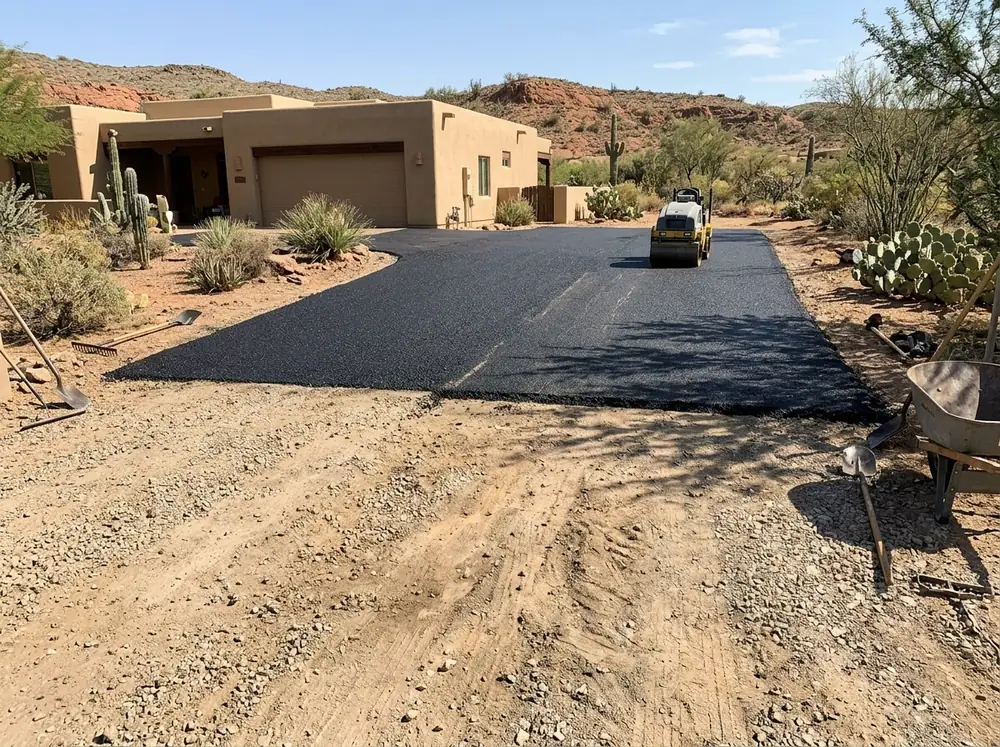
An old gravel driveway is a head start on a base, rarely a finished one. Years of tires push rock into the soil and leave ruts, so the gravel is usually regraded, topped up with crushed base and compacted to the same 6 to 8 inch target before any asphalt goes down. Where the ground has to be leveled first, Angi adds $5 to $10 per square foot. How much of the existing rock can stay is the line that moves the price most, so get it written into the quote: reused, added to, or replaced.
See gravel driveway paving for when the old gravel can stay as base.
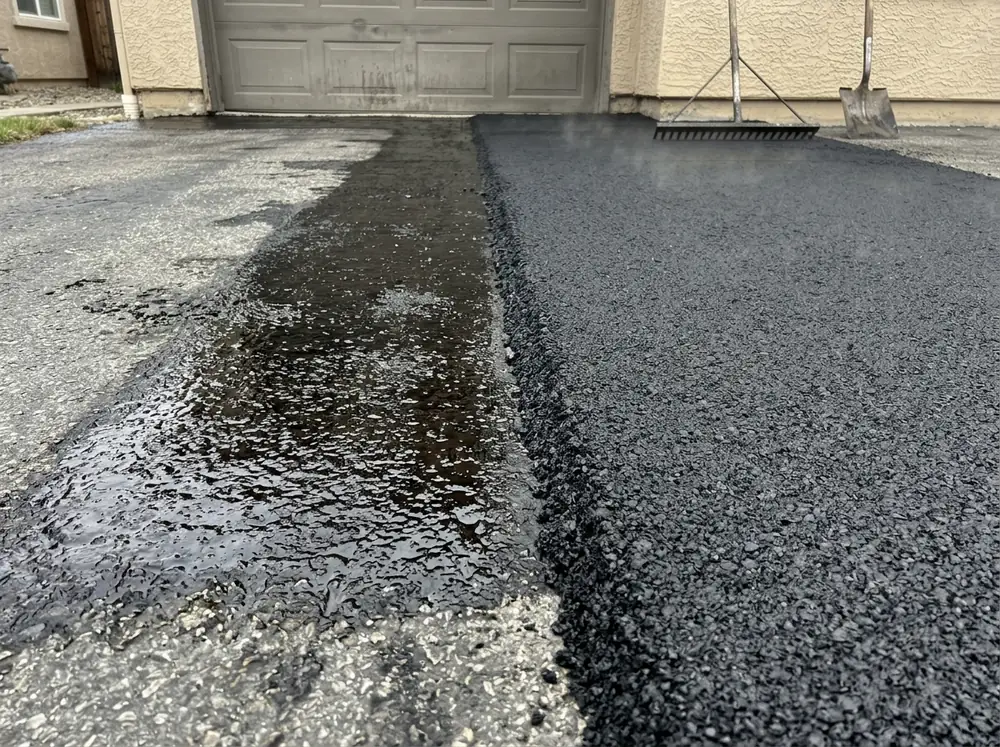
Asphalt Overlays and Driveway Resurfacing
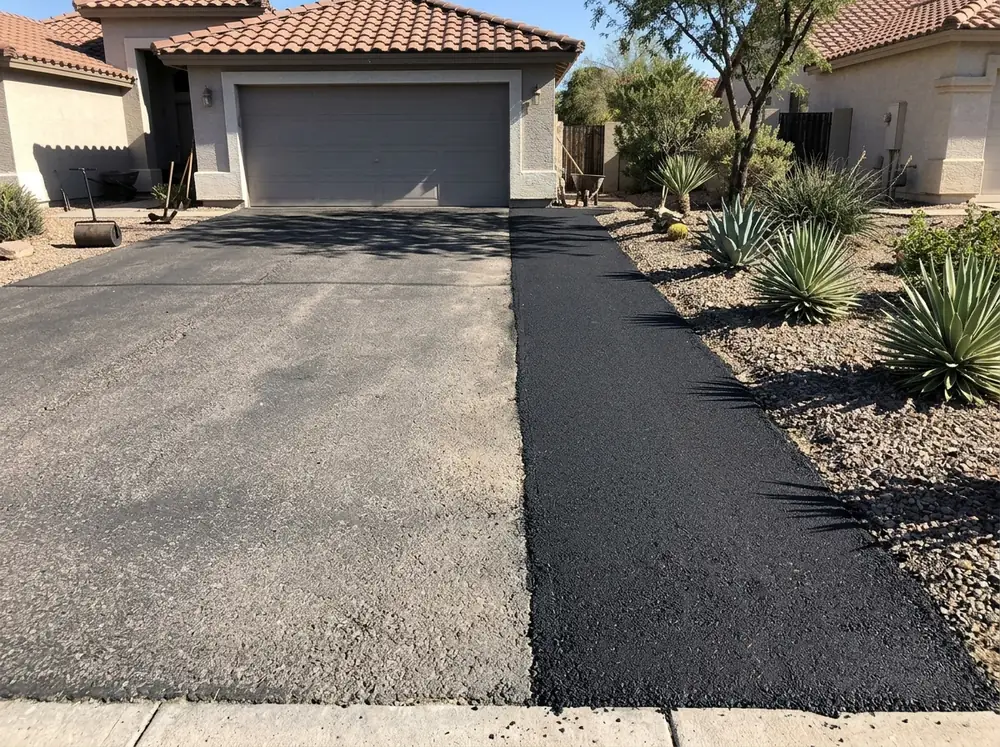
An overlay lays new hot asphalt, typically about two inches thick, over a driveway whose base is still solid, with a sticky tack coat sprayed first so the layers bond. Angi prices overlays at $3 to $7 per square foot and HomeGuide's resurfacing figures start lower, at $1 to $3. HomeGuide estimates an overlay saves 20% to 30% against full replacement and adds 8 to 15 years of life. The right candidate is under 15 to 20 years old with less than 30% of the surface damaged; cracks that come from a failing base will reappear in the new layer.
See driveway resurfacing to check whether your drive is still a candidate for an overlay.
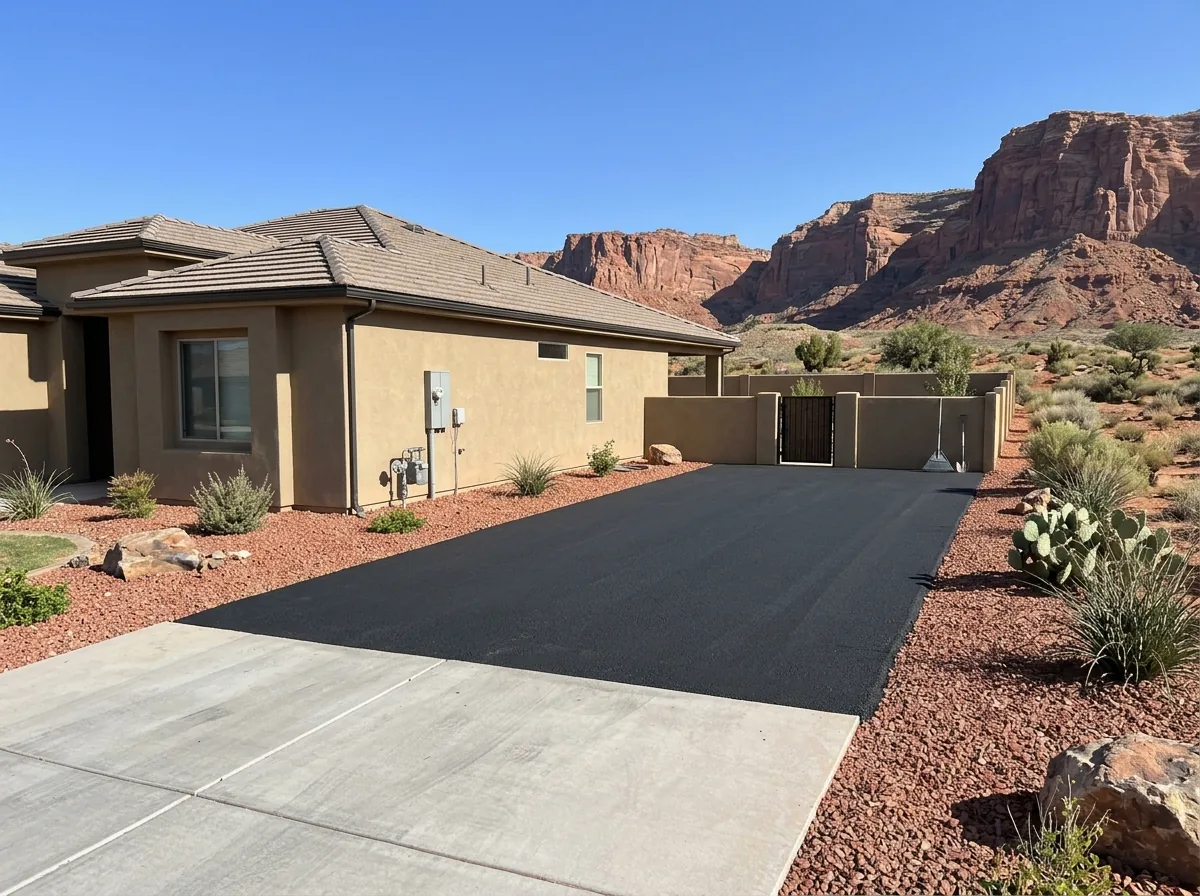
Driveway Extensions, Widening and RV Pads
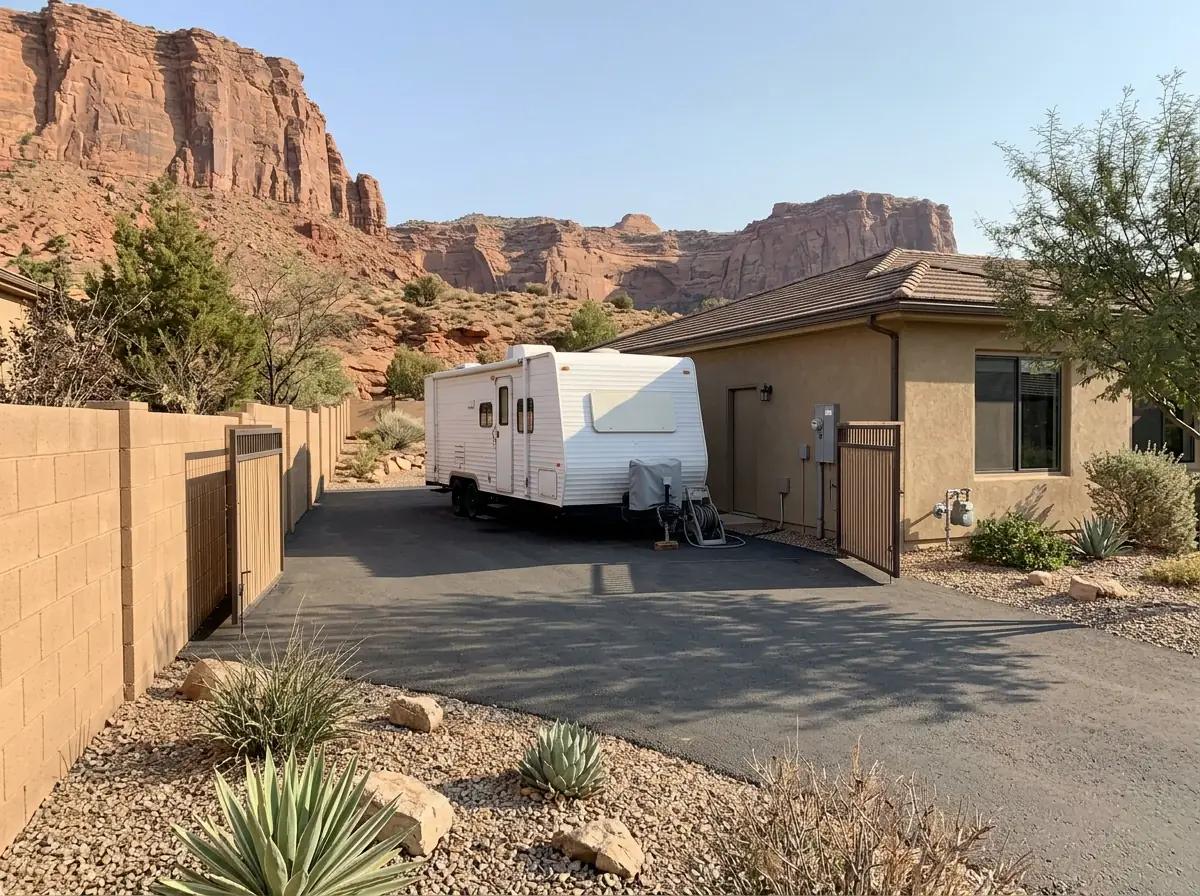
Widening a driveway or adding a pad along the side of the house is built like a new driveway, with weight as the difference. Where heavy vehicles park, HomeGuide calls for 3 to 4 inches of asphalt over an 8 to 10 inch base and keeps them off new pavement for at least a week. The City of St. George allows an RV beside a home as long as it stays out of the front setback, typically 25 feet (corner lots have two), on a surface such as a concrete pad, asphalt or gravel.
See driveway extensions for widening and street permits, or RV pad paving for motorhome and trailer pads.
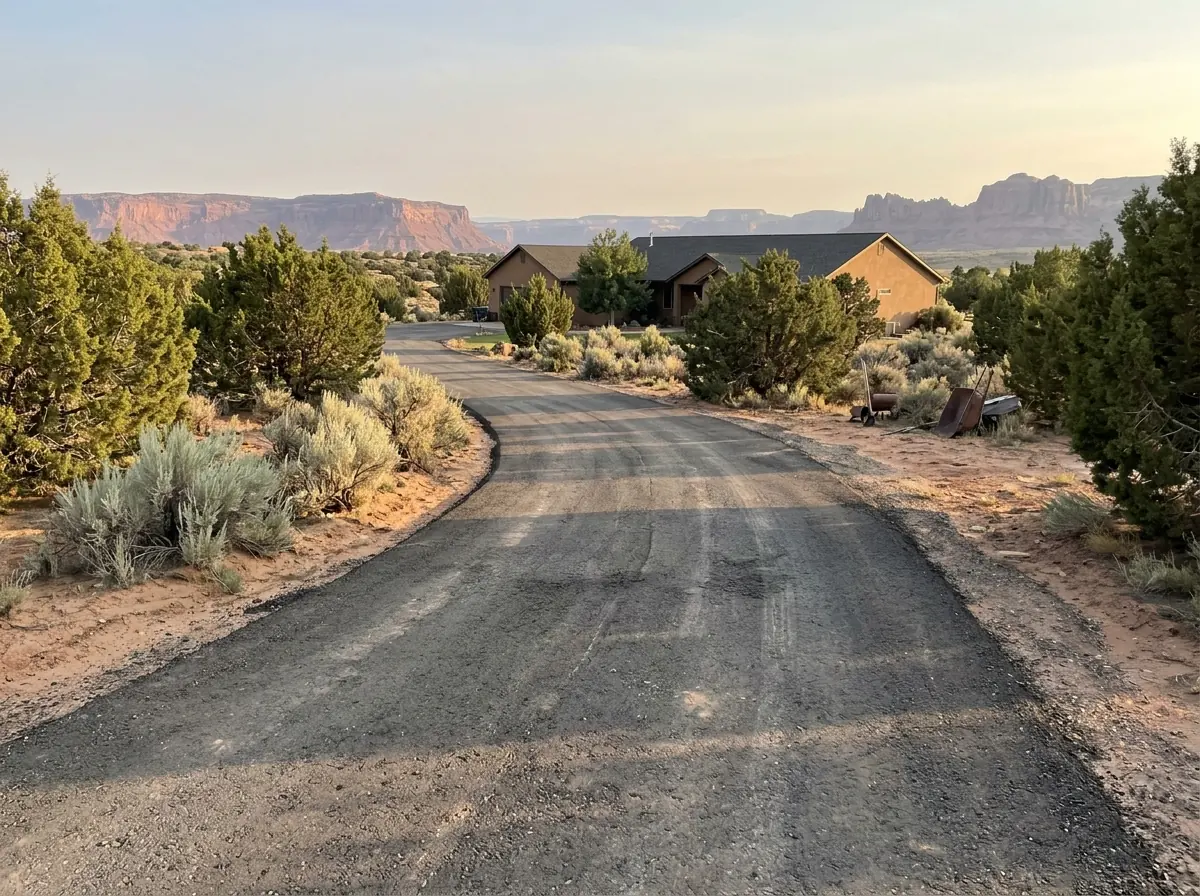
Recycled Asphalt Millings Driveways
Millings are old pavement ground up and reused. Spread and rolled, they make a darker, firmer surface than loose gravel for much less than hot-mix paving: HomeGuide puts an installed millings driveway at $2 to $5 per square foot, about $1,200 to $3,600 for two cars, and one ton covers roughly 60 square feet at 4 inches deep. The material is plentiful because asphalt is the most recycled material in America. The National Asphalt Pavement Association counts about 101.4 million tons of reclaimed pavement put back into new mixes in 2024.
More on prices, coverage per ton and sealing options: asphalt millings driveways.
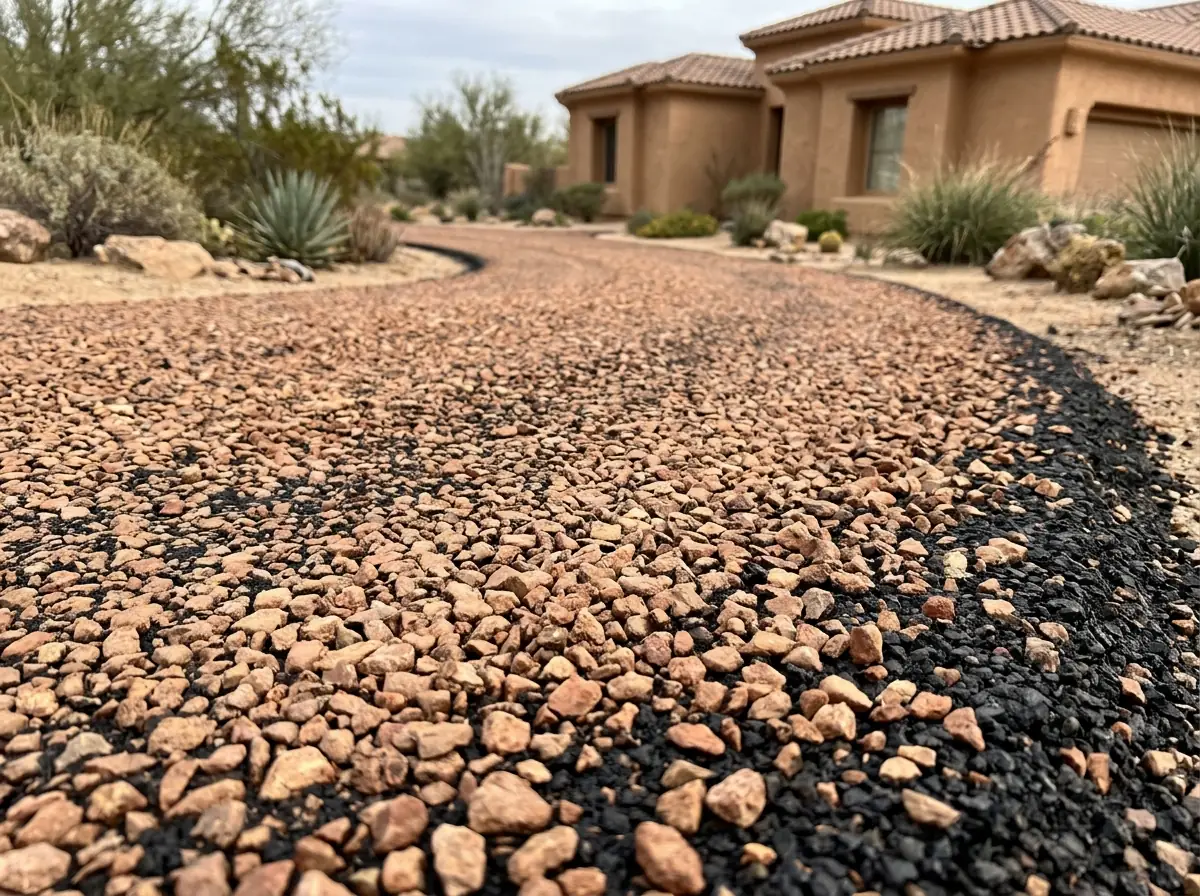
Chip Seal and Tar-and-Chip Driveways
Tar-and-chip lays liquid asphalt over a gravel base and presses stone chips into it, often in more than one layer. The finish is rough, stone colored and grippy. It runs $2 to $5 per square foot in HomeGuide's figures, or $700 to $2,900 for a typical driveway, and the same guide lists a cooler surface and no sealing among its advantages, both worth something under a St. George sun. The trade-off is life span: 7 to 10 years. It makes the most sense on a long drive where cost per foot outweighs a smooth black finish.
See chip seal driveways for single versus double layers.
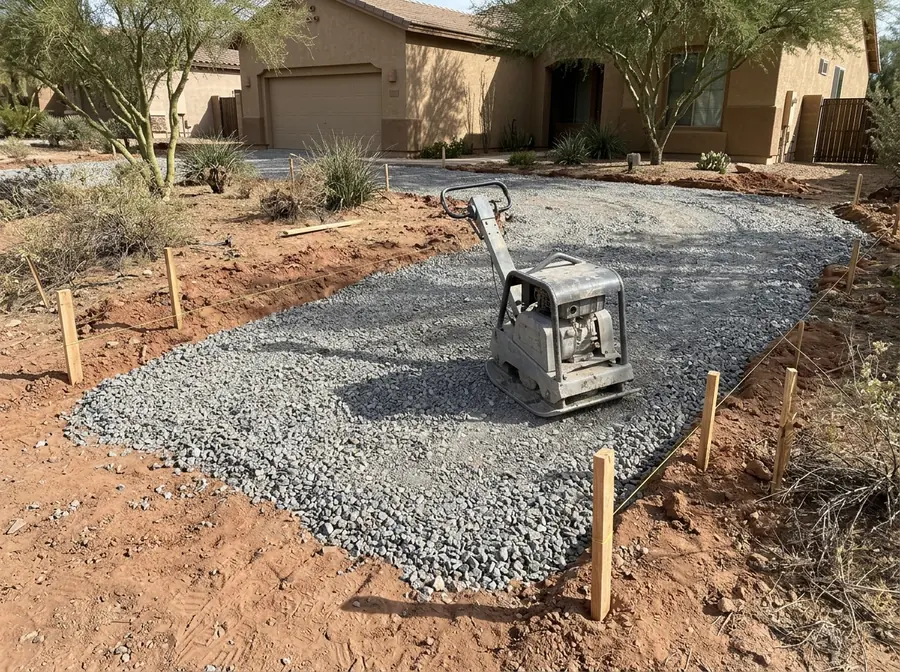
Grading, Base Preparation and Drainage
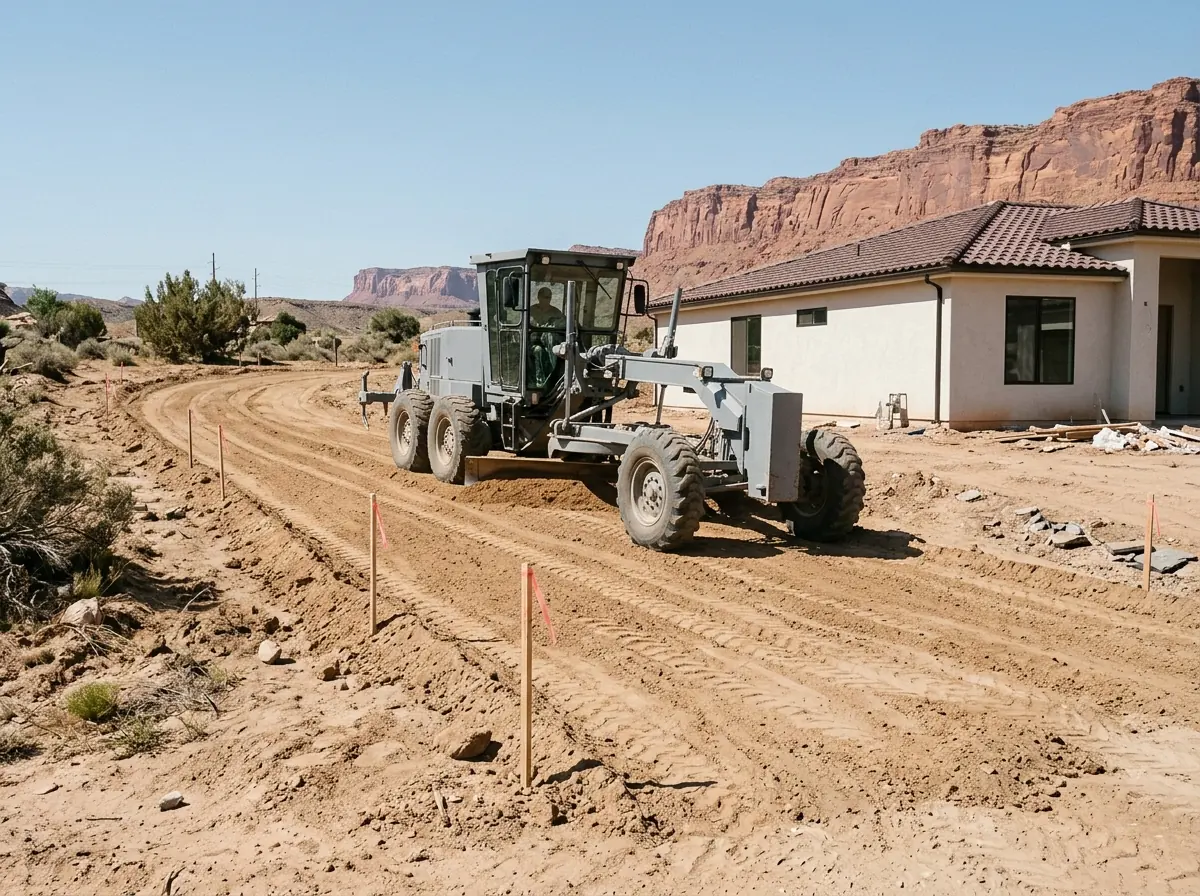
When asphalt fails early, the cause is usually underneath it. Grading sets the slope so water sheets off the surface and away from the garage, and compaction keeps the base from settling under tires. Clay soils, per HomeGuide, often need extra digging and more base material to avoid later cracking and settling. A sloped lot or a curving drive adds 15% to 30% to the price, in HomeGuide's figures.
See grading and base preparation for proof rolling and problem soils.
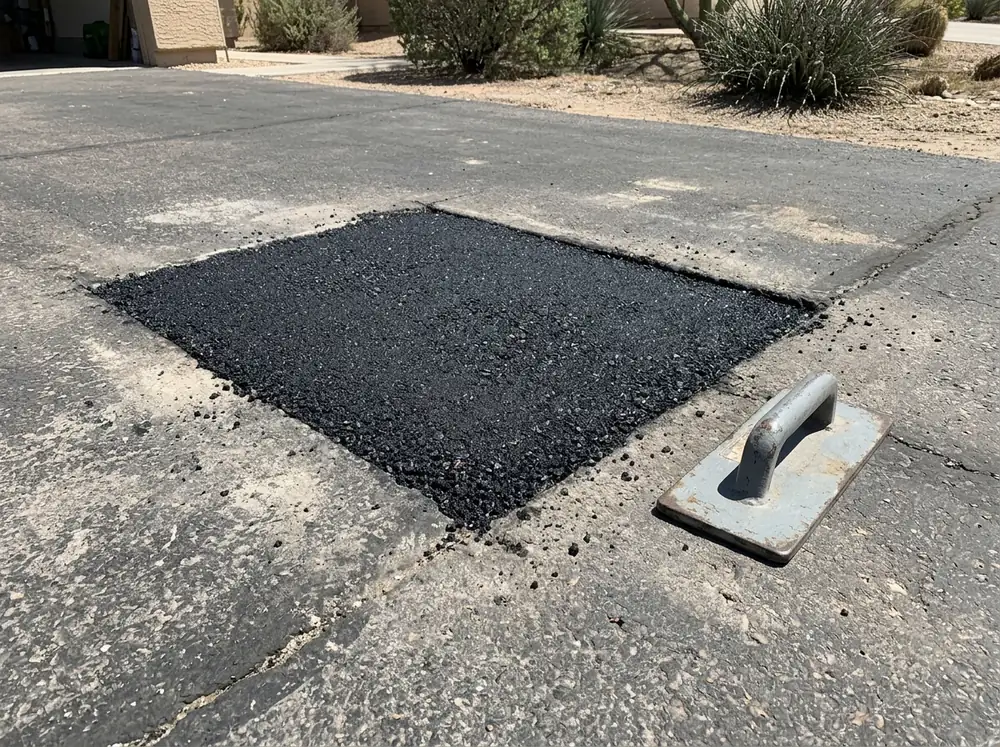
Asphalt Driveway Repair and Pothole Patching
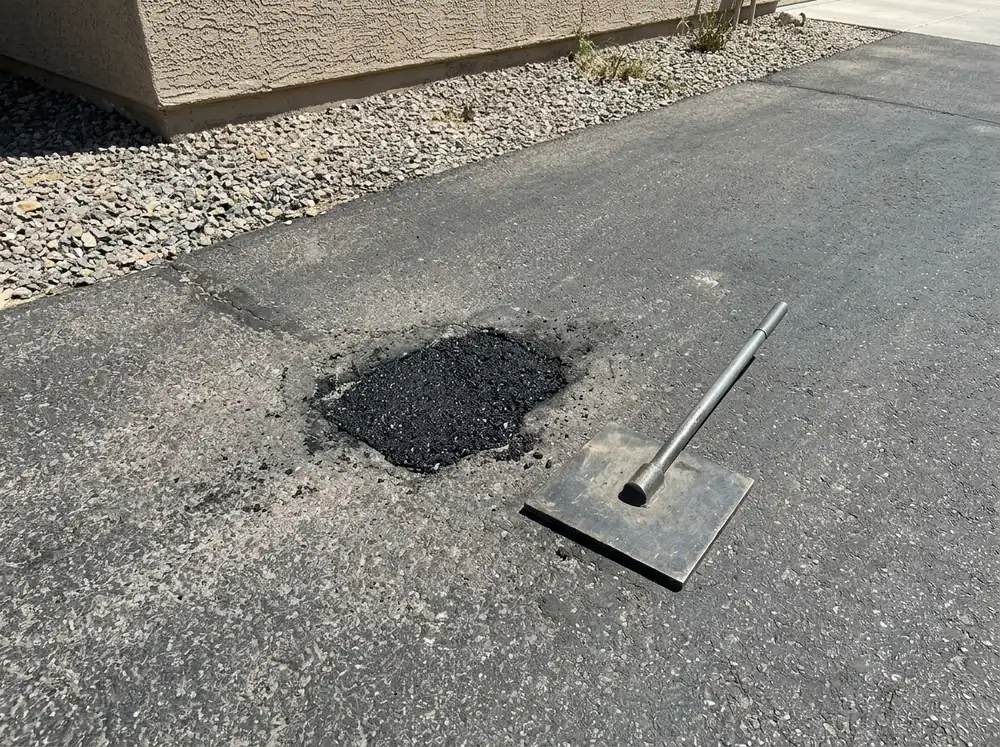
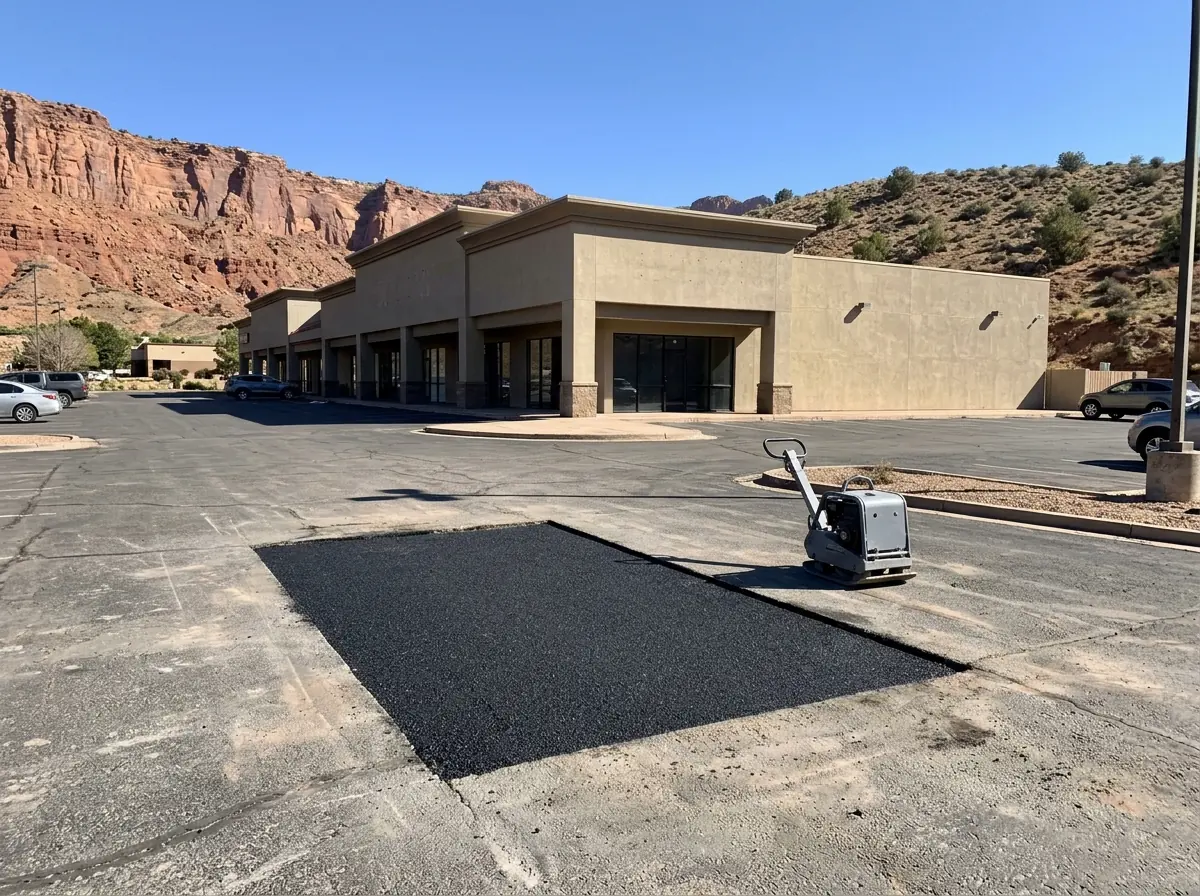
A pothole forms where water got under the surface and the base gave way. The repair that lasts squares off the damaged area with a saw, firms up the base, and fills it with hot mix. HomeAdvisor prices larger repairs at $2 to $5 per square foot. Fixr lists a single pothole at $150 to $400 and a sunken section at $500 to $3,000, because the base under a sunken area has to be rebuilt. Cold patch, at $100 to $200, is a stopgap. Expect a $50 to $100 call-out fee on small jobs.
See asphalt repair to match the damage to a fix, and asphalt patching for patch methods and what each costs.
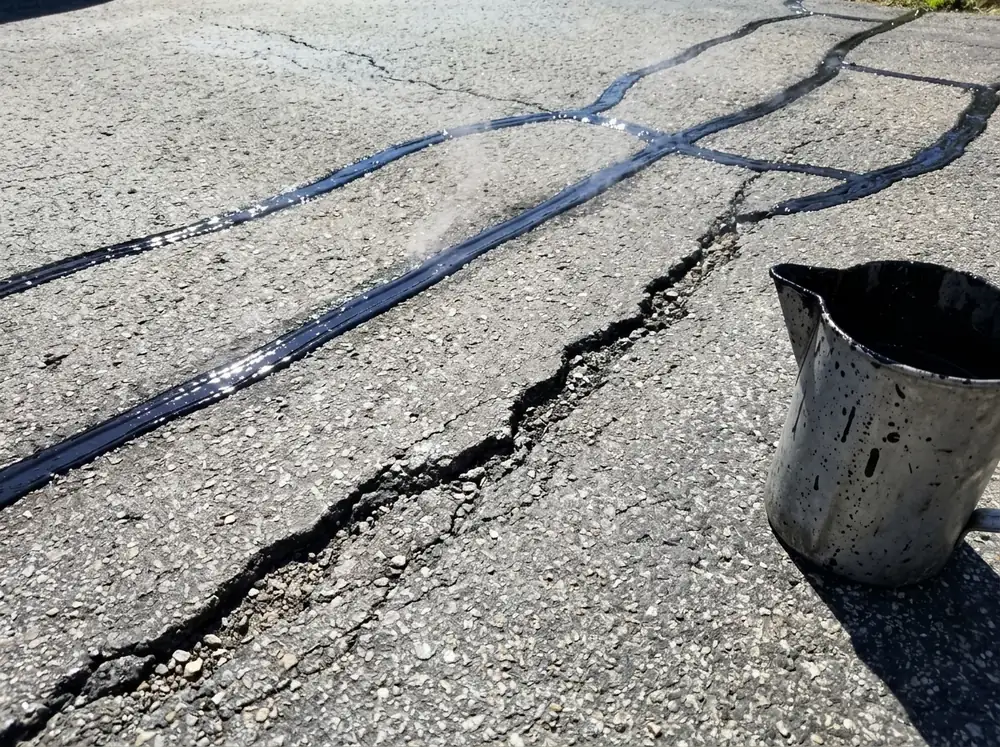
Asphalt Crack Sealing and Crack Filling
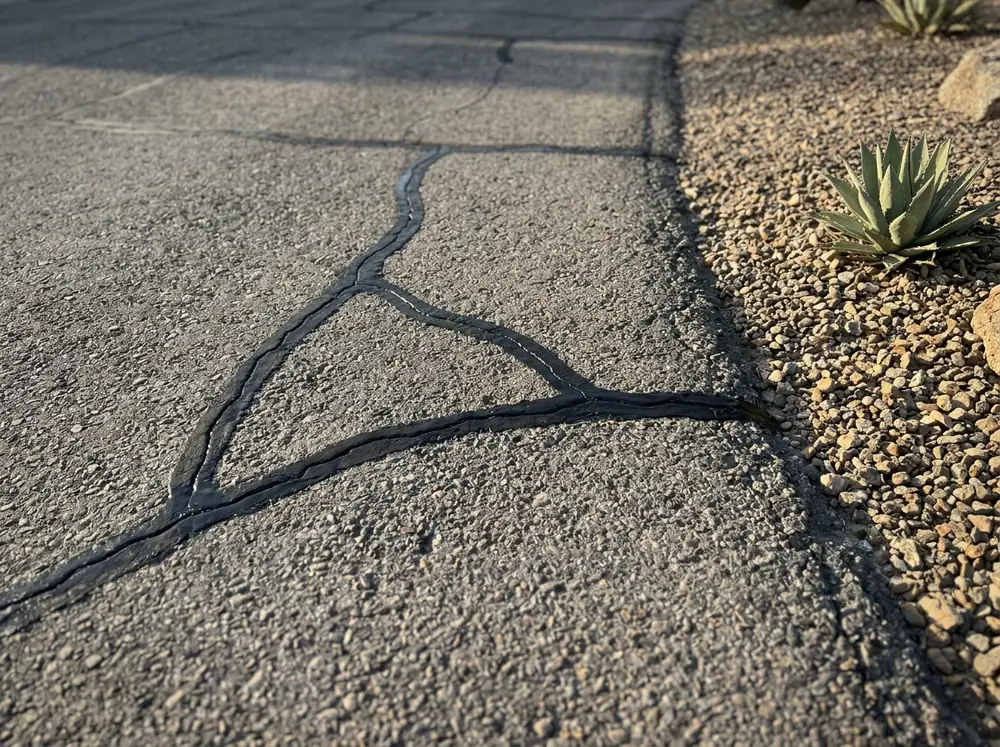
Sealing cracks is the cheapest work that keeps a driveway going. It keeps water out of the base. Each crack is cleaned out and filled with hot rubberized sealant. Cost guides charge $1 to $3 per linear foot, and Fixr puts a typical crack job at $100 to $400. Freezing still matters here: St. George averages about 96 nights a year at or below 32°F, most of them December through February, so water left sitting in a crack can freeze and pry it wider.
See asphalt crack sealing for which cracks get filled and which get routed.
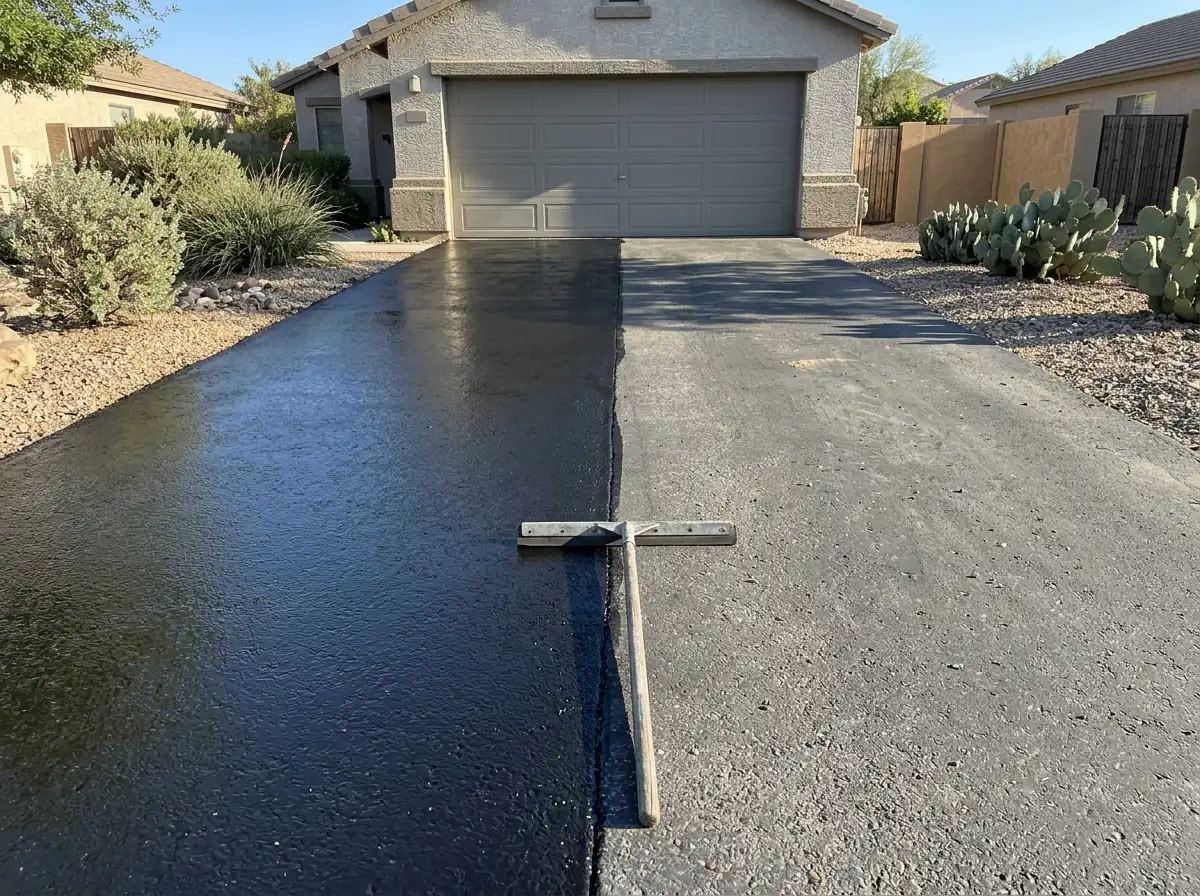
Asphalt Driveway Sealcoating
Sealcoat is a thin protective coat that keeps sun, water and oil off the asphalt. Here the sun does most of the damage, and Fixr notes asphalt-based sealer fades faster in very sunny areas and needs reapplying more often. HomeGuide prices driveway sealing at $1 to $2 per square foot, about $400 to $800 for 400 square feet, and says it needs 12 to 72 hours before cars go back on. New asphalt should wait: Angi suggests the first coat about six months after paving, then every two to five years.
Get a free asphalt paving estimate in St. George
- The estimate costs you nothing and commits you to nothing
- Ask for thickness, base depth and tear-out on the written bid
- Your job goes to one paving contractor, never a lead auction
- Property owners pay nothing for the introduction
More on sealer types and reseal timing: asphalt sealcoating.
Commercial Asphalt Paving for St. George Properties
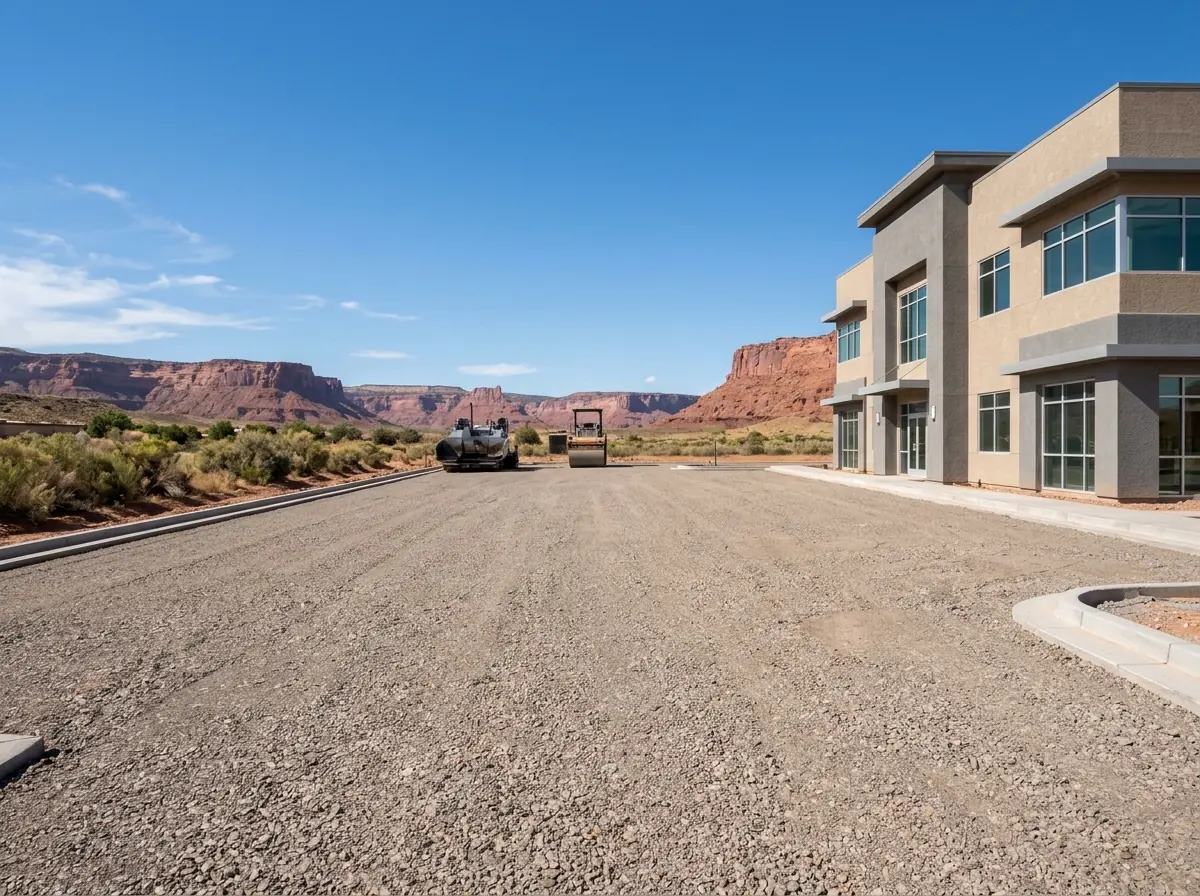
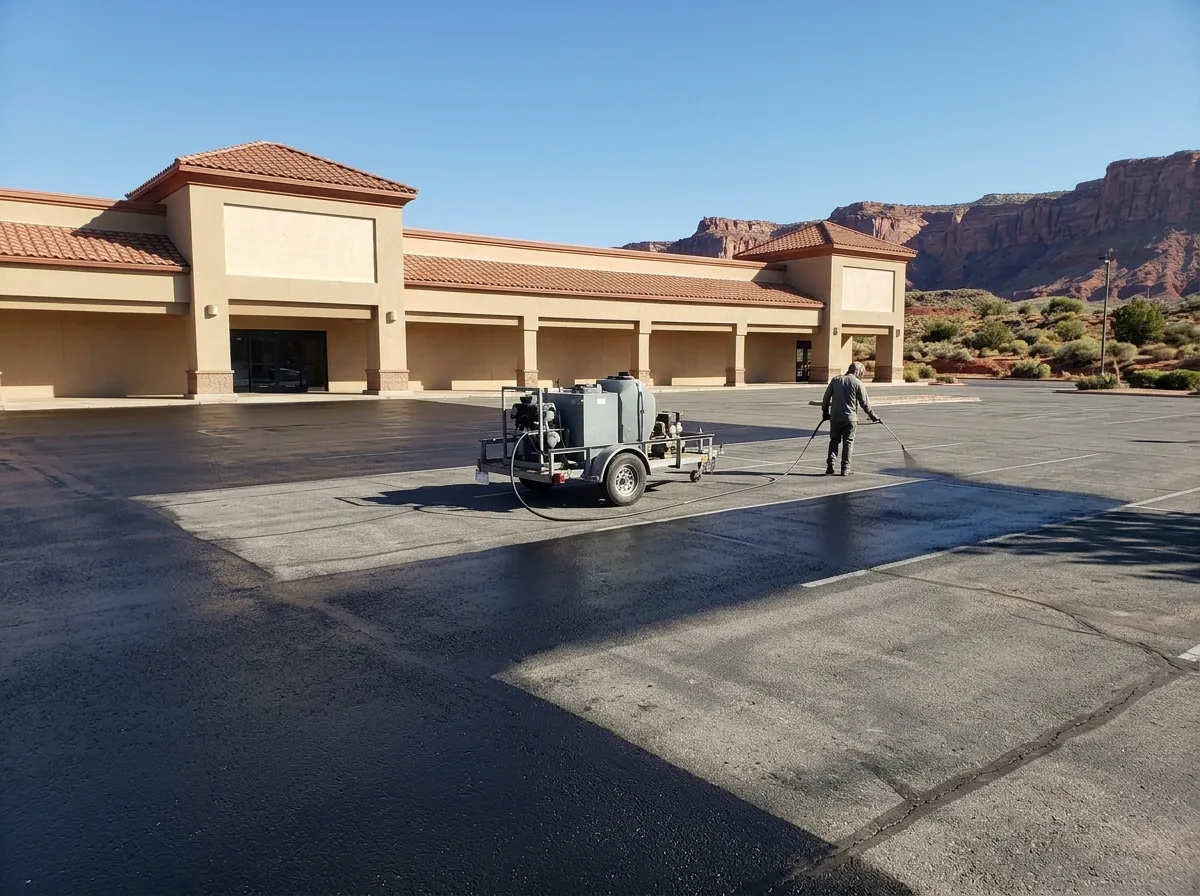
Lots, private streets and shared drives use the same materials as a driveway. The sections are thicker, the traffic is heavier, and a few rules apply that a homeowner never runs into. HomeAdvisor puts a new asphalt parking lot at $2 to $4.50 per square foot, or $400 to $1,130 per 9 by 18 foot stall, and two to four weeks from site prep to striping.
HOA Communities and Subdivision Roads
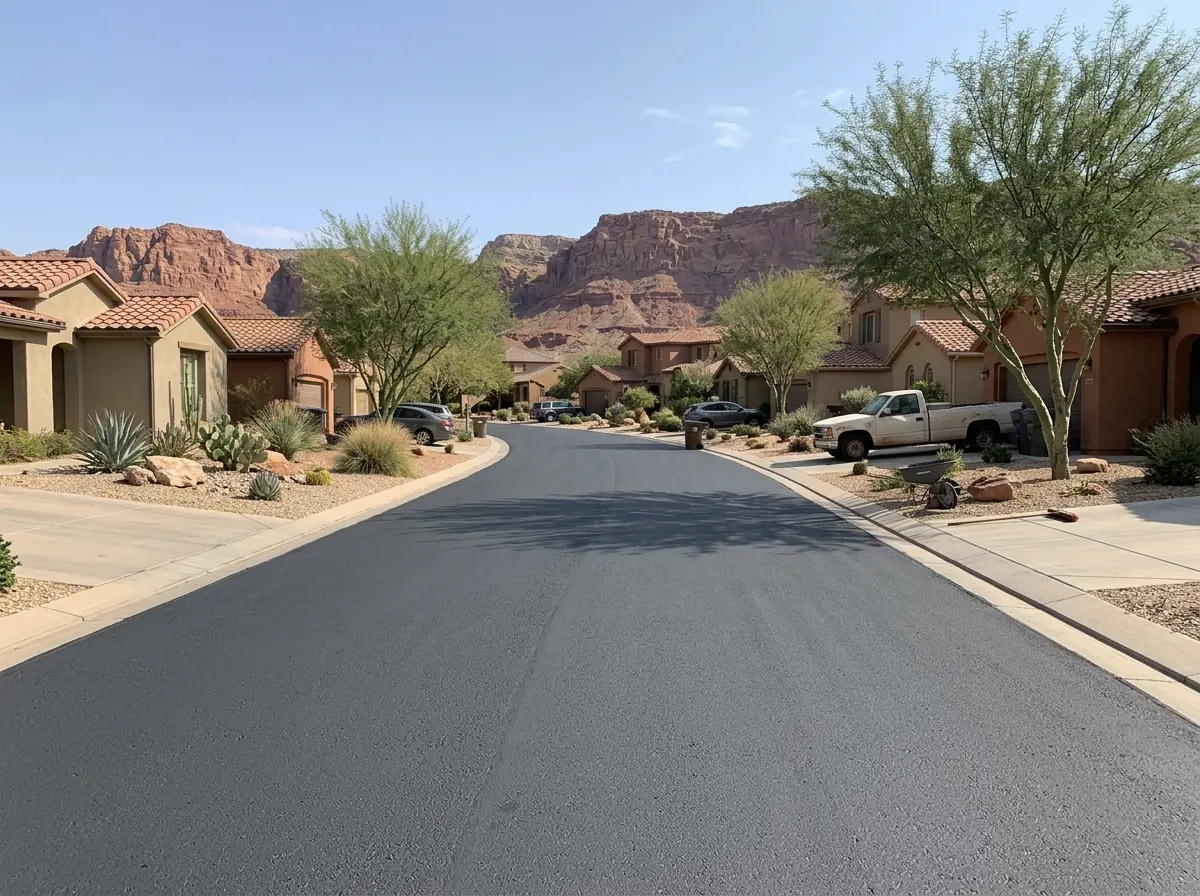
Private streets in a community are the HOA's to maintain, so paving comes out of reserves and a plan helps the board budget. HomeAdvisor's cycle for lots, sealcoat every three to five years and resurface every 15 to 20, works as a starting schedule for streets too. Walking paths and golf cart paths can go on the same cycle.
See HOA road paving for slurry seal, fog seal and path work.
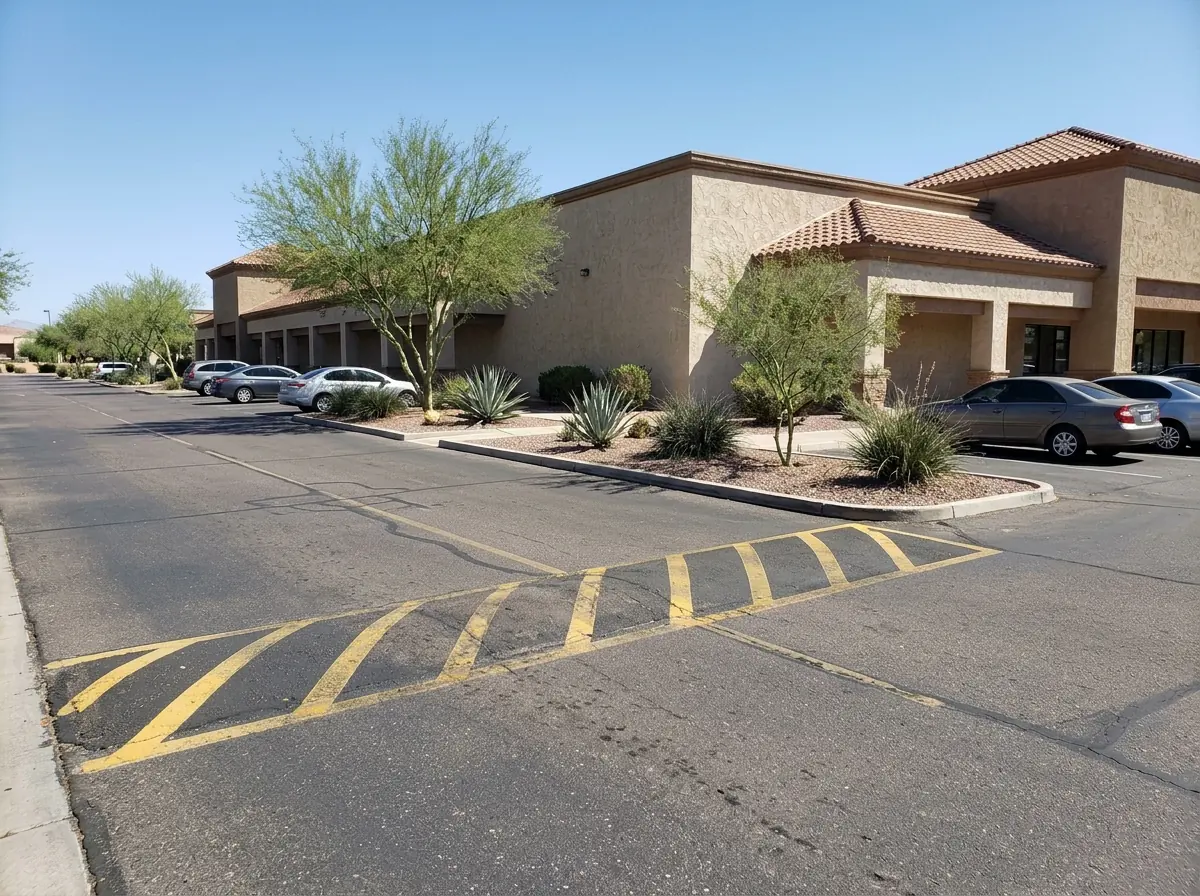
Retail Centers and Office Parking Lots
Tenants need the lot open, so ask at the bid whether work can be split into sections or done at night and on weekends. Restriping after a sealcoat is the moment to bring accessible stalls up to the current count.
See parking lot paving for lot costs and stormwater rules.
Apartments, Condos and Multifamily
Daily cars plus trash trucks and moving vans wear a multifamily lot fast. HomeGuide calls for 4 inches of asphalt or more where heavy vehicles run, and HomeAdvisor advises patching potholes right away before one failure spreads.
See parking lot sealcoating for resealing a lot residents can't leave empty.
Churches and Schools
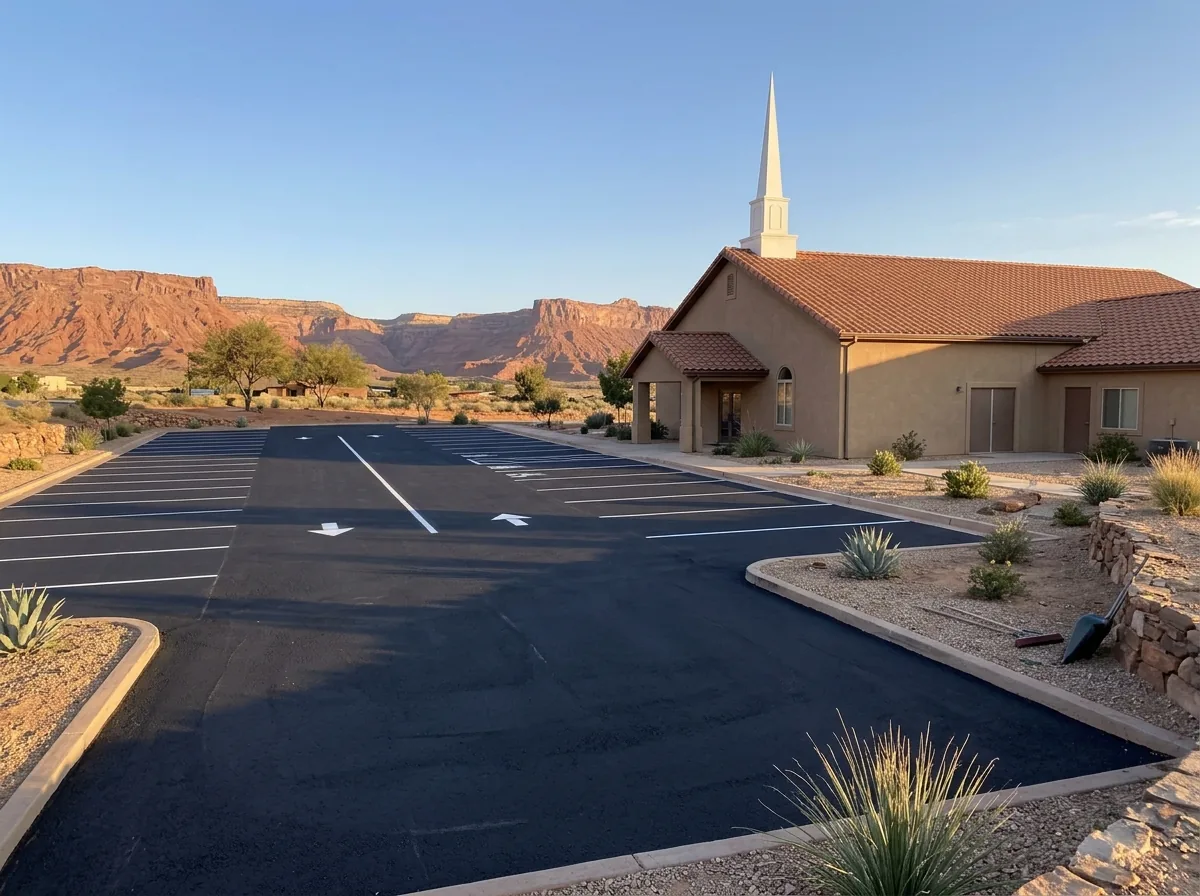
Traffic arrives in bursts and the lot sits quiet much of the week, which makes scheduling easier. Bigger projects meet state stormwater rules: disturbing an acre or more needs UPDES construction stormwater coverage, and St. George reviews the SWPPP before work starts.
See church and school parking lot paving for work timed around services and school breaks.
Industrial Yards and Warehouses
Truck yards and dock aprons carry the heaviest loads on any lot. Section thickness and base depth should come from the actual trucks and turning areas, not from a driveway spec, and the quote should state both.
More on heavy-duty truck lanes and dock aprons: parking lot paving.
Hotels, Restaurants and Care Facilities
Guests, delivery trucks and, at care facilities, residents with walkers share one lot. Under the 2010 ADA Standards, accessible car spaces are at least 96 inches wide and van spaces 132 inches (or 96 inches beside a 96 inch aisle), with aisles at least 60 inches wide and marked so no one parks in them.
See parking lot repair for patching drive lanes while guests keep arriving.
Specialty Asphalt Services
These jobs sit outside a standard driveway or lot, and each is usually priced as its own line on a bid.
Parking Lot Striping and ADA Stalls
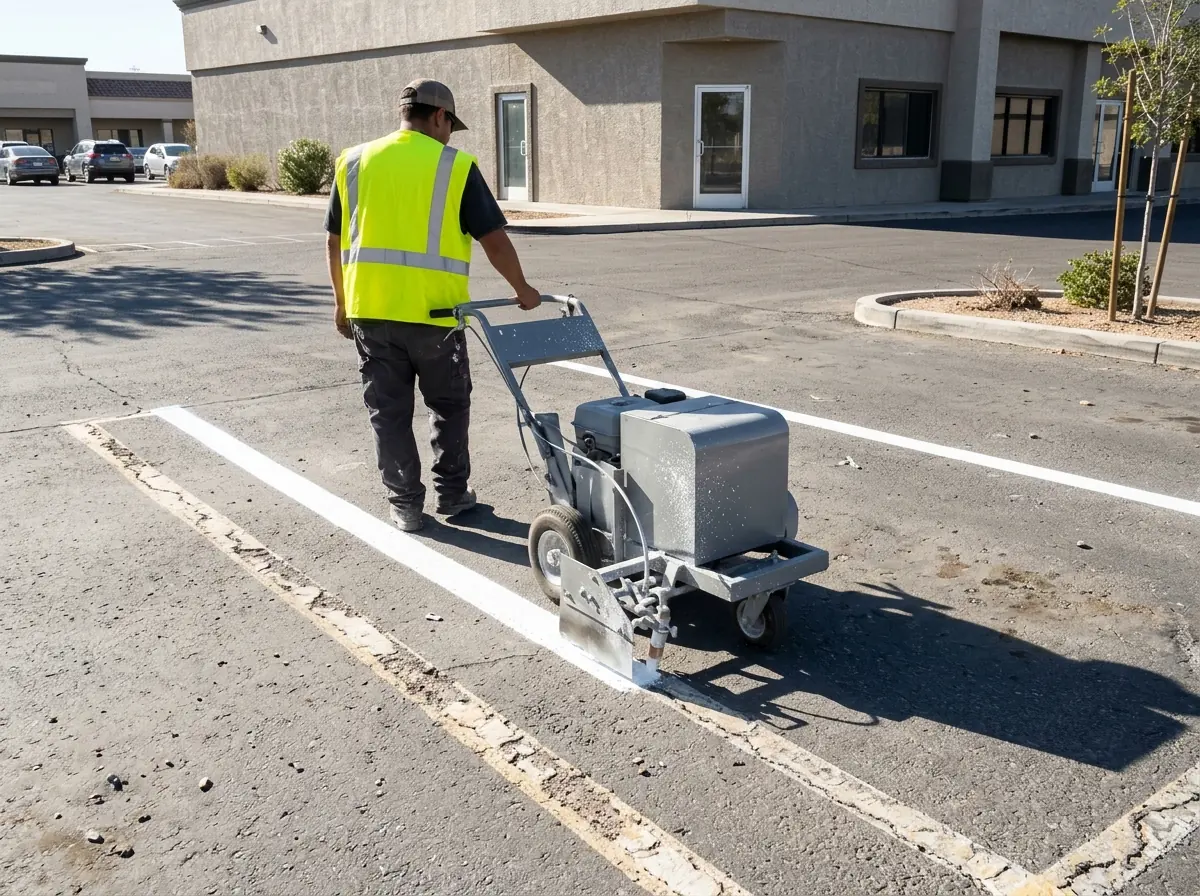
The 2010 ADA Standards tie accessible stalls to lot size: 1 for up to 25 spaces, 2 for 26 to 50, 4 for 76 to 100, and 2% of the total for 501 to 1,000. At least one in every six accessible stalls must be van accessible.
More on stall counts and aisle widths: parking lot striping.
Asphalt Milling
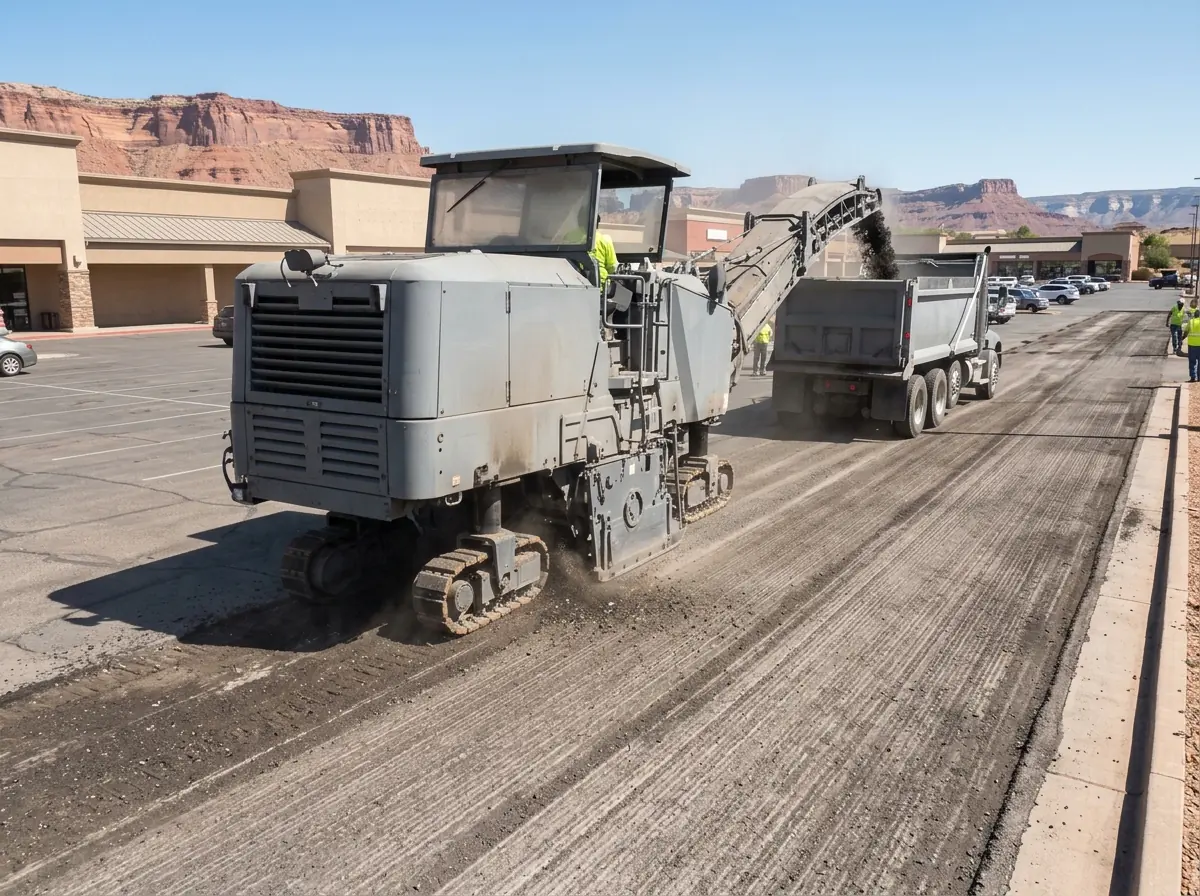
Milling grinds off the worn top of a lot or street so a fresh layer goes down without raising the surface above curbs, gutters and doorways. It's priced by area and depth, so get it as its own line on the bid.
See asphalt milling for mill-and-overlay and edge milling.
Private Road and Long Driveway Paving
Long drives and private lanes need a crowned or sloped surface and side drainage more than a short driveway does. Where one meets a state highway, digging in UDOT right-of-way for a driveway approach needs a UDOT permit first.
See private road paving for shared lanes and fire access.
Speed Bumps and Speed Humps
A speed bump is short and abrupt, made for parking lots where cars already crawl. Humps stretch the rise over a longer run, which suits a private street better than a lot. Both are built up in asphalt on the existing pavement and painted so drivers see them.
See speed bump installation to compare bumps, humps and tables.
Sport Court Asphalt (Basketball, Pickleball)
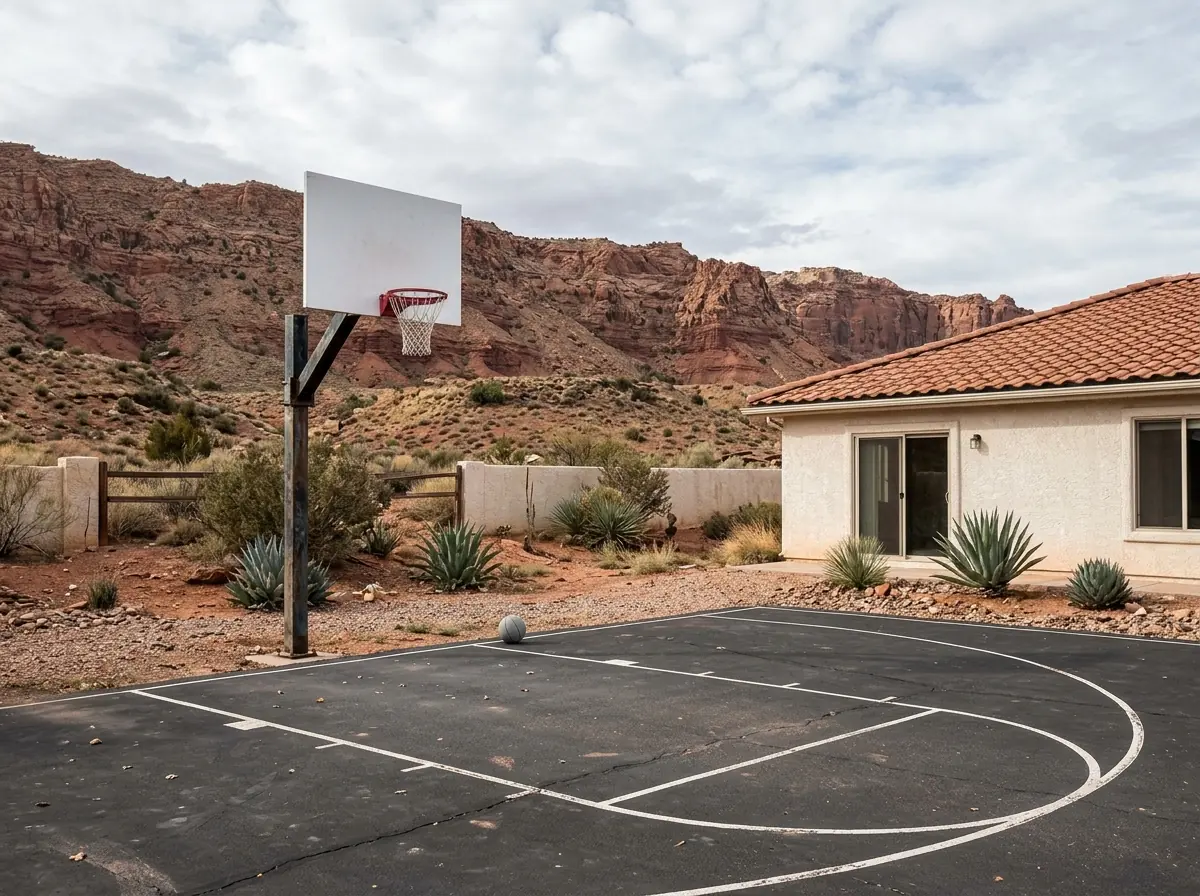
A backyard court needs a flatter, more even slab than a driveway, with just enough fall to shed water. The asphalt has to cure before a color coating goes on, so the court and its surfacing are scheduled as two steps.
More on court sizes and coating waits: sport court paving.
Drainage, Asphalt Curbs, Catch Basins and Swales
State geologists rank flooding as the most widespread and costly geologic hazard in this corner of Utah. Asphalt curbs and berms steer runoff, swales carry it across a lot, and catch basins collect it; a sunken ring around a basin means the base beneath has washed out.
See driveway drainage for ponding, berms and culverts.
How Asphalt Paving Works in St. George
- STEP01
Site visit and written scope
The contractor measures, checks the old surface and the drainage, and writes up the job: base depth, asphalt thickness, tear-out, grading, cleanup, and the payment schedule. Angi's hiring guide says the contract should state the down payment, the payments along the way, and the final payment terms.
- STEP02
Excavation, grading and base
Old material comes out, the subgrade is shaped for drainage, and crushed base goes down and is compacted. Of all five steps, this one does the most to decide how long the driveway lasts.
- STEP03
Paving and rolling
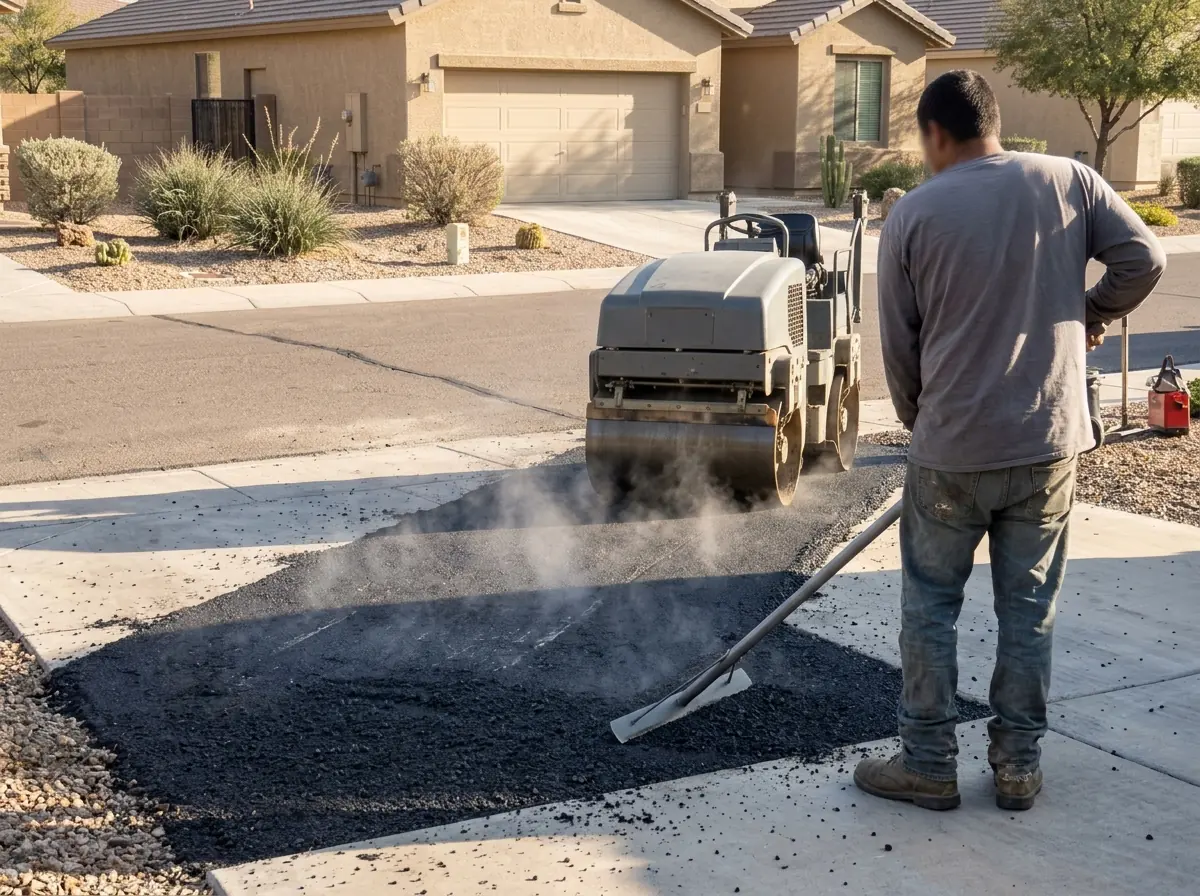
Hot mix is spread by a paving machine and rolled while it's still hot enough to compact. A Federal Highway Administration paving checklist sets the minimum surface temperature at 47°F to 50°F for layers of driveway thickness, so in St. George it's the cold winter mornings that hold a crew back.
- STEP04
Cure and first use
Stay off it for 24 to 48 hours, or 3 to 5 days in hot weather, and keep heavy vehicles off for a week. A parking lot, with striping, usually takes two to four weeks from prep to reopening.
- STEP05
First sealcoat
Fresh asphalt needs time before sealer: Angi says about six months, HomeGuide 3 to 6 months. After that, plan on a reseal every two to five years.
Asphalt Paving Cost in St. George
A typical asphalt driveway costs about $5,350 at Angi's national average. HomeGuide prices it by size:
| Driveway size | HomeGuide range |
|---|---|
| 20 by 20 feet (400 square feet) | $2,000 to $4,800 |
| 500 square feet | $2,500 to $6,000 |
| 1,000 square feet | $5,000 to $12,000 |
The only St. George price reports found date from 2018, so every figure here comes from national guides, most of them updated in 2025 or 2026. Use them to sanity-check a quote, not to replace one.
What moves the number: tear-out ($1 to $2 per square foot), leveling ($5 to $10 per square foot where needed), curves and slopes (15% to 30% more), and special mixes for extreme weather (10% to 20% more, per HomeGuide). Small jobs hit minimums; some contractors won't pave for less than $2,000.
Upkeep is cheap by comparison. A 400 square foot driveway costs $400 to $800 to seal and crack filling runs $1 to $3 per foot. Parking lots seal at $0.15 to $0.30 per square foot, and a new lot runs $400 to $1,130 per stall.
Things to Know Before Paving in St. George
Summer heat
July highs average 101.6°F and about 124 days a year reach 90°F, per Western Regional Climate Center records. Fresh asphalt stays soft longer in that heat, which is why the cure and sealcoat waits on this page lean to the long end.Problem soils
The Utah Geological Survey maps expansive, collapsible and gypsiferous soils in the St. George area and calls expansive soil and rock the most troublesome construction condition in southwestern Utah. Ask how deep the base goes and why.Monsoon storms
St. George averages only 8.18 inches of rain a year, but the monsoon runs June 15 to September 30. In July 2024 monsoon storms ended a 78-day dry stretch, and the National Weather Service said flash flood risk was going up. Slopes and edges need to be set for that kind of downpour.Street permits
Digging in a St. George street, alley or other public place takes a permit from the public works encroachment officer, a surety bond of at least $10,000 and a 100% performance bond. For driveway approach questions, call Public Works at 435-627-4055.HOA approval
HomeGuide notes HOAs may set rules on driveway materials and appearance. Get architectural approval in writing before a contractor is scheduled.License and liens
Utah's S260 Asphalt and Concrete Contractor license covers asphalt, overlays, chip seal, sealant, base work and striping. If you sign a written contract with a licensed contractor and pay in full, Utah's Residence Lien Recovery Fund shields an owner-occupied single-family home or duplex from subcontractor and supplier liens.Asphalt or concrete
HomeGuide says concrete reflects heat and suits warm climates while asphalt handles freeze-thaw better. St. George gets both: long hot summers and regular winter frost.
Service Area
St. George Asphalt Co. takes paving requests from homeowners, HOA boards and commercial property managers in St. George, Utah. Every request goes to one independent paving contractor who works in the city.