
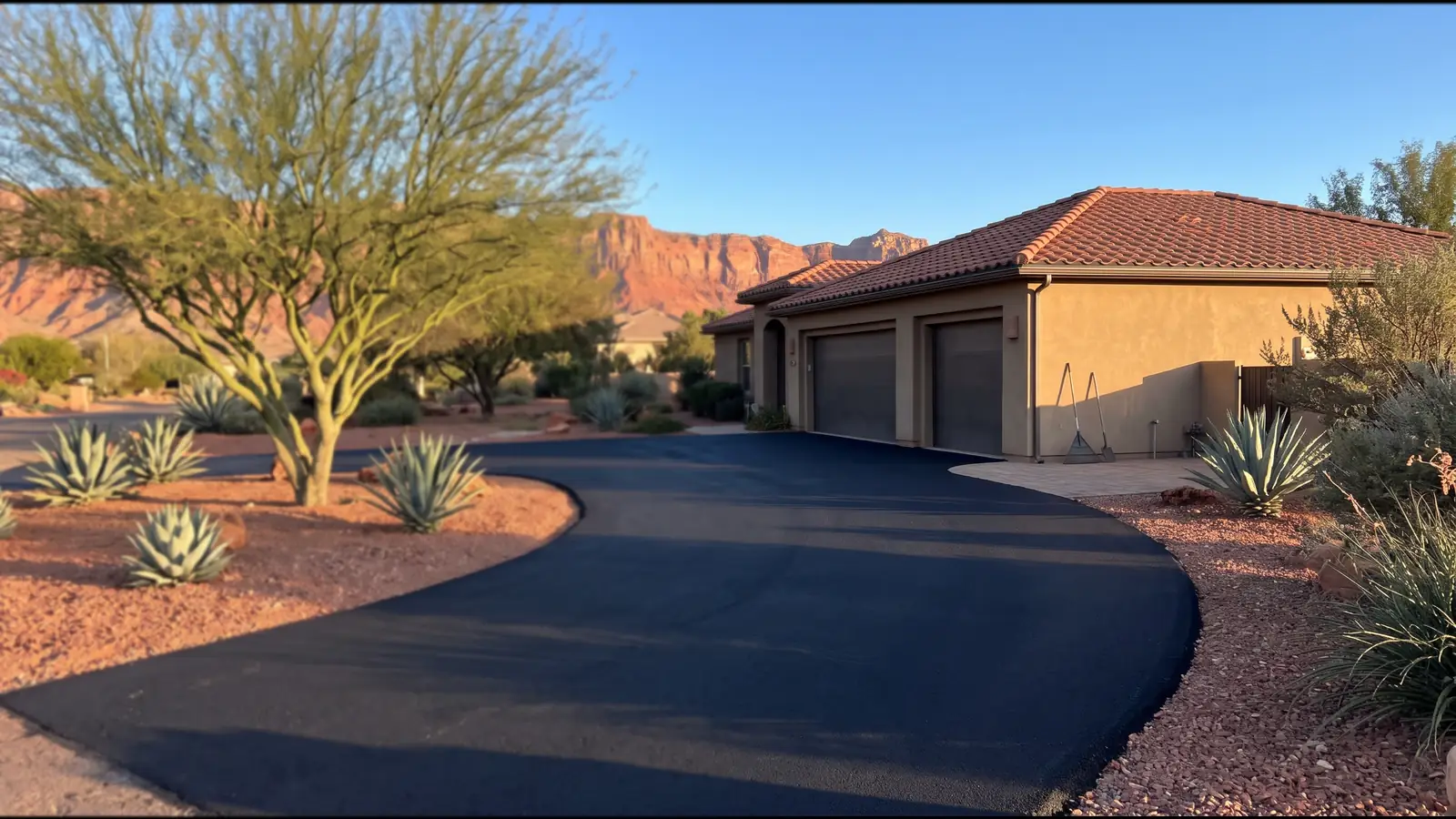
Grading and Base Preparation Steps Under New Asphalt
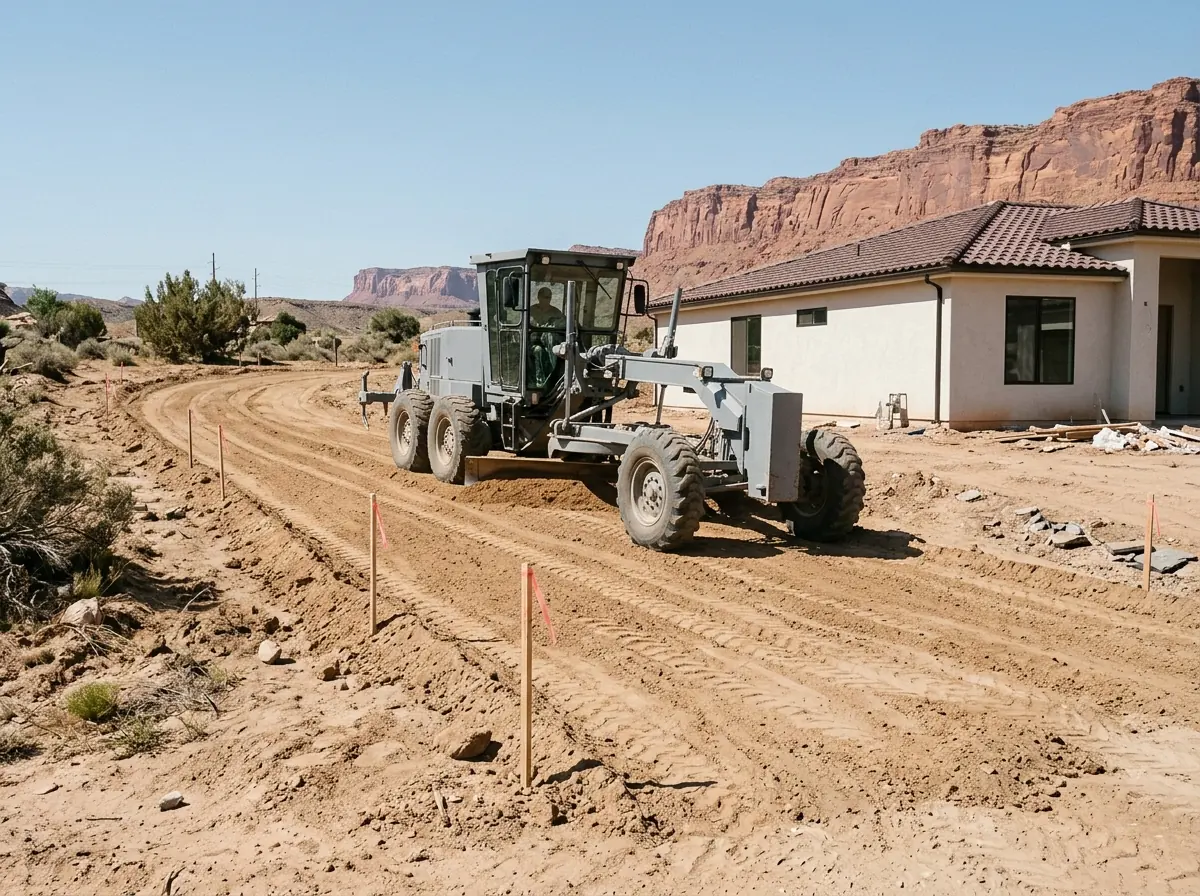
Rough grading and slope for runoff
Rough grading moves soil to set the overall shape: cutting high spots, filling low ones and giving the surface a fall that carries water away from the house and off the pavement. In St. George, where runoff goes matters beyond puddles. Water soaking into gypsum-bearing ground dissolves the gypsum, and the Utah Geological Survey lists street, roof and parking lot runoff and irrigation among the things that speed that up. Sizing the drains themselves is covered on driveway drainage.
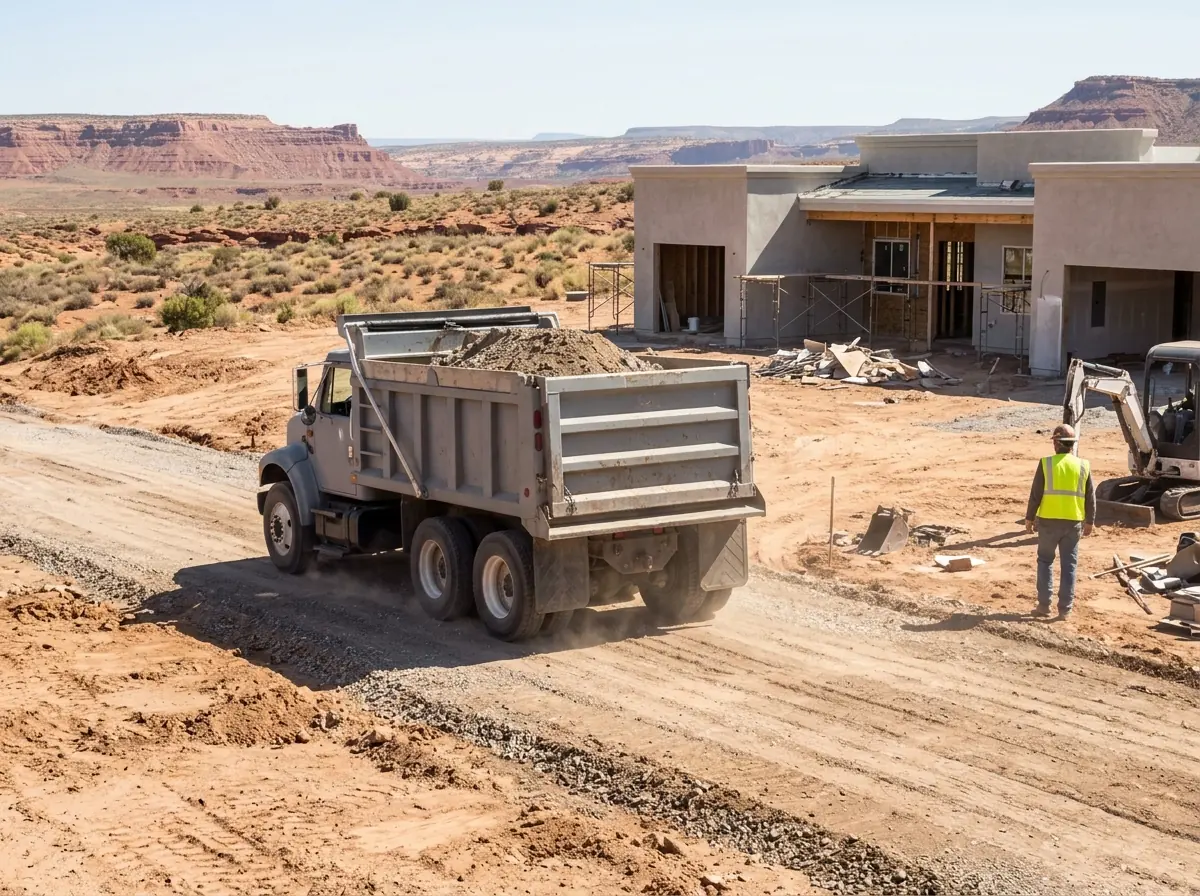
Subgrade compaction and proof rolling
Once the shape is right, the native soil (the subgrade) is compacted, then tested. A proof roll looks at the whole surface rather than a few test spots:
- Equipment: a tandem-axle dump truck, or a tri-axle with the third axle raised, loaded to at least 20 tons; a towed roller of at least 40 tons is the alternative.
- Pass criteria: a single pass, with about 1 inch of deflection at most and no pumping or cracking.
- Scope: the research applies it to the subgrade only, not to each layer of base.
Those numbers come from an Indiana DOT highway study. A driveway crew may use a lighter loaded truck, but the idea is the same: find soft spots while they are still cheap to fix.
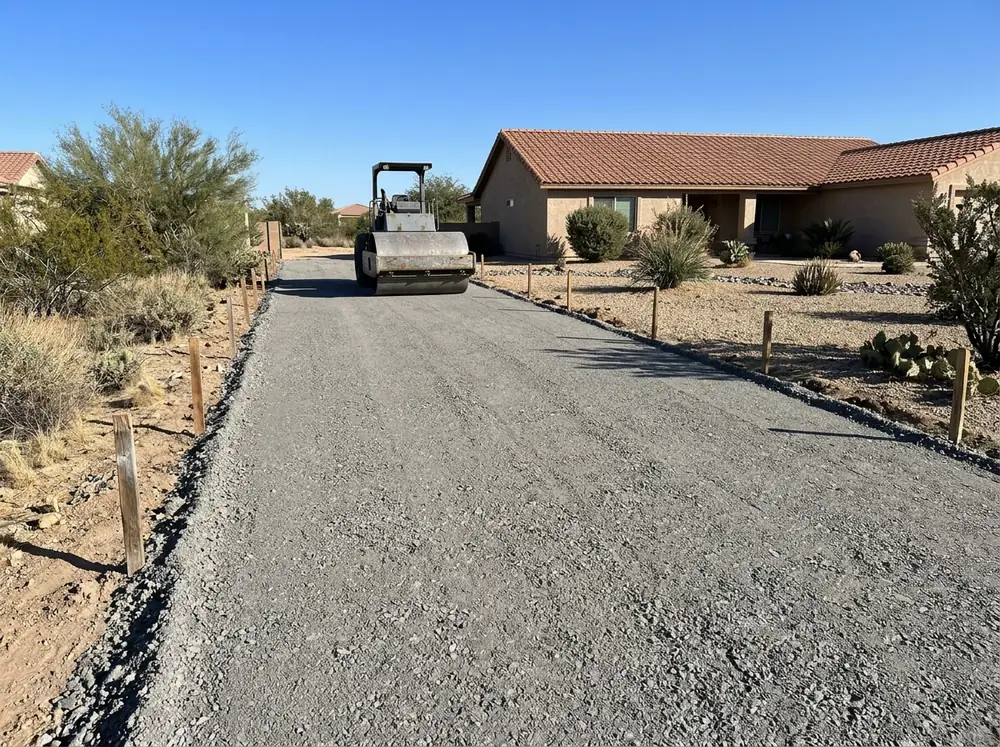
Road-base gravel course
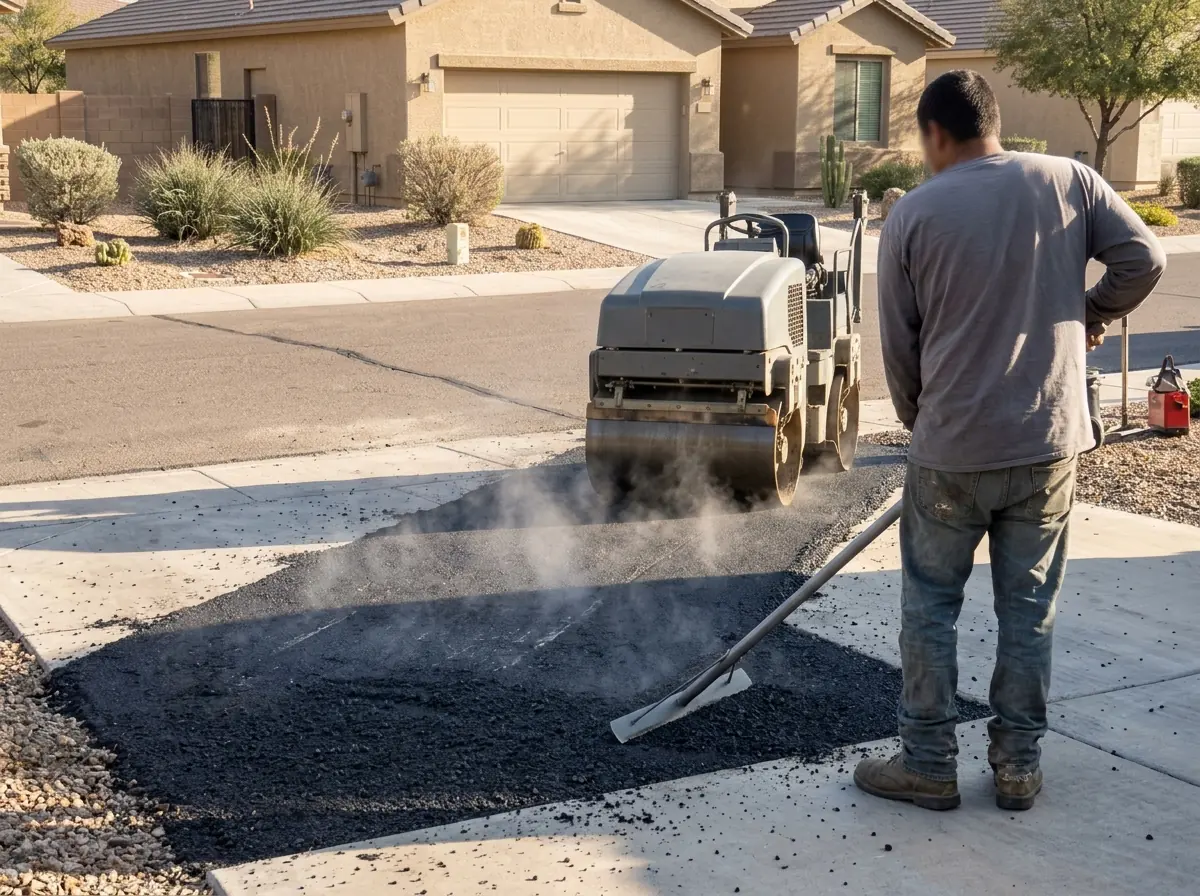
The base course is the crushed stone that actually carries the asphalt. Angular stone mixed with sand and stone dust (often sold as crusher run) packs tightly because the pieces lock together, while rounded rock rolls under load. It goes down in layers, each compacted before the next. Base depth depends on what will drive on it; the figures for cars and heavier vehicles are on asphalt driveway paving, and an RV pad needs the heavier end.
Over-excavation for expansive and gypsum-bearing soils
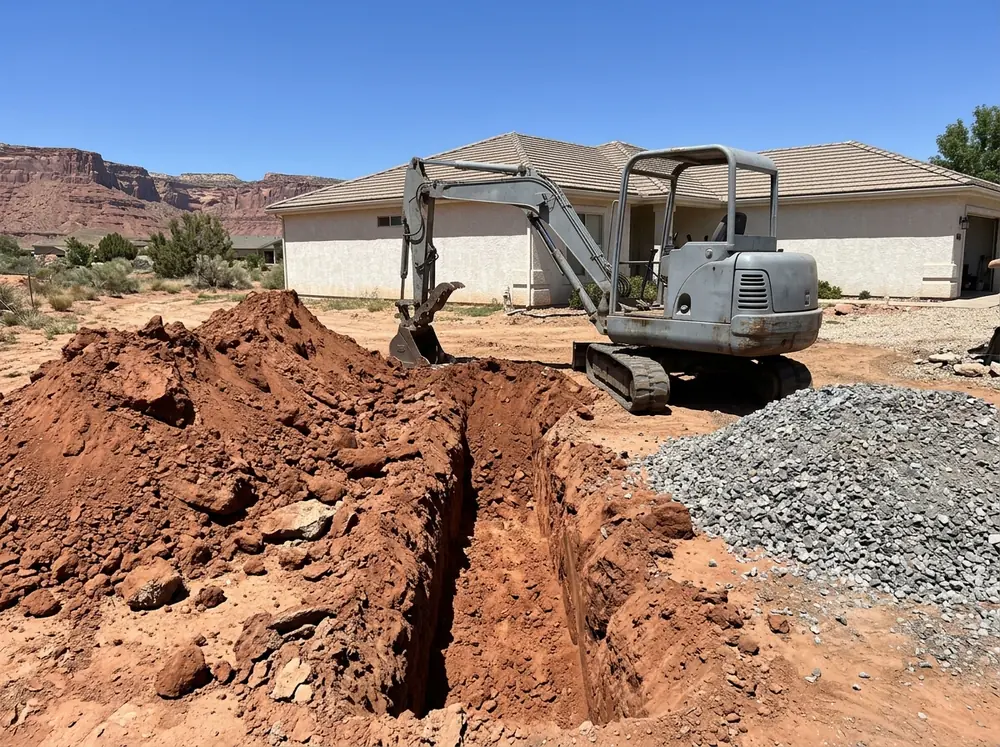
Where the soil itself is the problem, the fix is to dig it out deeper than a normal base would need and replace it with compacted, imported material. How deep depends on what the dig finds, so ask whether the bid prices over-excavation as a unit rate (per cubic yard or per inch of depth) instead of a guessed lump sum. The soil types that call for it are listed below.
Geotextile fabric under the base
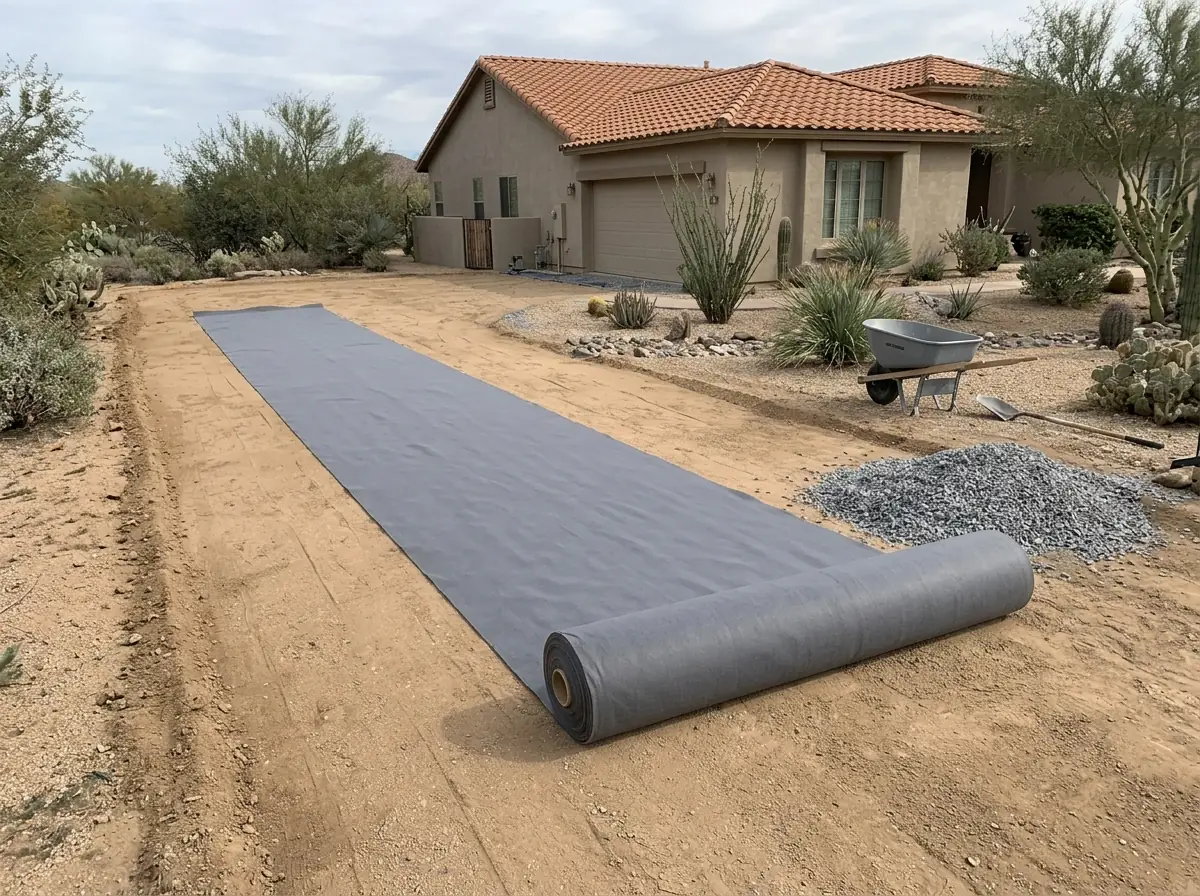
On soft or fine-grained ground, a layer of geotextile fabric can go down before the first lift of base. A Virginia transportation research report describes its main job as keeping the base aggregate and the subgrade fines from mixing, and cost guides say it stops gravel from sinking into the subsoil. It does not replace compaction or a proper base depth.
Why St. George homeowners and property managers call St. George Asphalt Co.
- The estimate costs you nothing and commits you to nothing
- Ask for thickness, base depth and tear-out on the written bid
- Your job goes to one paving contractor, never a lead auction
- Property owners pay nothing for the introduction
St. George Problem Soils That Change the Grading Plan
The Utah Geological Survey calls expansive soil and rock the most troublesome construction condition in southwestern Utah, and its St. George area hazard maps cover several more:
Expansive soil and rock
High-clay material that swells when wet and shrinks when it dries, lifting and dropping whatever sits on it.Gypsum-bearing soil
Gypsum dissolves in water and the ground loses volume; at 10% gypsum or more, the UGS says this can cause local subsidence and sinkholes. A hard gypsum and calcium-carbonate layer locals call "water rock" can also hold back groundwater that floods an excavation if it's breached.Collapsible soil
Firm when dry but settles sharply once it's wetted, typically on young alluvial fans and debris-flow deposits.Caliche
A hard calcium-carbonate layer near the surface in dry climates that can be very difficult to excavate.
The UGS also notes that problem soils can damage pavement after it's built. That is the reason to ask a contractor what they expect to find before digging and how the bid handles it if they find something else.
What to Ask About Grading in a Paving Bid
Base depth after compaction
Is it written in the bid, separate from asphalt thickness?Proof roll
Will the subgrade be proof-rolled, and who decides what counts as a soft spot?Unexpected soil
If the dig turns up clay, gypsum or caliche, what is the unit price for going deeper?Spoils
Is hauling away excavated soil included, or extra?
See driveway drainage for catch basins and swales when grading alone can't move the water.