
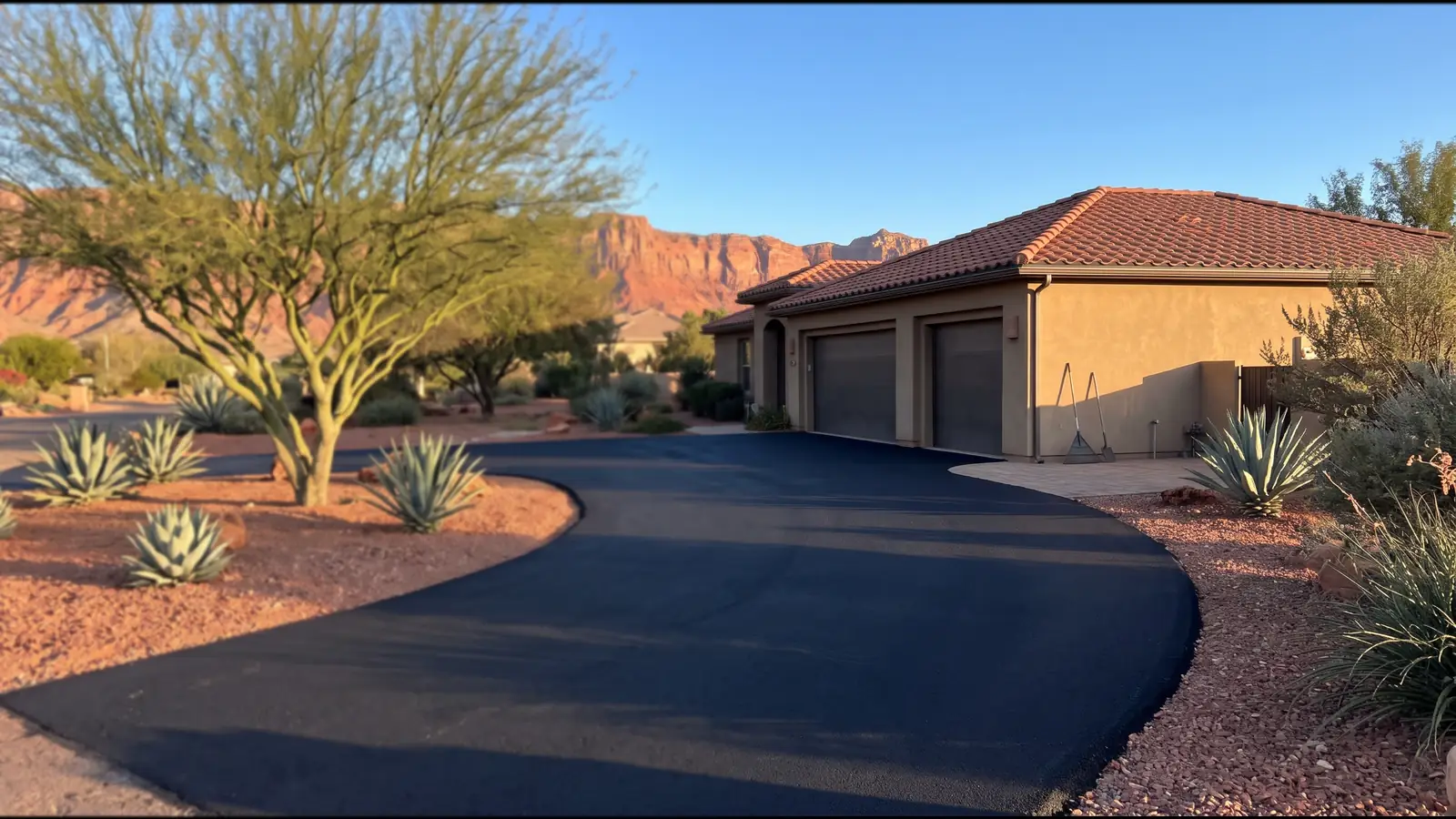
Asphalt Driveway Damage Types and How Each Is Repaired
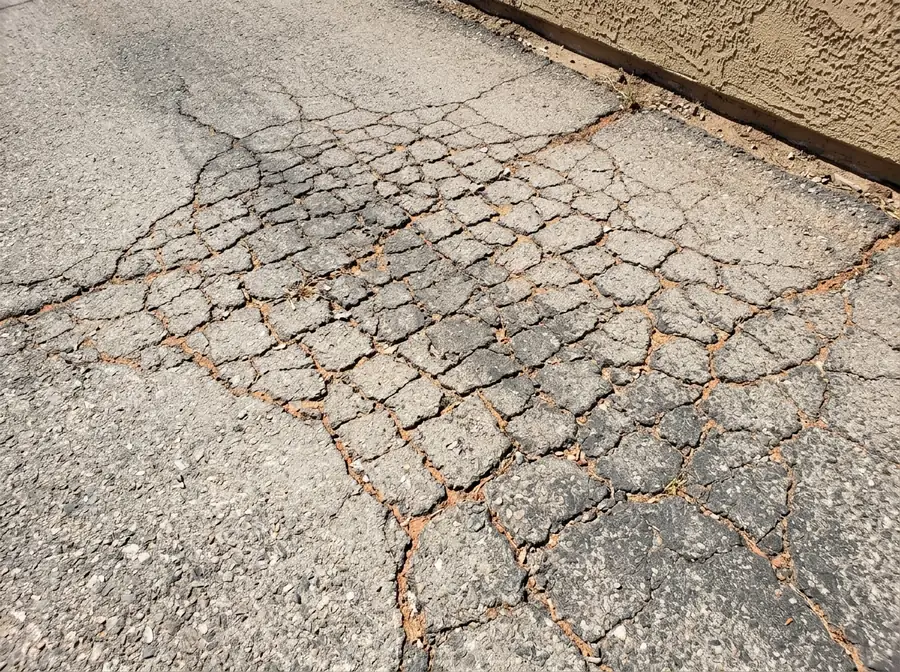
Alligator cracking
A web of connected cracks that looks like reptile skin. Pavement Interactive calls it fatigue cracking and a sign of structural failure: the asphalt has been flexing under loads because the base or soil below lost support, often from poor drainage, heavier loads than it was built for, or weak compaction. Sealing those cracks does little. The repair depends on size:
- Small, local area: cut out the cracked asphalt, dig out and replace the weak soil, fix the drainage if needed, then patch
- Large area: an overlay built strong enough to carry the load, or replacement
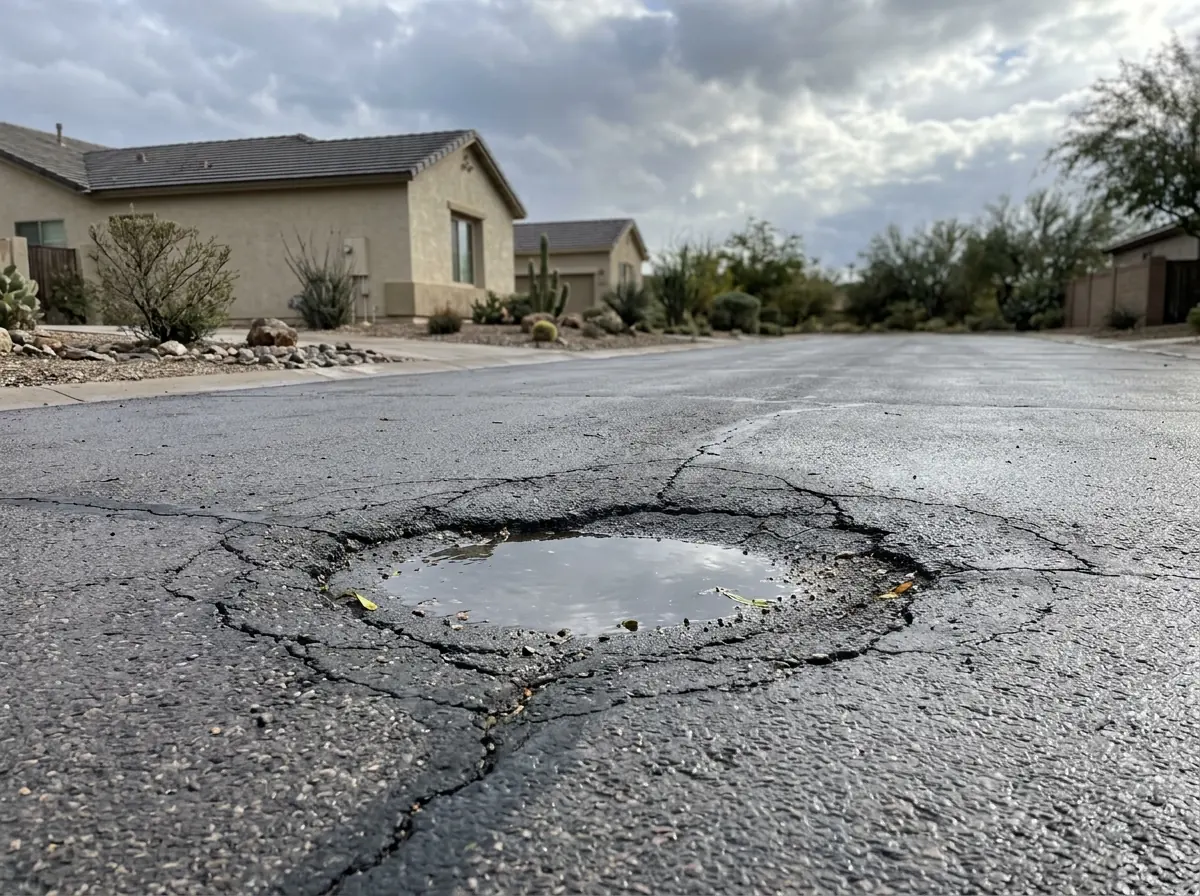
Sunken spots and depressions
A low spot that holds water after a storm is the giveaway. Fixr traces sinking to poor installation, poor drainage or traffic on asphalt before it cured. The repair removes the loose asphalt, rebuilds what's under it and repaves the area, so it costs more than surface work: $500 to $3,000 depending on how far it has sunk. Aprons at the street sink too, from traffic, heat and water, at $200 to $1,000 to repair.
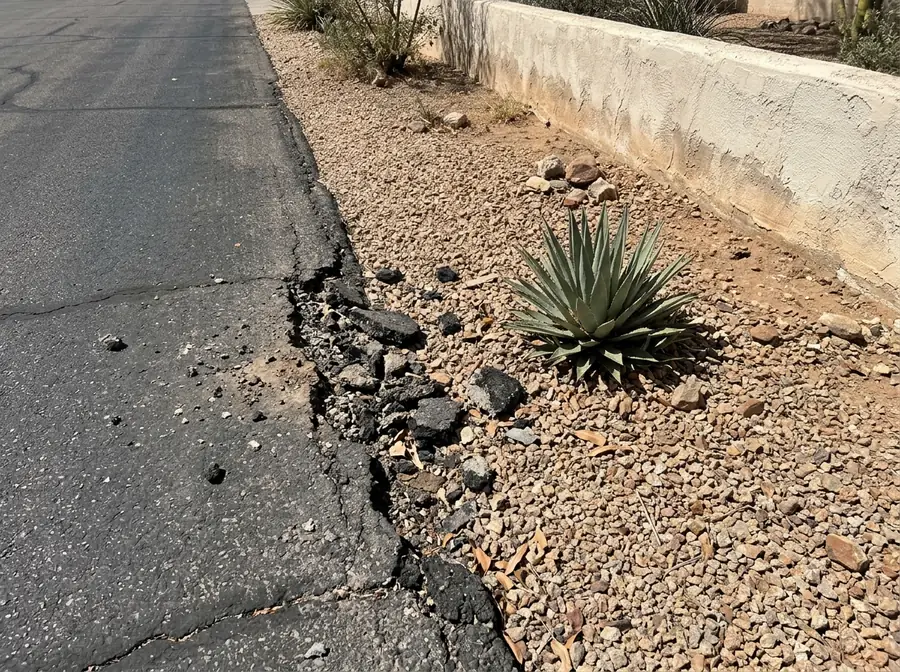
Crumbling edges
An asphalt edge often has no curb or slab beside it to hold it in, and Fixr names weeds and grasses along the edge as another cause of cracking there. Fixr prices the fix at $300 to $1,500: loose material is cleaned out, cracks are filled and compacted, and fresh asphalt is laid and smoothed. Its upkeep advice is to check the edges often and pull weeds that crack them.
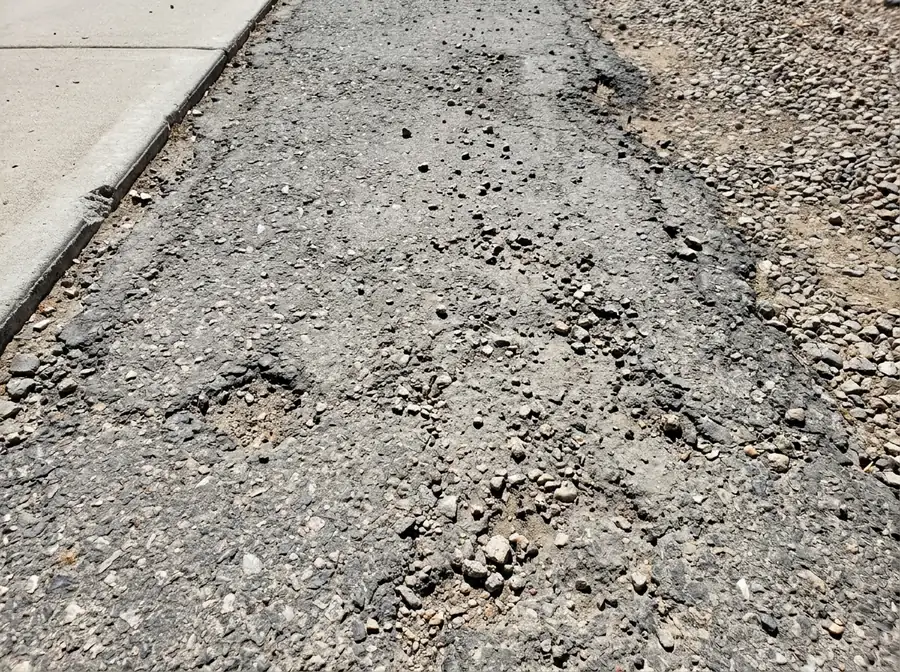
Raveling and sun-faded, oxidized surfaces
Raveling is the surface coming apart from the top down as stones loosen and wash out of the binder. Pavement Interactive ties it to dusty aggregate, segregated mix and poor compaction when the asphalt was laid. Small raveled spots are removed and patched; a whole surface coming apart needs an overlay, covered on asphalt driveway resurfacing. A driveway that has only faded to gray is a different case: it needs a seal, not a repair, and sealcoating covers that.
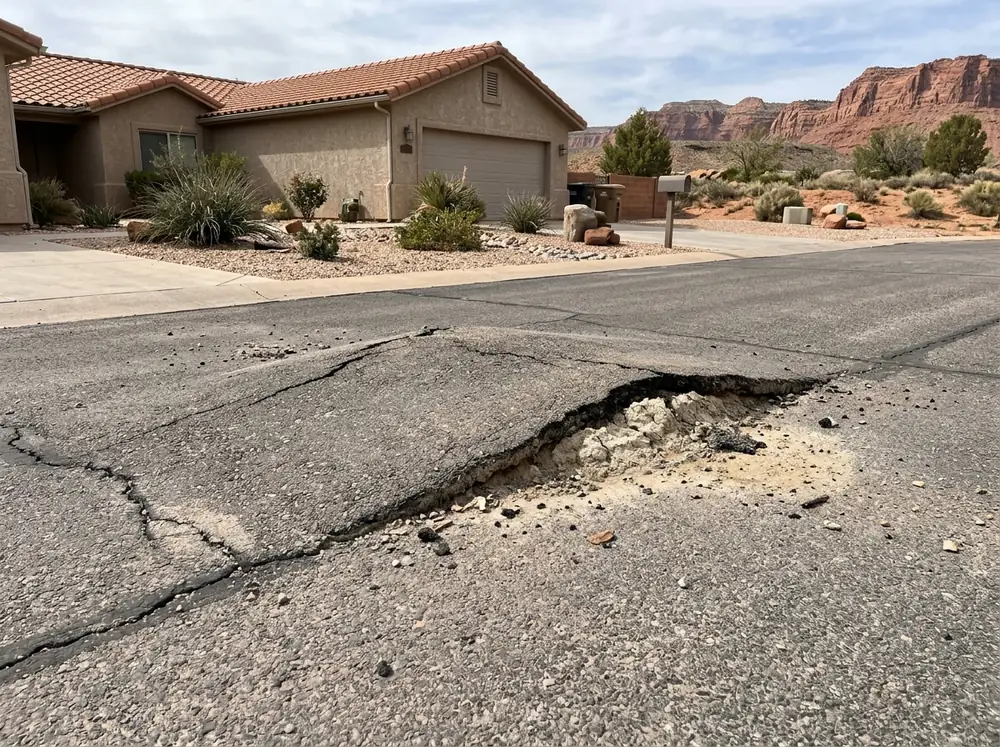
Heaved sections over expansive soil
Expansive soils swell when wet and shrink as they dry, and the Utah Geological Survey ranks them as southwestern Utah's most troublesome construction condition (more on grading and base preparation). That movement can lift and crack the asphalt above. Patching the surface won't stop it. The heaved section is cut out, the problem soil is dug out and replaced with compacted base, and the area is repaved. Ask how deep the contractor plans to dig, and why.
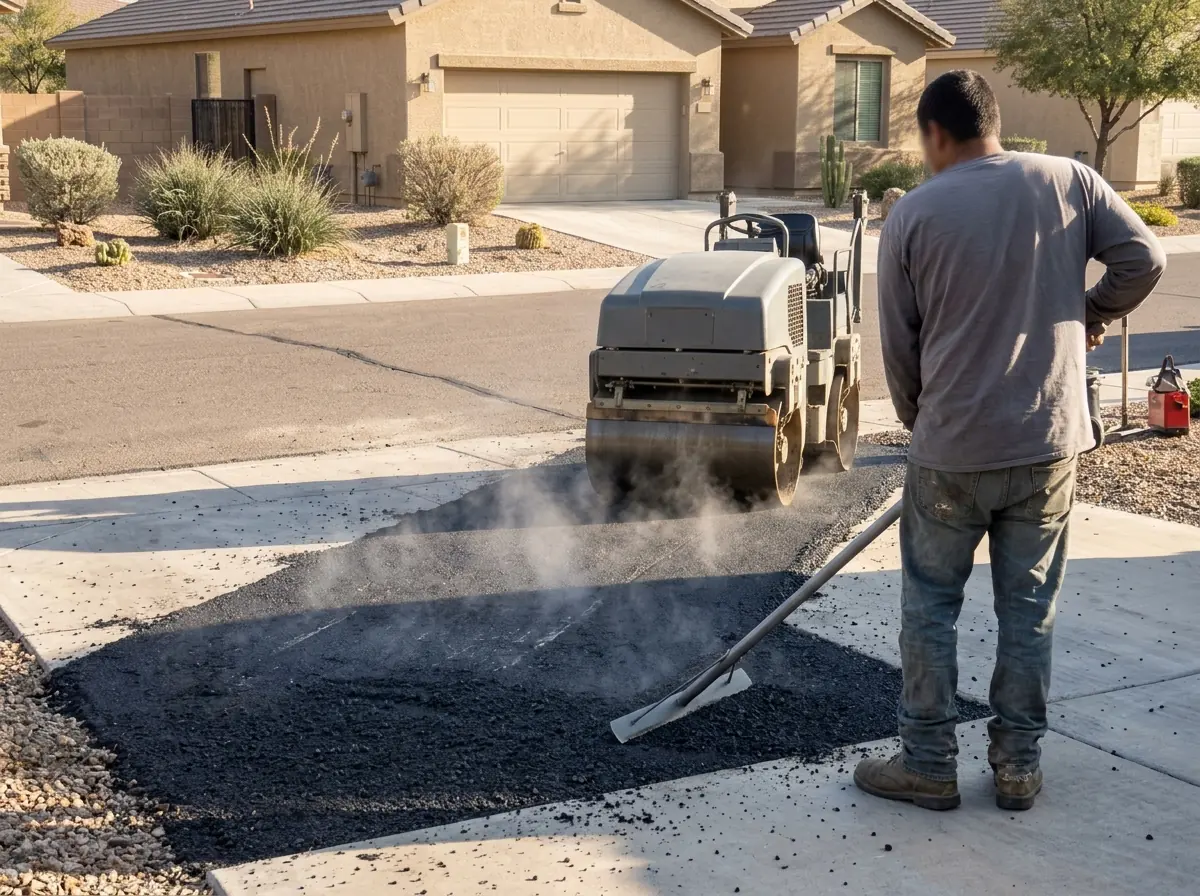
Why St. George homeowners and property managers call St. George Asphalt Co.
- The estimate costs you nothing and commits you to nothing
- Ask for thickness, base depth and tear-out on the written bid
- Your job goes to one paving contractor, never a lead auction
- Property owners pay nothing for the introduction
Asphalt Repair Cost by Damage Type
Repair prices vary more than paving prices because the job depends on what's underneath. Fixr's national figures:
Cracks
$100 to $400 per repairPotholes
$150 to $400Crumbling areas
$300 to $1,500Sunken sections
$500 to $3,000Driveway aprons
$200 to $1,000
HomeAdvisor's average across all driveway repairs is $2,471, with most between $1,069 and $4,028, because its range includes larger work such as resurfacing. Patch methods, from cold patch to saw-cut and infrared, are priced on asphalt patching, and per-foot crack prices are on crack sealing.
Repair, Resurface or Replace?
Damage type and age settle most of this. Here is how the cost guides split it:
Repair
Damage is local: a few cracks, a pothole, one sunken spot or a broken edge, on a driveway that is otherwise sound.Resurface
The base is sound but the surface is worn, cracked or raveled across a wide area. HomeAdvisor notes that an overlay does not fix underlying problems, so base failures get repaired first. See resurfacing.Replace
HomeAdvisor says replacement is needed when the surface is badly deteriorated, the gravel base has failed or drainage can't be fixed, and it reads alligator cracking as a sign the driveway needs a complete overhaul. Fixr adds that on driveways 25 years or older, repairs tend to be temporary. See driveway replacement.
If you get quotes for both a repair and a resurface, ask each contractor what they expect the cheaper option to buy in years.
See asphalt patching for how potholes and cut-out sections are filled.