
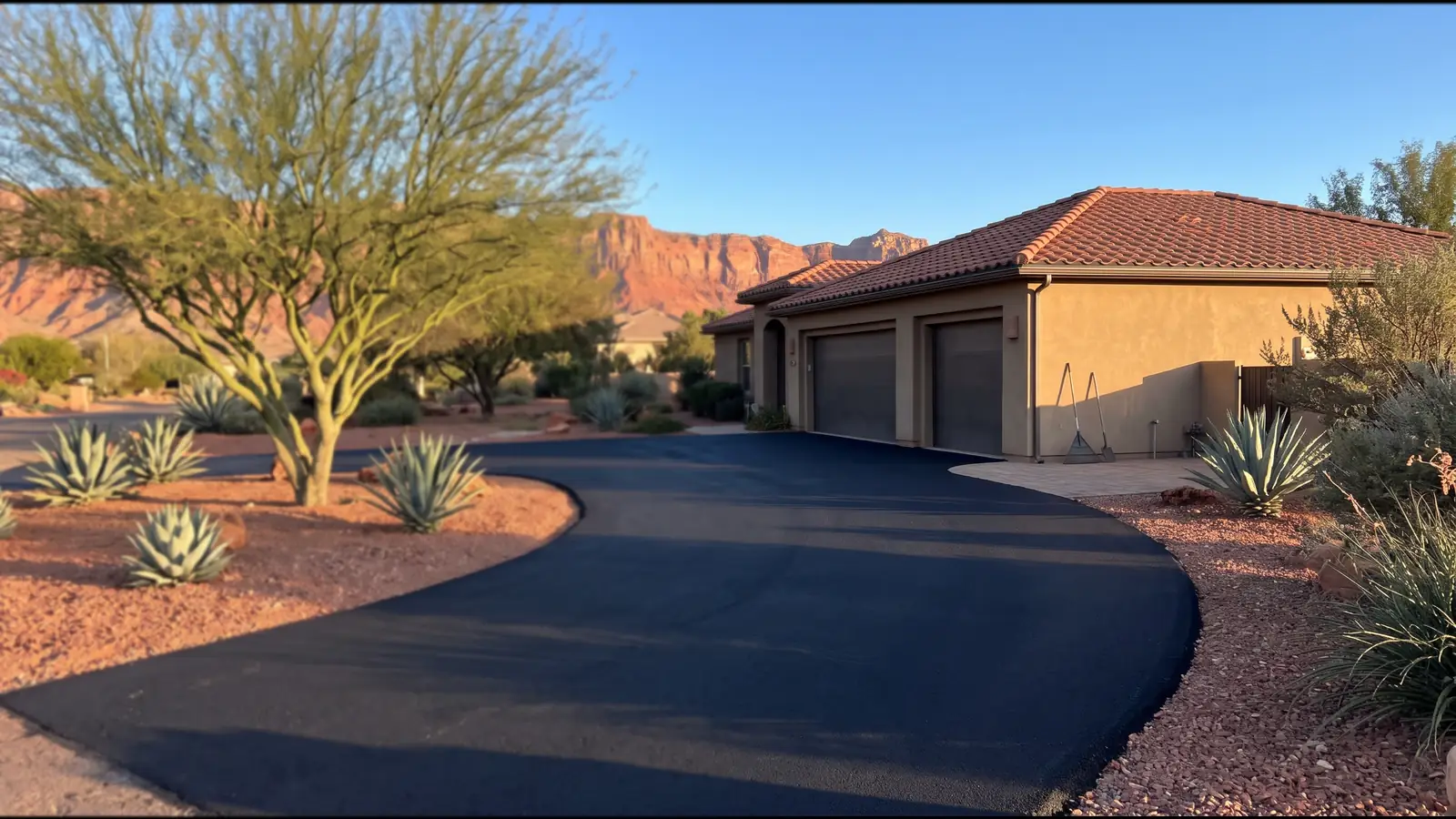
Asphalt Milling Jobs and What Each One Fixes
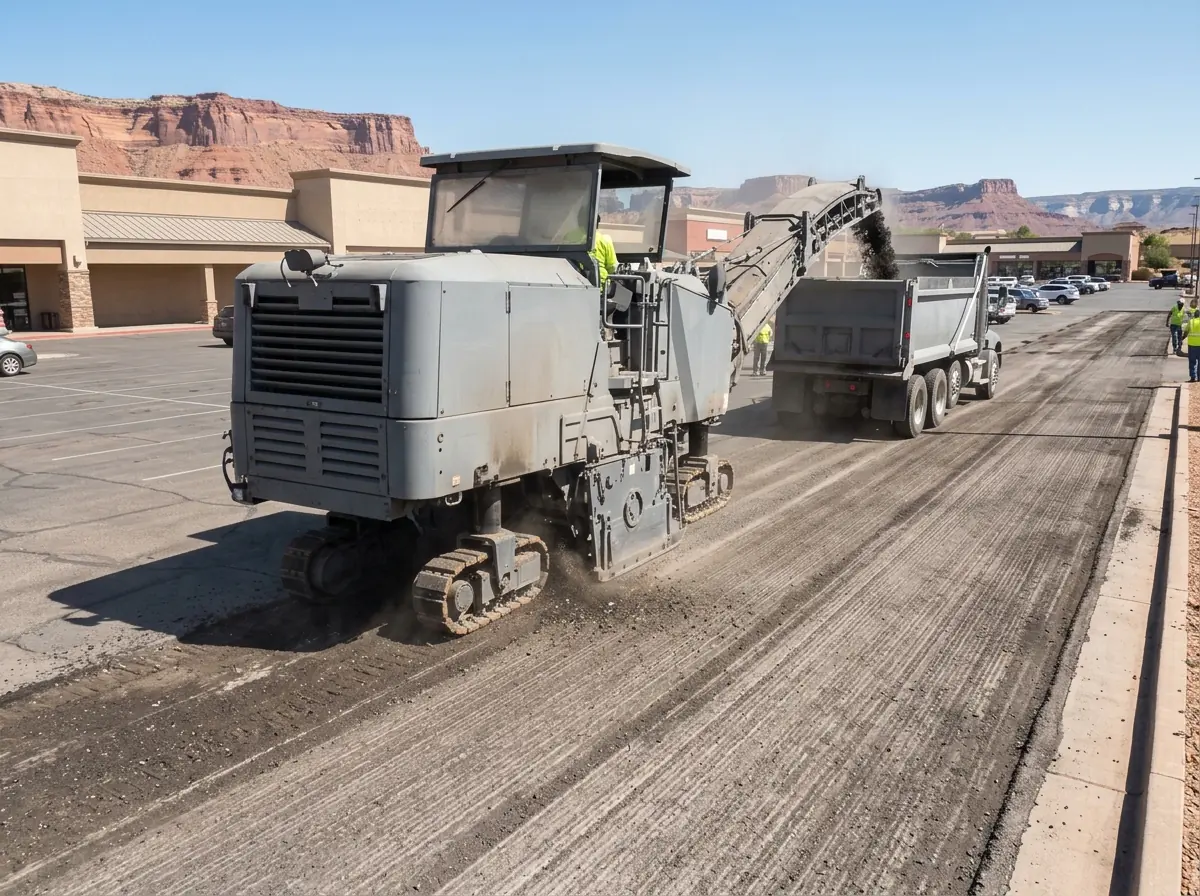
Mill-and-overlay of lots and roads
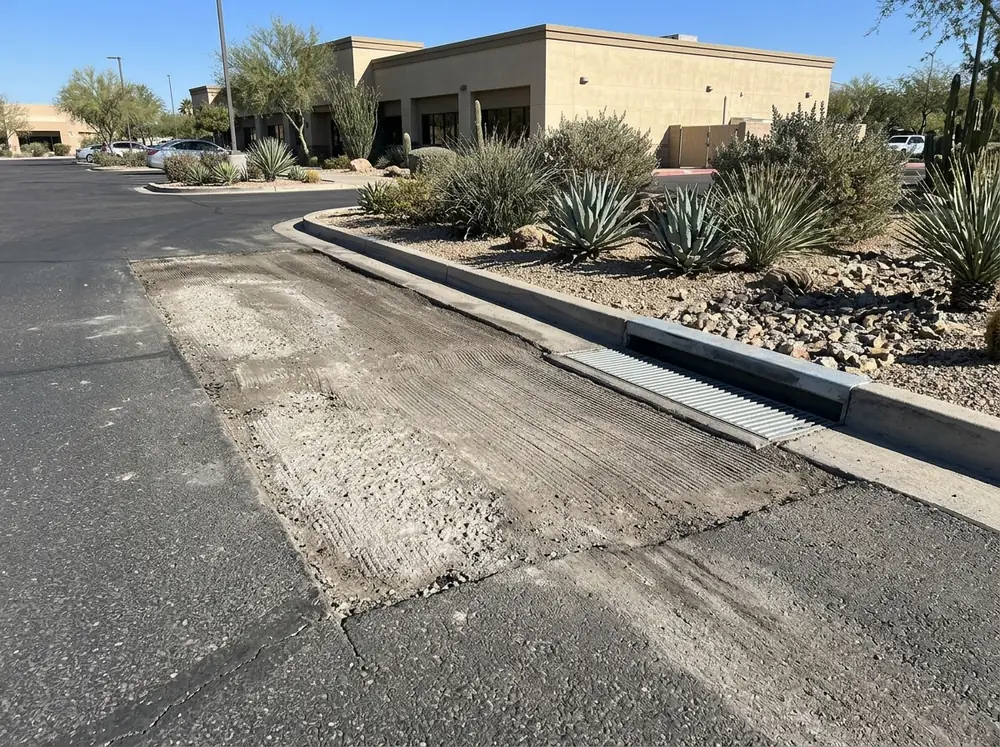
The most common reason to mill is to make room for new asphalt. Laying an overlay on top of a lot raises the surface at every curb, gutter and doorway. Grinding off the worn layer first keeps the finished grade where it was. The milled area gets swept, any soft spots underneath get patched, and paving follows, so ask how many days the grooved surface will carry traffic before the paver arrives. Overlay pricing and which surfaces qualify are on asphalt resurfacing.
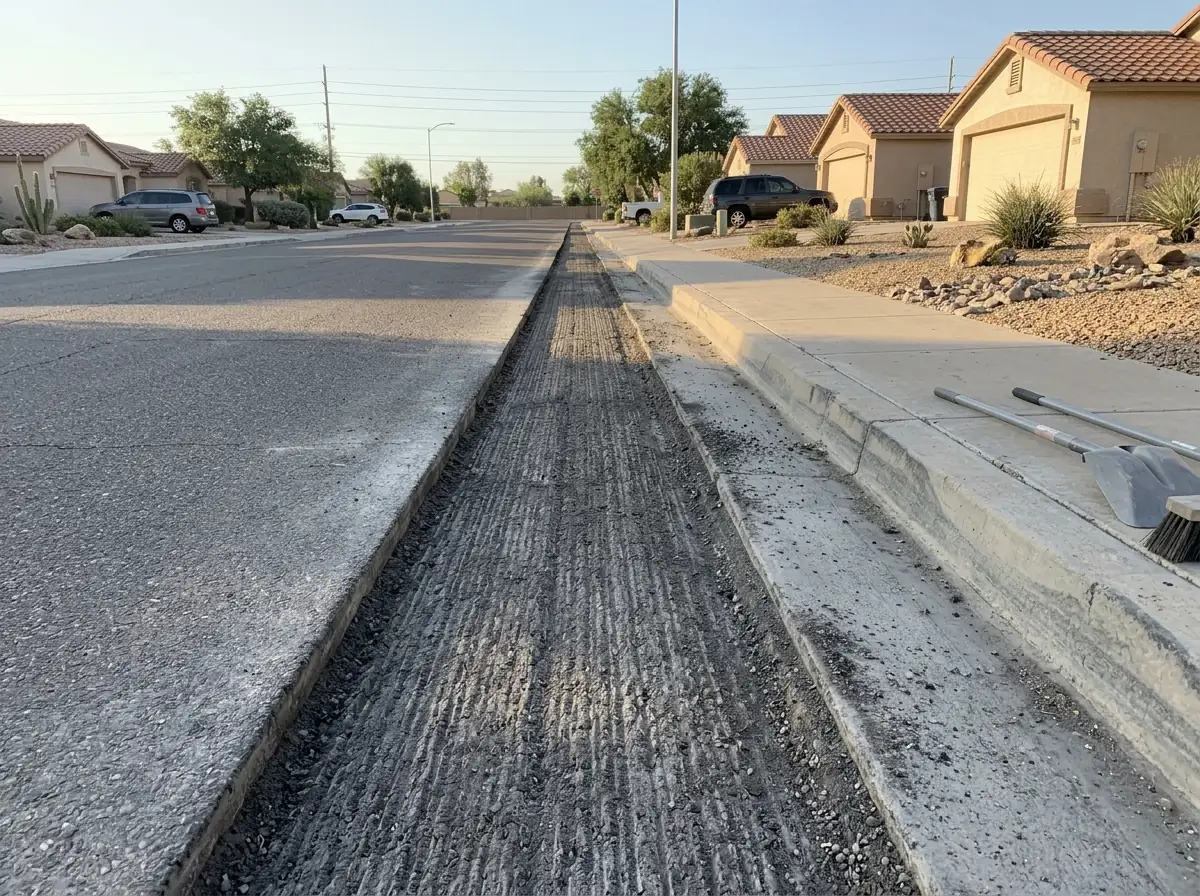
Edge milling at gutters and garages
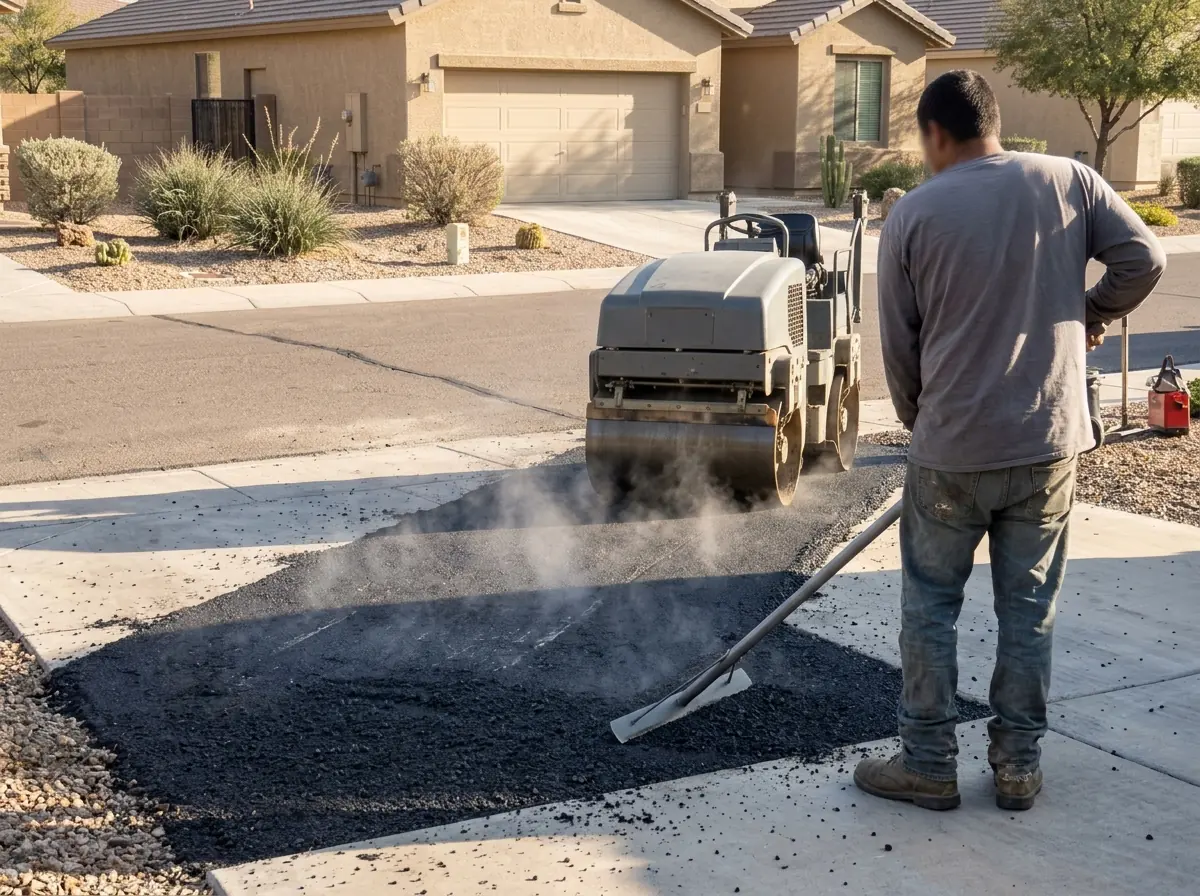
Sometimes only the edges need cutting: a strip along the concrete gutter, the joint at a garage slab, the line where a lot meets a sidewalk. Milling a wedge there, then overlaying the whole surface, lets the new asphalt meet the concrete flush instead of leaving a lip that trips people and holds water. On a driveway this is a short job, which is where per-day minimums bite, so ask for edge work to be combined with the overlay on one ticket.
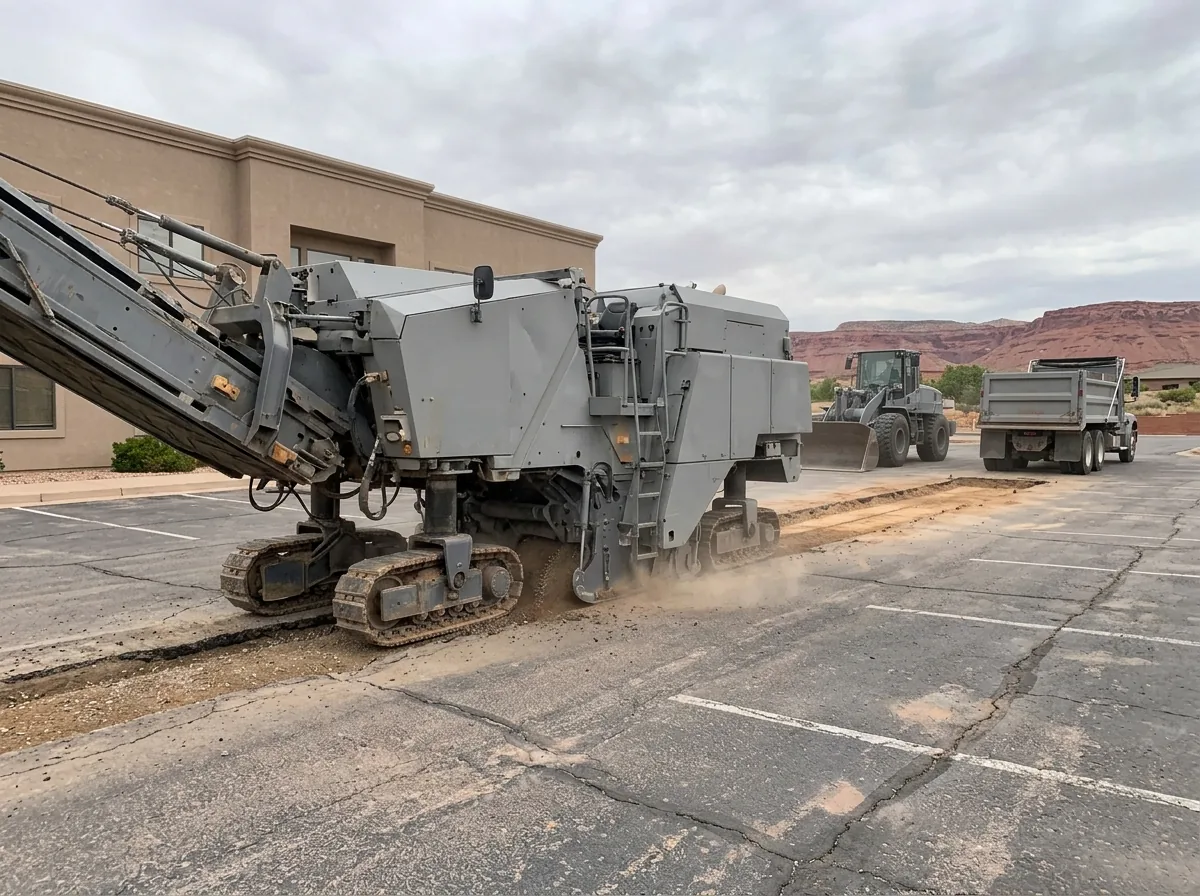
Full-depth milling for removal
When a lot or street is being rebuilt, the old asphalt has to come out. Federal guidance names two ways: milling, which takes up to 2 inches per pass, and full-depth removal, where equipment rips and breaks the pavement and loaders scoop it into trucks. Thick pavement takes several milling passes, so the choice often comes down to depth, how close the work is to curbs and utilities, and what happens to the material. A related process, cold in-place recycling, mills down as far as 6 inches, mixes the material with emulsion and lays it back in one pass; it's a road-scale method, and you'd hear about it on a street or long private road rather than a parking lot.
Profile milling to fix drainage and bumps
Milling can also reshape a surface. A crew cuts high spots, humps at old patches or a crown that sends water the wrong way, so the overlay can be laid at an even thickness with the slope you want. On a flat lot that ponds after a storm, profile milling plus overlay can redirect water toward the inlets without tearing out the base. If the low spot comes from the base sinking, milling won't fix it. Driveway drainage covers basins, swales and why water matters so much here.
Why St. George homeowners and property managers call St. George Asphalt Co.
- The estimate costs you nothing and commits you to nothing
- Ask for thickness, base depth and tear-out on the written bid
- Your job goes to one paving contractor, never a lead auction
- Property owners pay nothing for the introduction
Asphalt Milling Cost and What Moves It
Milling is priced by the square yard on large jobs and by the day on small ones. No national cost guide we could read first-hand covers milling alone, so the numbers come from a public bid: four contractors bid a January 2026 city contract at $2.55 to $5.25 per square yard to mill 0 to 1.5 inches on 40,000 square yards. That bid was in Florida, so treat it as a sense of scale, not a St. George price.
Depth
Deeper cuts mean more passes and more trucks.Area
Under a day's work, the day rate sets the price whatever the square footage.Who keeps the millings
In the same bid, unit prices were the same or lower when the contractor kept the millings than when the city did. Millings sell by the ton, so ask whether the price reflects who keeps them.Access and edges
Tight corners, manholes and valve boxes need slower work or hand tools.
Where the Millings Go
Asphalt pavement is the most recycled material in the United States. In 2024 an estimated 101.4 million tons of reclaimed asphalt pavement (RAP) went into new mixes, 99% of RAP was put back to use, and the average new mix now holds more than 20% RAP. RAP can also be used as a base course or fill once it's crushed and screened. Some millings end up as driveways and yard surfaces; asphalt millings driveways covers what they cost laid that way.
Before any milling, ask whether the bid includes sweeping the milled surface and for the contractor's Utah license number, which you can check with DOPL.
See parking lot repair when milling is one step in a wider fix for a worn commercial lot.