
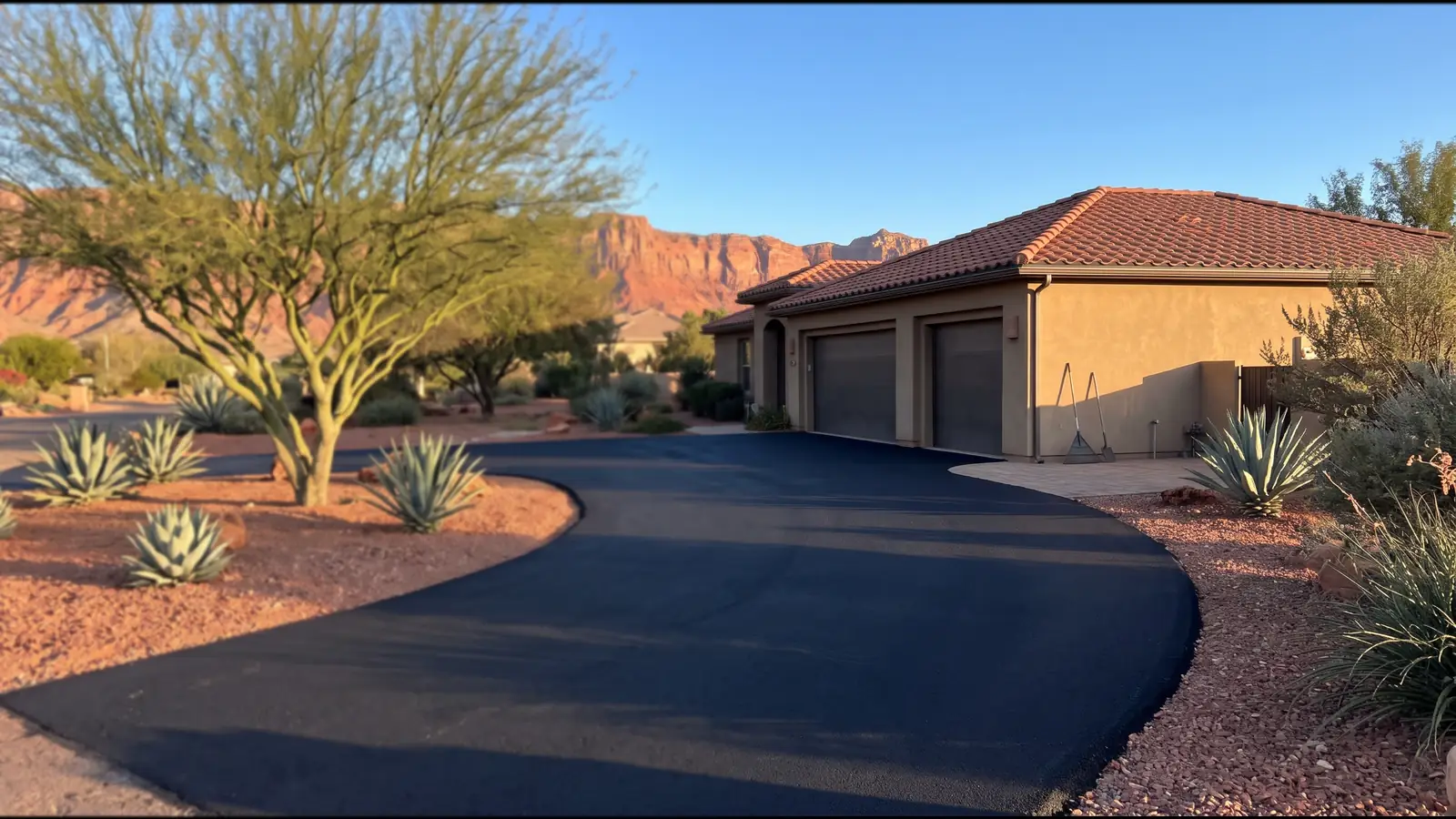
Private Road Paving by Kind of Lane
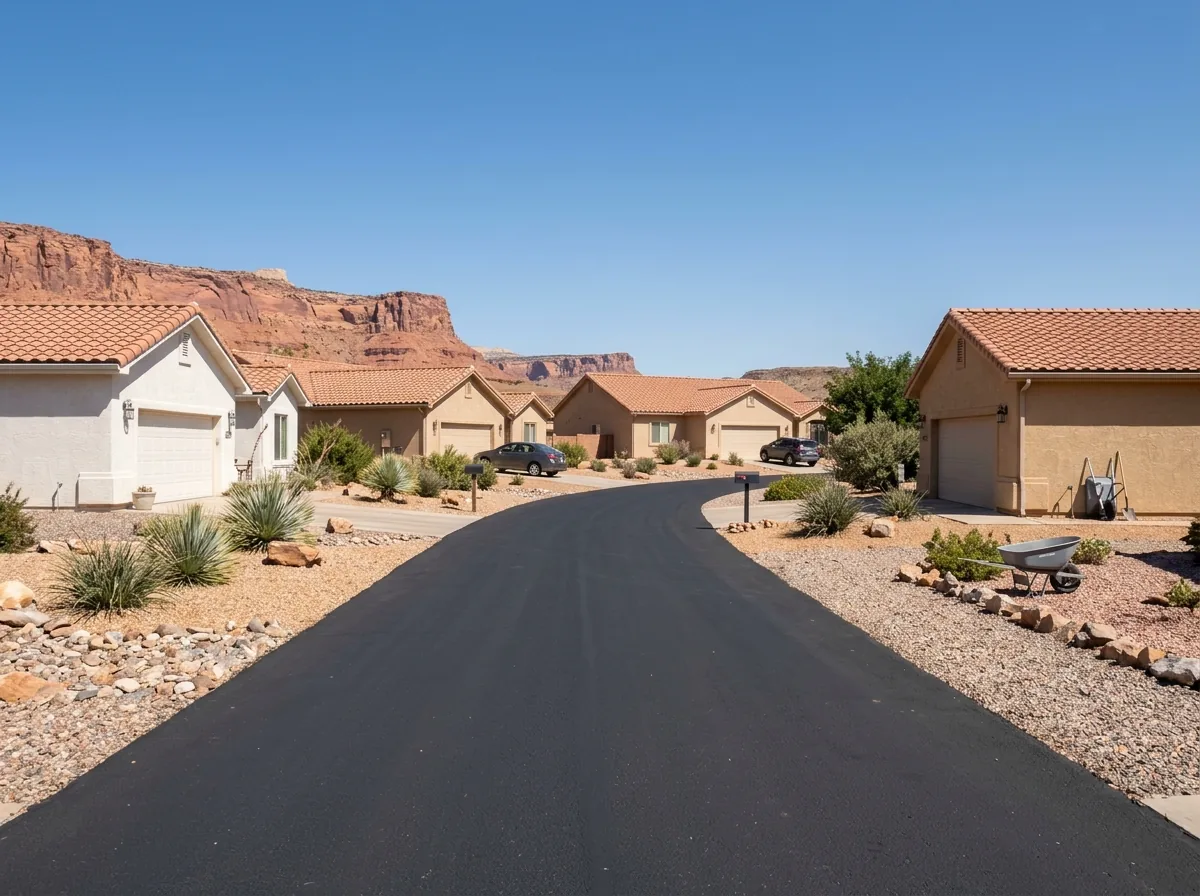
Shared private lanes
A lane that three or four households drive every day is a small road, and it gets road traffic: trash trucks, delivery vans, a moving truck now and then. The paving itself is the easy part. The hard part is that several owners pay for it. Before anyone signs a bid, agree in writing on how the cost splits (by frontage, by equal shares, or by lot), who holds the contract, and who pays for crack sealing and sealcoat in five years.
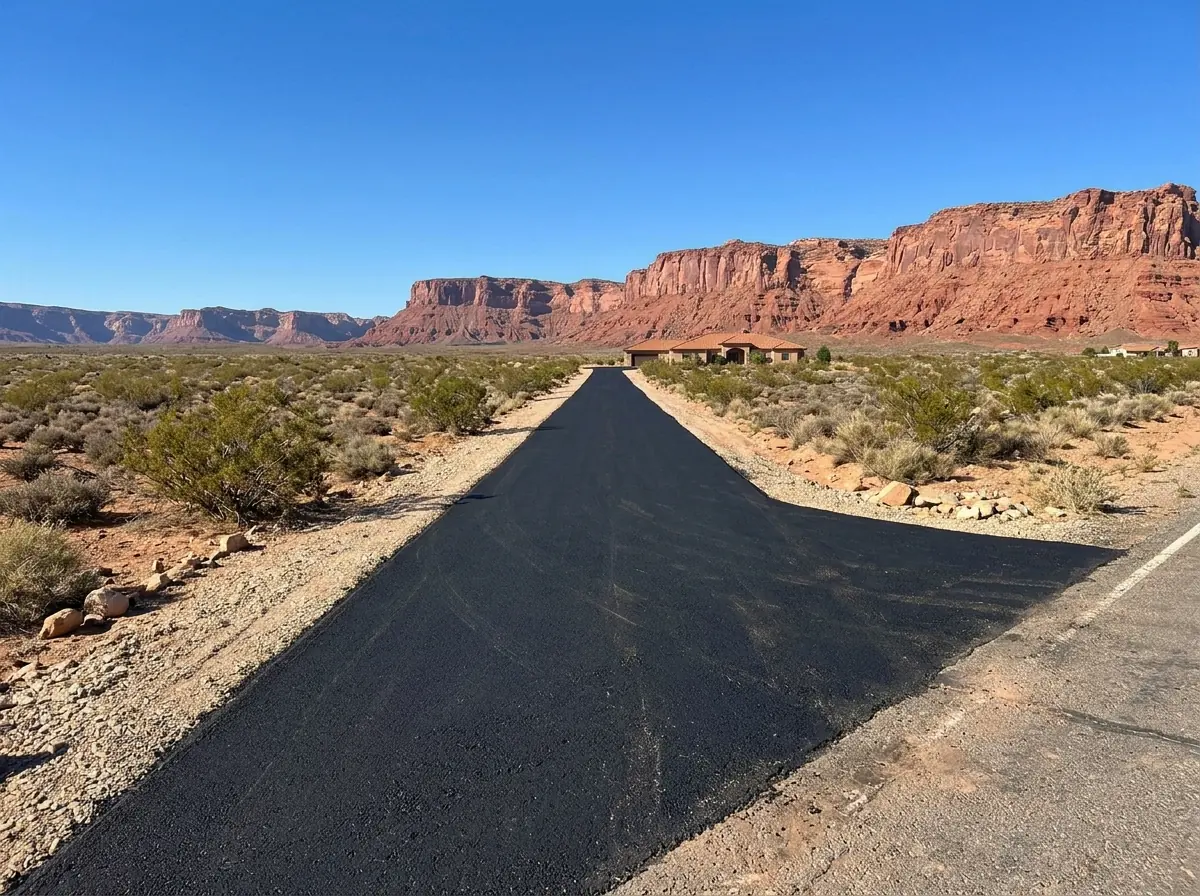
Long driveways on large lots
A driveway several hundred feet long is priced like any driveway, by the square foot, but length changes the details. A long run needs a crown or cross slope so rain sheds to one side instead of running down the middle, and it may need a pull-out so two cars can pass. If the house sits more than 150 feet from the street, the fire access rules below can apply to the driveway too.
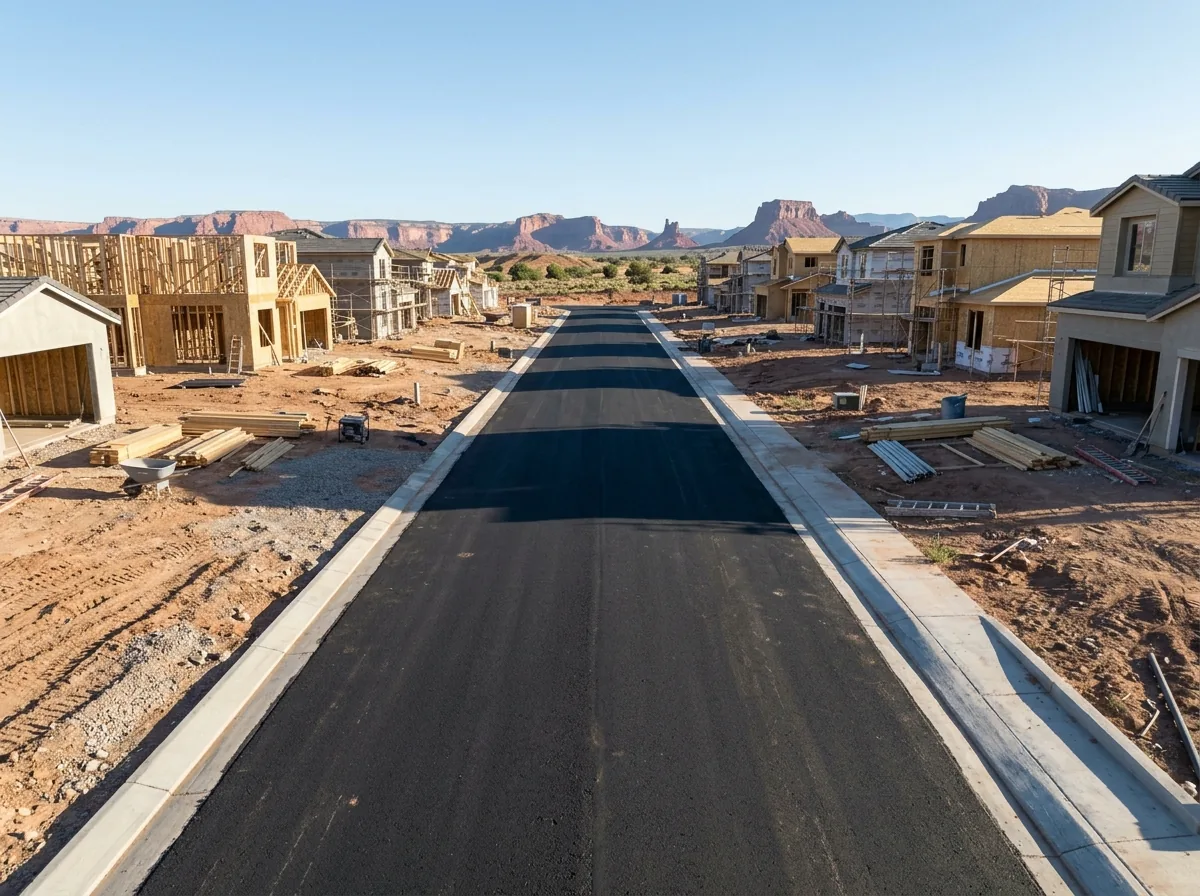
Subdivision streets before city acceptance
A developer building streets the City will later own works to the City's own book. St. George's Standard Specifications for Design and Construction govern infrastructure in public streets, rights-of-way and easements, and the City treats those standards as minimums. A street that stays private still needs a pavement section someone has designed. For scale, the Asphalt Paving Association of Iowa's design guide gives residential streets with 50 to 700 vehicles a day 5 to 7.5 inches of full-depth asphalt, thicker on weak subgrade. Ask whether the bid follows a geotechnical report or a city standard detail.
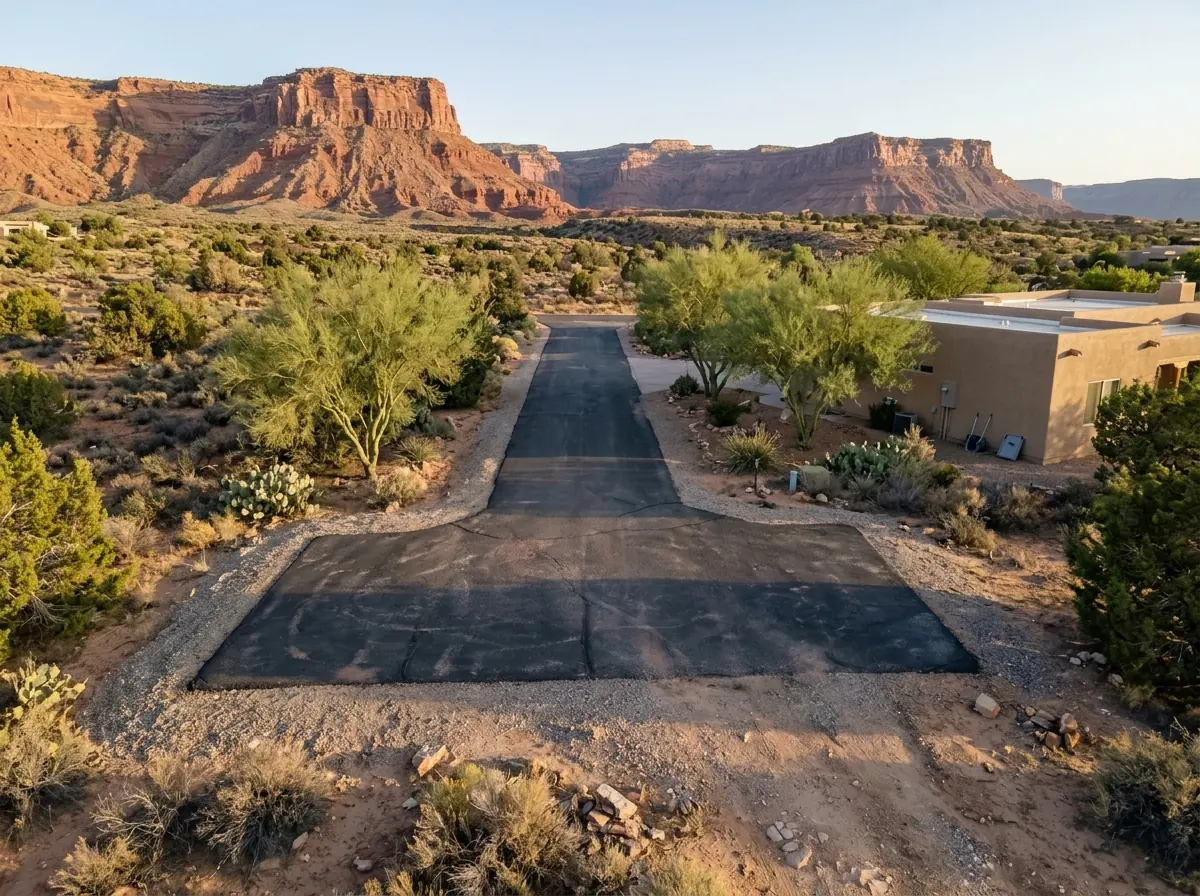
Fire access lanes and turnarounds
When a private road is the only way a fire engine can reach a house, it has to meet the fire code, whatever the neighbors would prefer. That means width, a surface that holds a heavy truck in any weather, and room to turn around at the end. The next section lists the numbers.
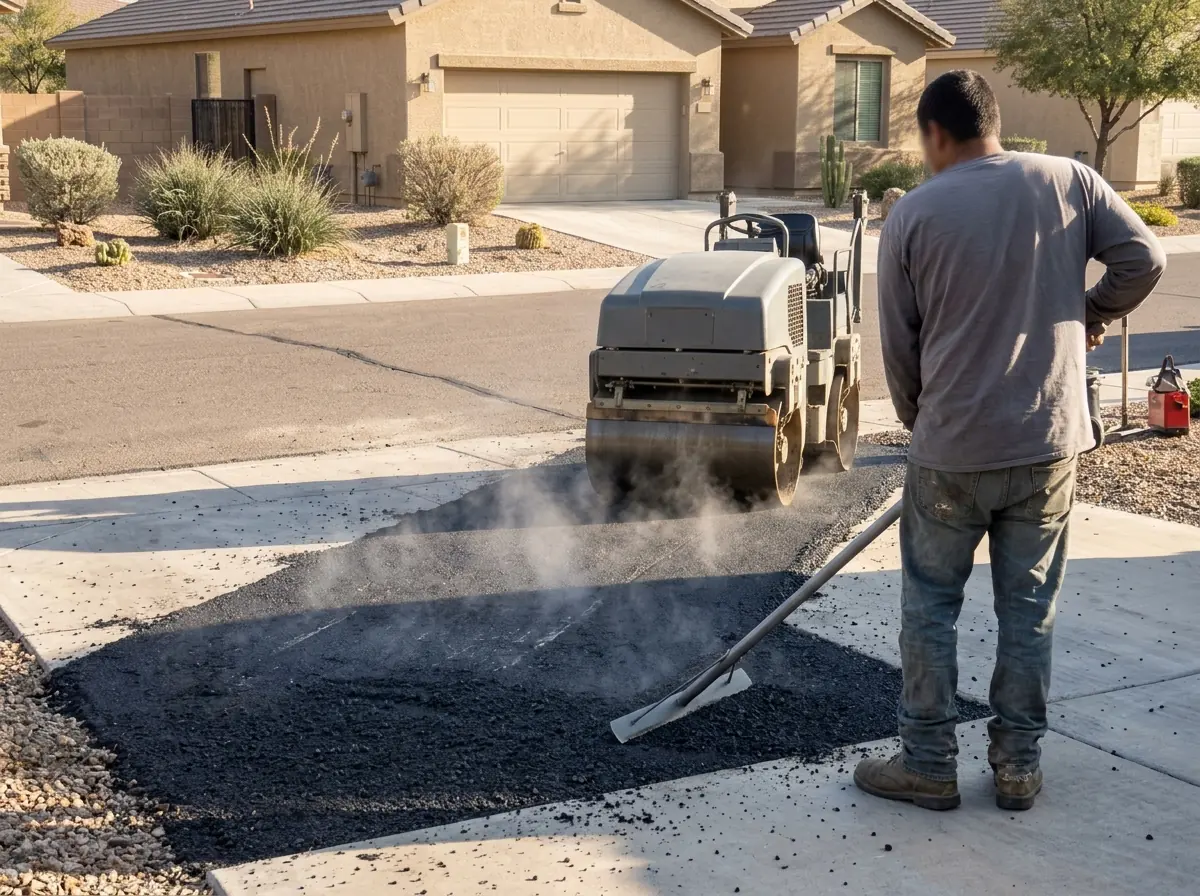
Why St. George homeowners and property managers call St. George Asphalt Co.
- The estimate costs you nothing and commits you to nothing
- Ask for thickness, base depth and tear-out on the written bid
- Your job goes to one paving contractor, never a lead auction
- Property owners pay nothing for the introduction
Private Road Fire Access Rules in Utah
Utah's State Fire Code adopts the 2024 International Fire Code without its appendices. Section 503 of that code sets the baseline every fire access road in the state works from:
Reach
The access road has to come within 150 feet of every part of a building's first-floor exterior walls.Width and height
At least 20 feet of unobstructed width and 13 feet 6 inches of vertical clearance.Surface
Built to carry the weight of fire apparatus and surfaced for all-weather driving.Dead ends
Any dead-end access road over 150 feet long needs an approved turnaround.Grade and turning radius
Set by the local fire code official based on the department's trucks.No parking
The required width has to stay clear at all times, parked cars included.Speed bumps
Traffic calming devices are prohibited on fire access roads unless the fire code official approves them.
The ICC's optional Appendix D adds specifics a city may adopt on its own: a surface for apparatus up to 75,000 pounds, 26 feet of width where a hydrant sits on the road, a 10 percent maximum grade, and for dead ends of 151 to 500 feet a 120-foot hammerhead, a 60-foot "Y" or a 96-foot cul-de-sac. Utah's statewide code leaves the appendices out, so ask the St. George fire code official which numbers apply before the turnaround is laid out.