
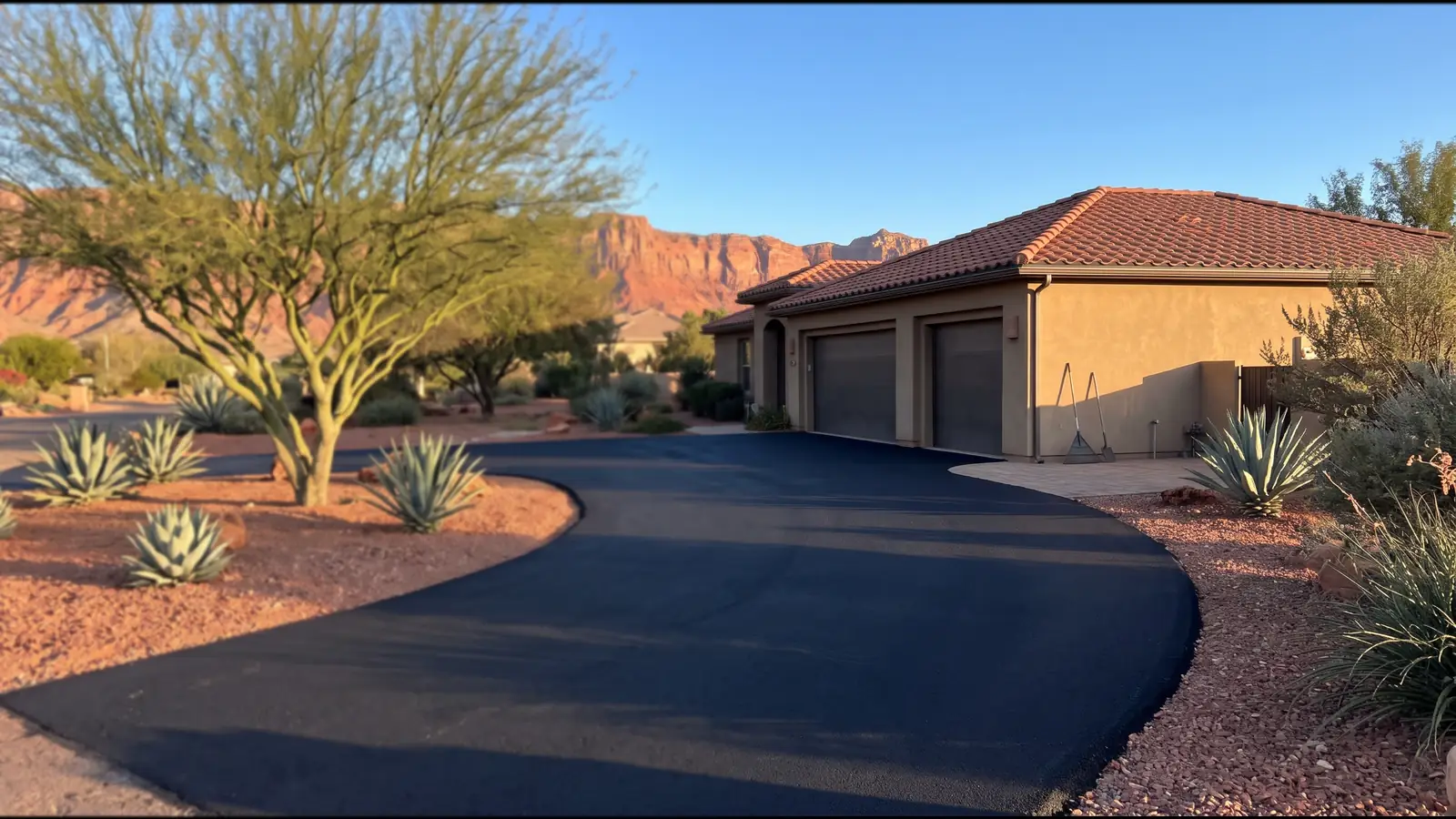
RV Pad Paving Types by What Parks There
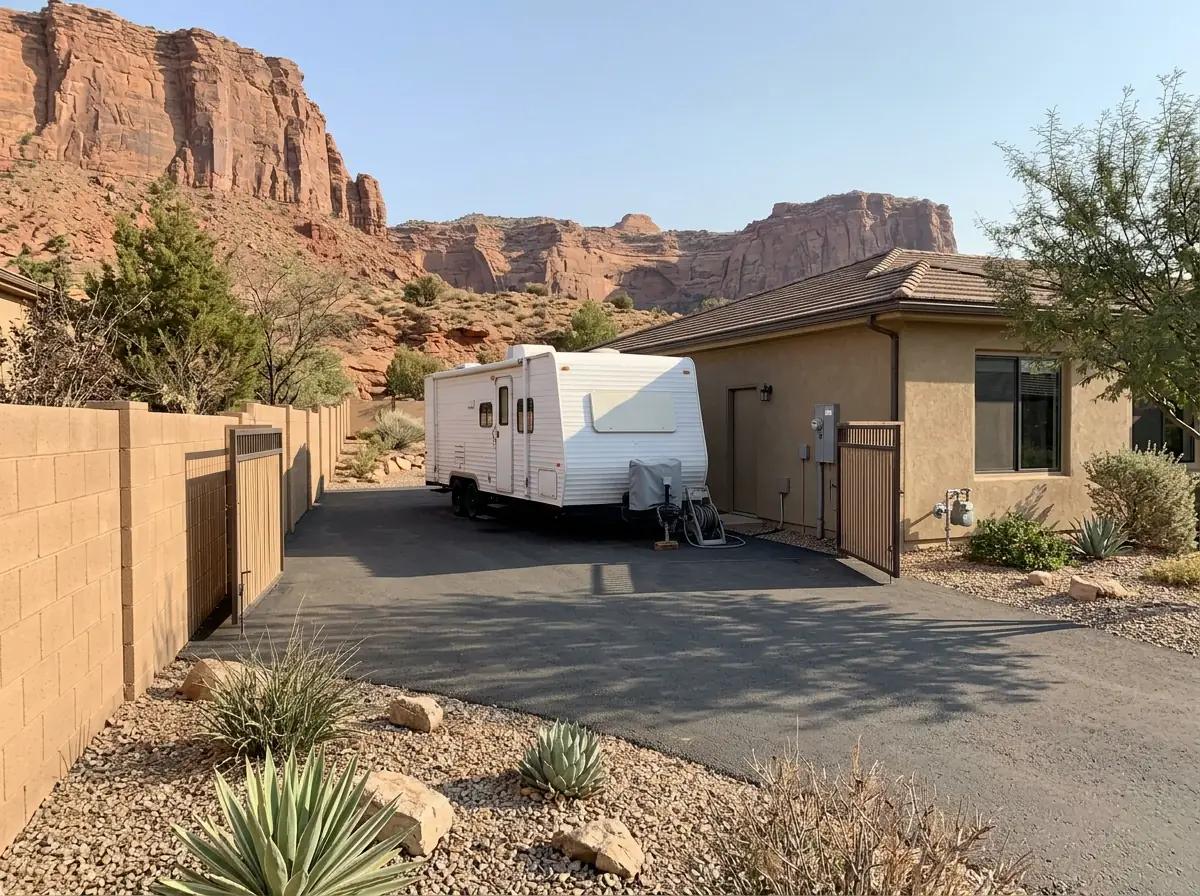
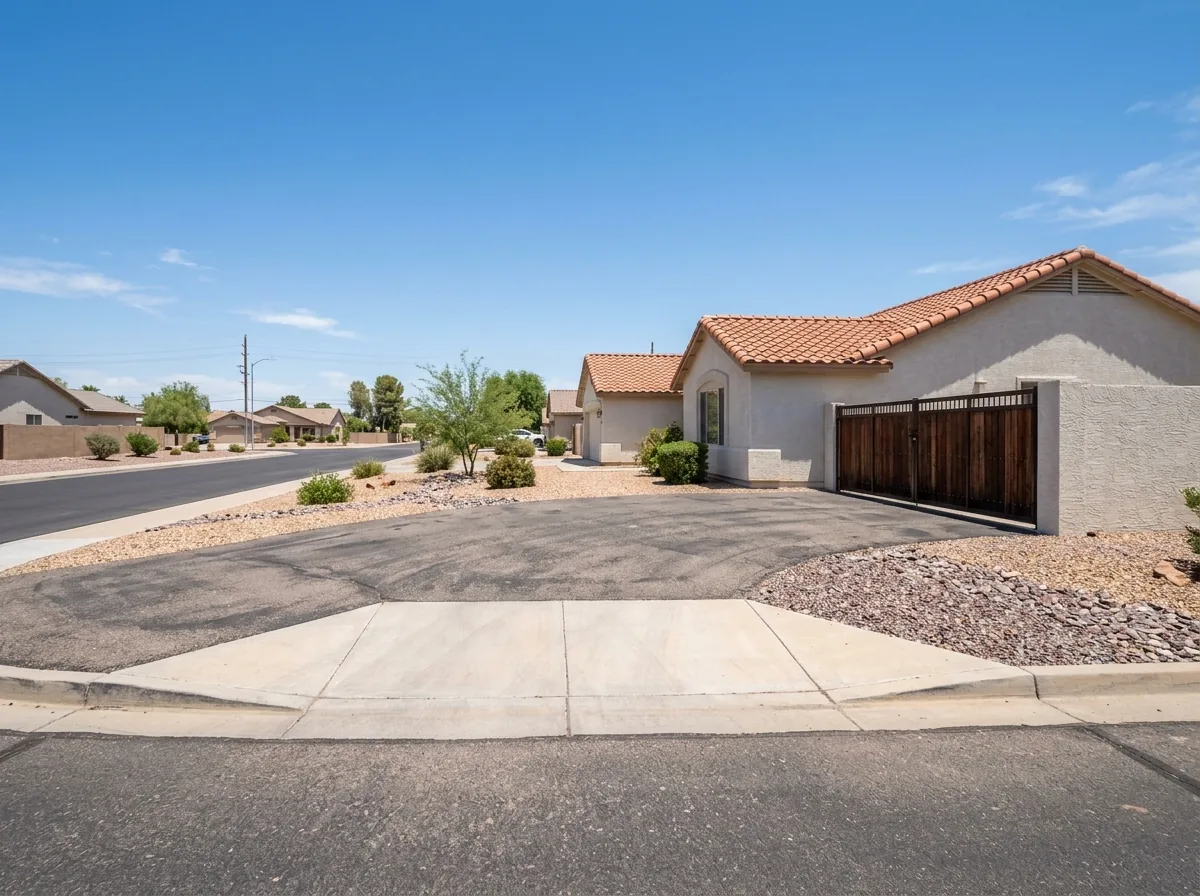
Side-yard RV pads behind a gate
The side yard, outside the front setback, is one of the places city rules allow an RV to park (see the rules below). The pad runs from the driveway or a second curb approach, through a wide gate, along the house. Measure the gate opening and the narrowest point between the house and the property-line wall before anyone quotes: that clearance, not the pad length, often decides what rig fits. A paving contractor will also want to know whether a block wall footing or sprinkler lines run under the strip.
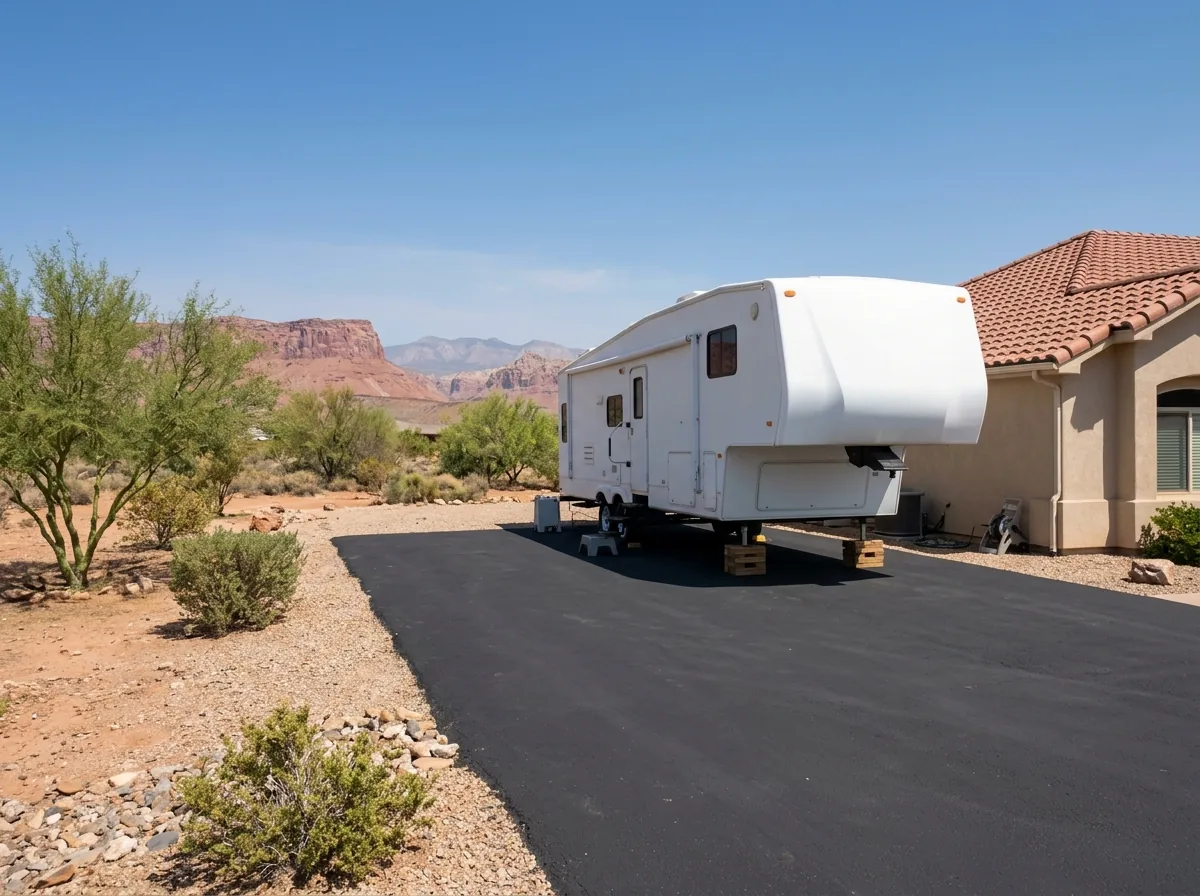
Pads for motorhomes and fifth wheels
A motorhome or fifth wheel puts far more weight on the pad than a car, and much of it lands on a few small points: tires, leveling jacks and landing gear. That is why the pad gets the heavy-vehicle build-up listed above, not the car spec. Asphalt also softens in summer heat, so ask about putting boards or pads under jacks and landing gear to keep them from pressing into the surface. Ask that the pad be sized with room to open slide-outs and walk around the rig.
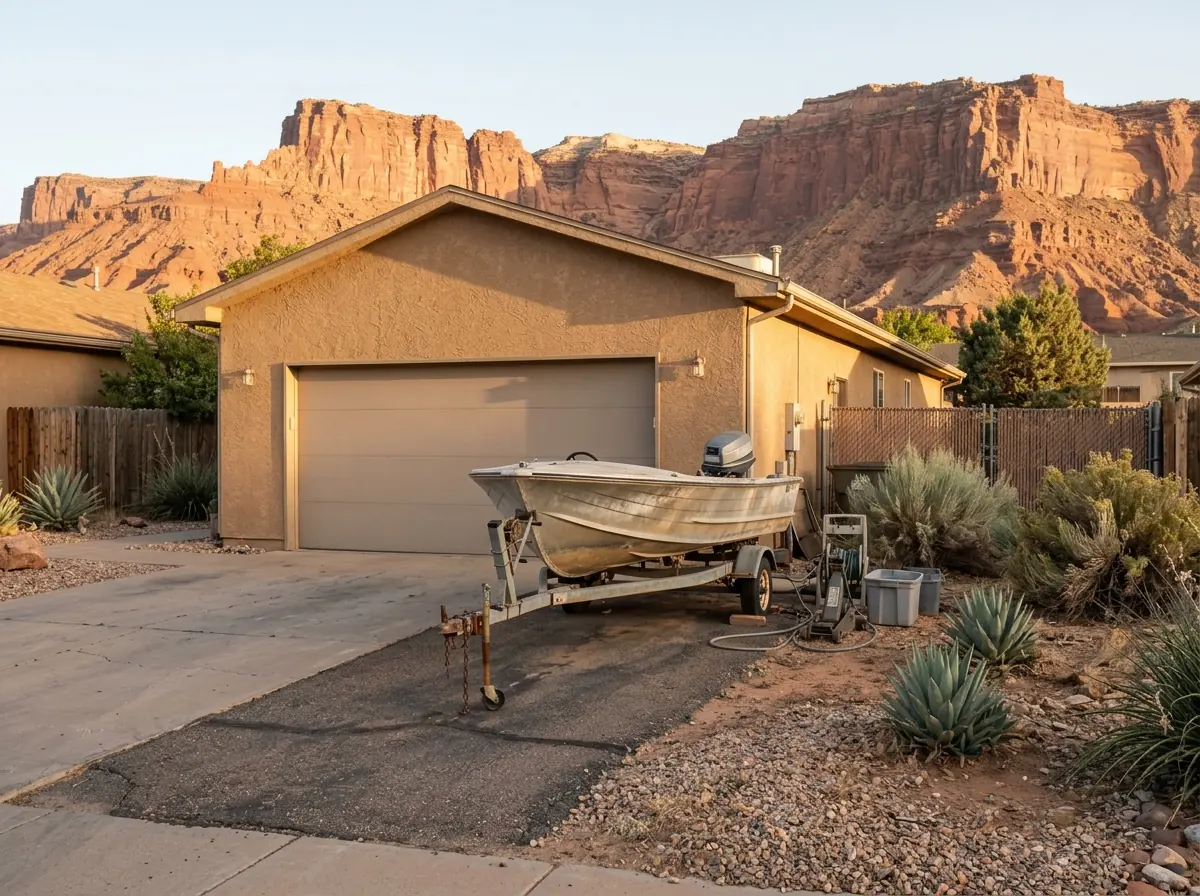
Boat and trailer pads
A boat, utility trailer or pair of side-by-sides needs less length and less depth than a motorhome, and the pad can often be a short widening of the existing drive. The weight still concentrates on the trailer tongue and axles, so the base under the tongue jack and wheels needs the same care as the asphalt on top. If a truck will also pull the trailer onto the pad, price it at the heavier spec as well.
Approaches and turn-in areas
Long rigs need room to swing in from the street. That can mean widening the driveway apron, adding a flared turn-in, or paving a strip across the front yard to reach the side gate. Digging into the street to widen the approach needs a city permit with bonding (driveway extensions has the details). Check the turning path with the actual rig before the layout is set: a pad you can't back onto is wasted money.
Why St. George homeowners and property managers call St. George Asphalt Co.
- The estimate costs you nothing and commits you to nothing
- Ask for thickness, base depth and tear-out on the written bid
- Your job goes to one paving contractor, never a lead auction
- Property owners pay nothing for the introduction
St. George RV Parking Rules to Check Before You Pave
The city's code enforcement office answers "Where can I park my RV?" directly:
On the driveway
Allowed, as long as the RV doesn't block a public sidewalk or the street.Not in the front setback
An RV can't be parked in the front setback or an identified landscape area. A typical front setback is 25 feet, and a corner lot has two front setbacks.Beside the house
An RV may be parked at the side of the home, outside the front setback.Surface
That side area has to meet the city's parking lot standards: a concrete pad, asphalt or gravel.HOA rules
An HOA can set its own rules on driveway appearance and materials; check them before you sign a bid (homepage has more on HOA approval).
What to Ask Before an RV Pad Is Paved
Thickness
Does the bid list asphalt thickness after compaction and the base depth under it, and do both match a heavy-vehicle spec?Base testing
Will the base be proof-rolled before paving? Grading and base preparation explains the test.Slope
Which way will water run off the pad, and does it head away from the house and the neighbor's wall (driveway drainage)?First use
How long should the rig stay off the new asphalt? Heavy vehicles wait longer than cars (cure times).Future hookups
If you might add power or water at the pad later, ask whether conduit or a sleeve should go under the base now.
See driveway extensions for widening the drive in front of the gate at the same time.