
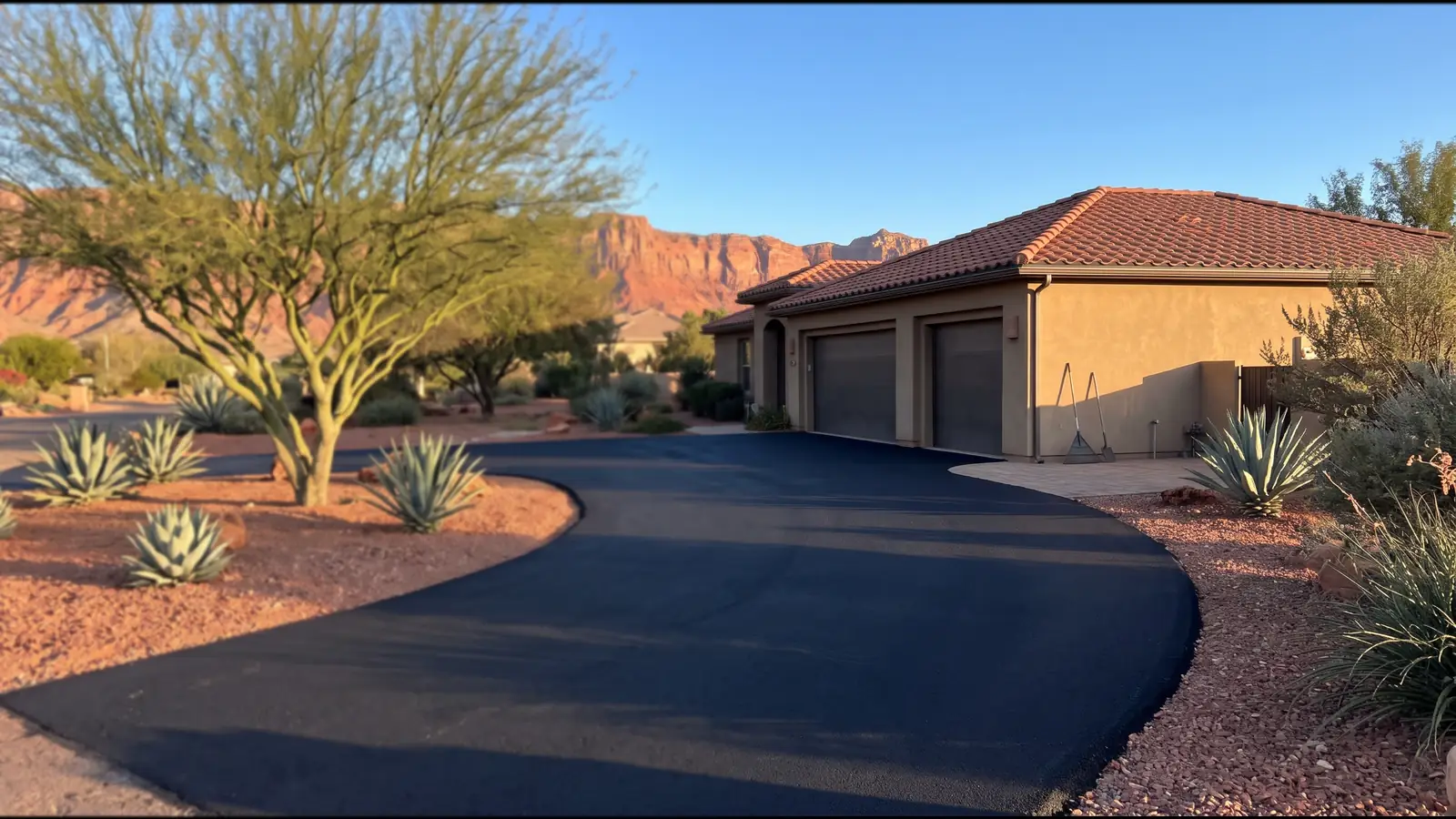
Gravel Driveway Paving by Starting Condition
Paving over an existing gravel base
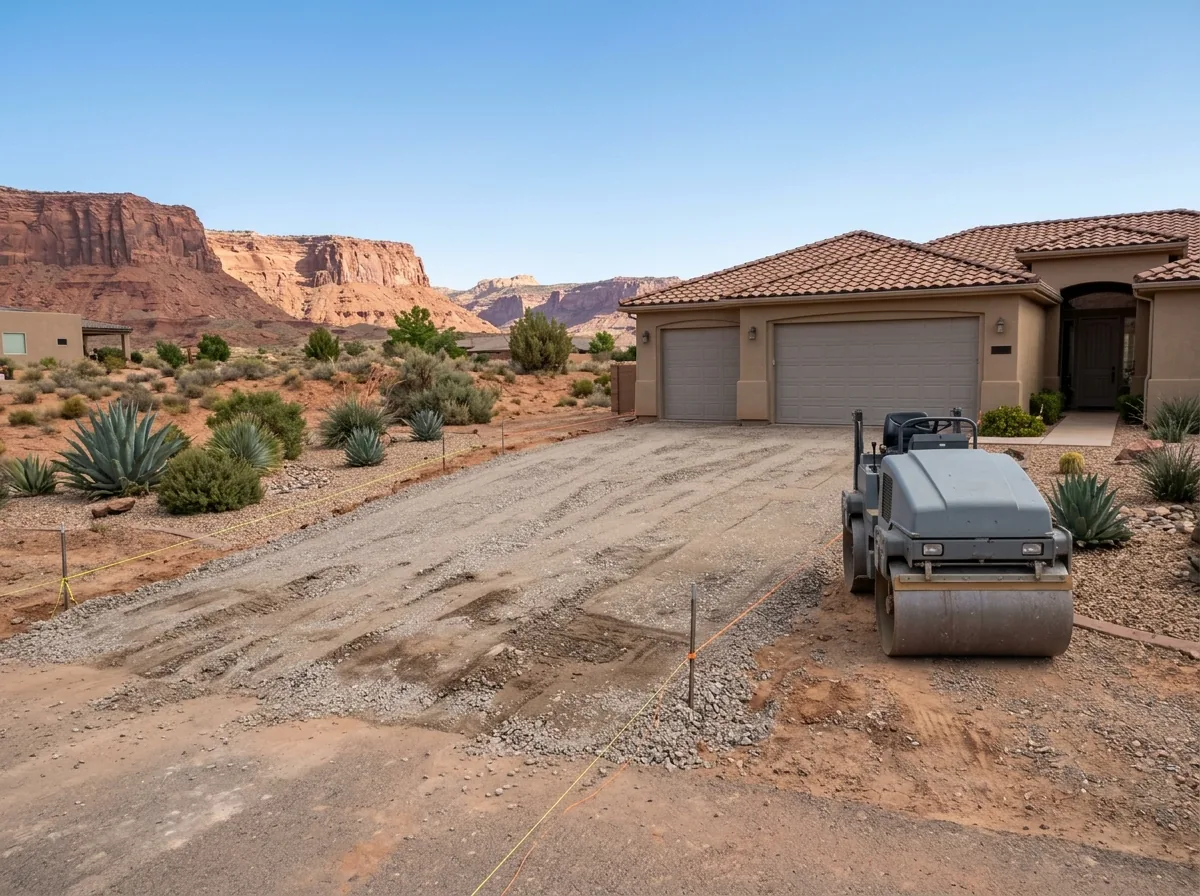
A drive of angular crushed stone with fines in it, laid in layers and packed by years of traffic, can often become part of the base. The contractor regrades it, adds road base where it's thin, compacts it and paves on top. Decorative gravel is a different story: cost guides warn that rounded stone such as pea gravel or river rock doesn't compact well and shifts under wheels, so it usually has to come out first.
- Typical gravel build: a 3- to 4-inch base of crusher run under 2 to 3 inches of top stone.
- What asphalt wants underneath: more than that for cars, and more again for trucks (base spec).
Dirt and desert-soil driveways with no base
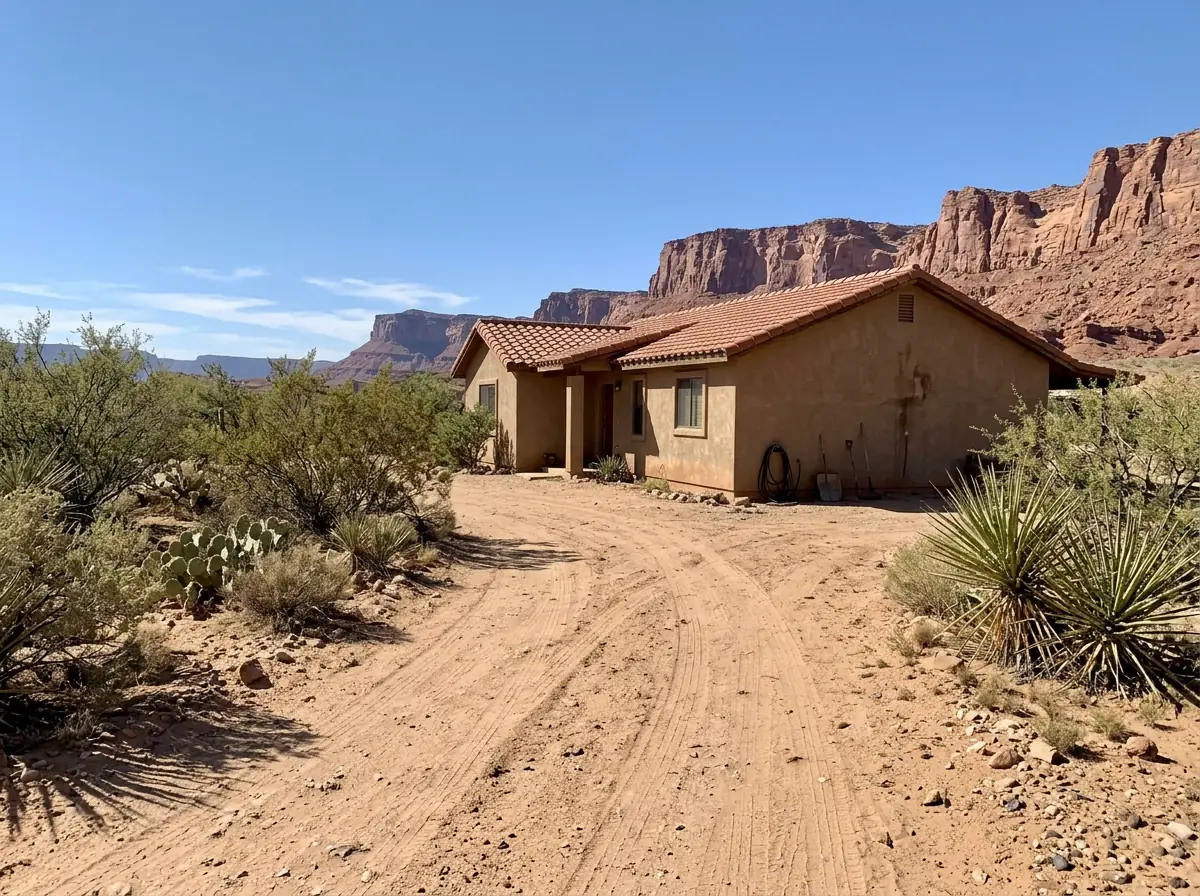
A drive that is just packed native soil has no base to reuse. The full depth of road base has to be brought in, spread and compacted before any asphalt arrives, so these jobs cost more than paving over a usable base. The soil type matters as much as how hard it looks in July: clay that swells when wet and ground that settles once it's soaked are both mapped in the St. George area, and grading and base preparation explains how a crew deals with them.
Rutted and washboarded gravel drives
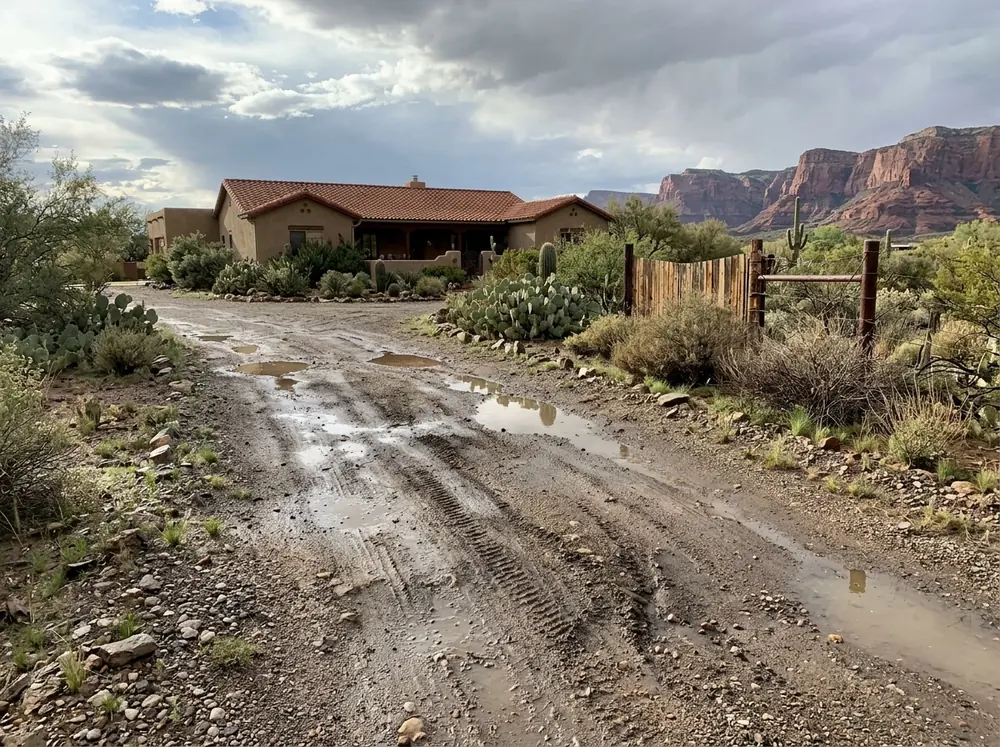
Ruts and washboarding say something about the ground under the stone. Cost guides point to poor grading as the cause of puddles, erosion and gravel that walks out of place, and Angi treats deep ruts, drainage failures or a failing sub-base as signs a gravel drive needs rebuilding rather than more gravel. Paving straight over that would lock the same soft spots under new asphalt. Expect the contractor to dig out the worst ruts, fix the slope and proof-roll the base before paving.
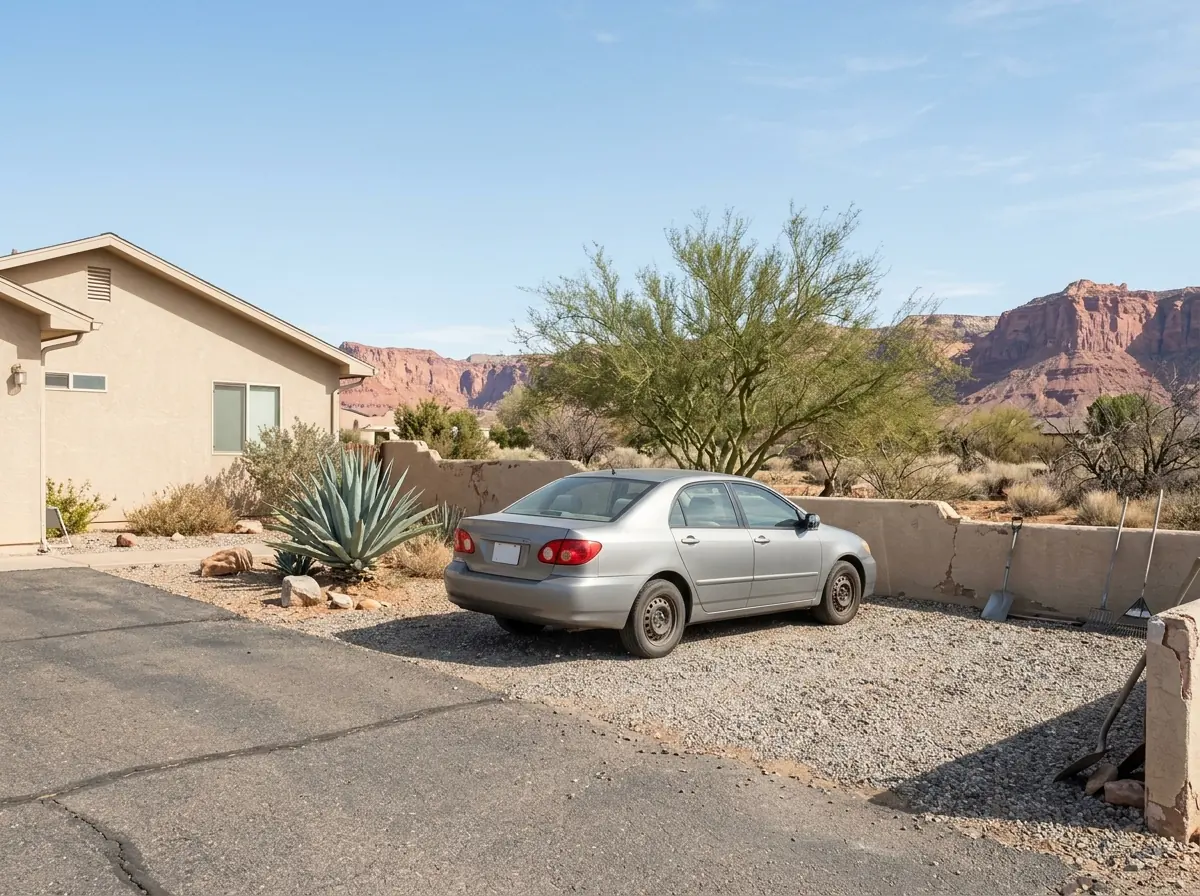
Gravel parking pads beside the house
Many homes have a strip of gravel next to the driveway for a third car or a trailer. St. George code is specific about where cars can sit. Parking on front lawns, sidewalks, required landscape areas and the front or street-side setback is not allowed, except that the front setback may be used on an approved paved surface, and the side front setback area may be gravel. The city's code enforcement office describes a typical front setback as 25 feet, and a corner lot has two. So a pad inside the front setback needs paving to be legal parking, while one in the side front setback can stay gravel. Ask for the pad and the drive to be priced and paved as one job.
Why St. George homeowners and property managers call St. George Asphalt Co.
- The estimate costs you nothing and commits you to nothing
- Ask for thickness, base depth and tear-out on the written bid
- Your job goes to one paving contractor, never a lead auction
- Property owners pay nothing for the introduction
What Changes the Price of a Gravel-to-Asphalt Conversion
How much of the gravel is usable
Clean, compacted crushed stone stays as base; rounded or dirty gravel comes out and gets hauled.How much base gets added
Every inch of new road base over the whole drive adds material and compaction time.Slope and shape
A drive that has to be reshaped so water runs off adds grading; long, curved drives add more (private road paving covers the longest ones).The street end
A gravel drive that meets the street with no paved apron may need one, and work in the street takes a city permit (driveway extensions explains it).Drainage
If water already pools on the gravel, it will pool on asphalt too unless the bid fixes the grade or adds a drain (driveway drainage).
How a Gravel Driveway Gets Paved
- STEP01
Dig test and measurements
The contractor measures the drive and digs a few test holes to see how deep the stone goes, whether it's crushed or rounded, and what soil lies beneath.
- STEP02
Regrade and add base
Ruts and low spots get cut out or filled, the surface is shaped to shed water, and road base is added where the old gravel falls short.
- STEP03
Compact and proof-roll
The base is rolled in layers, then checked under a loaded truck. Any section that flexes or pumps gets dug out and rebuilt.
- STEP04
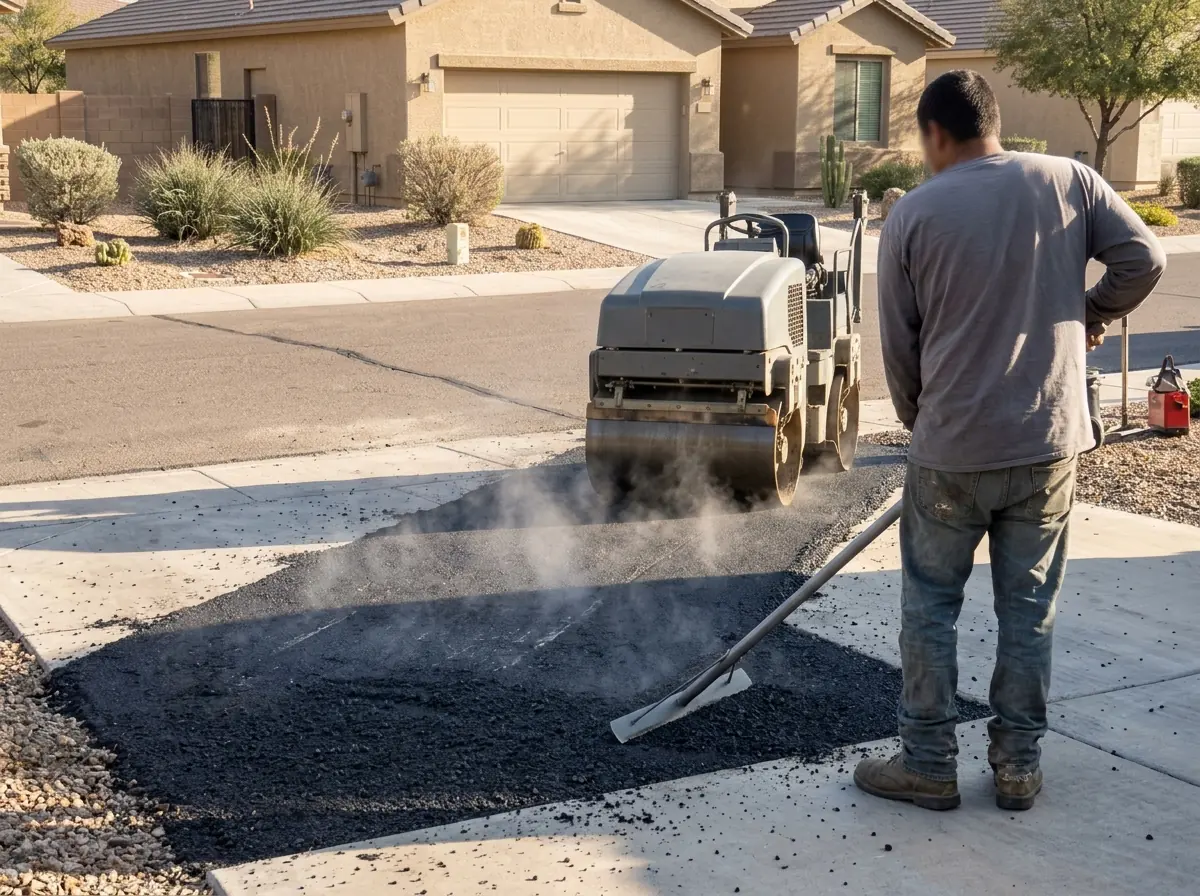
Pave and roll the edges
Asphalt goes down, gets compacted, and the edges are rolled or shaped so they don't crumble where the drive meets gravel or landscaping. Ask whether the bid states asphalt thickness after compaction.
See asphalt millings driveways for a cheaper hard surface that also goes down over old gravel.