
Chip Seal Driveway Types and Base Options
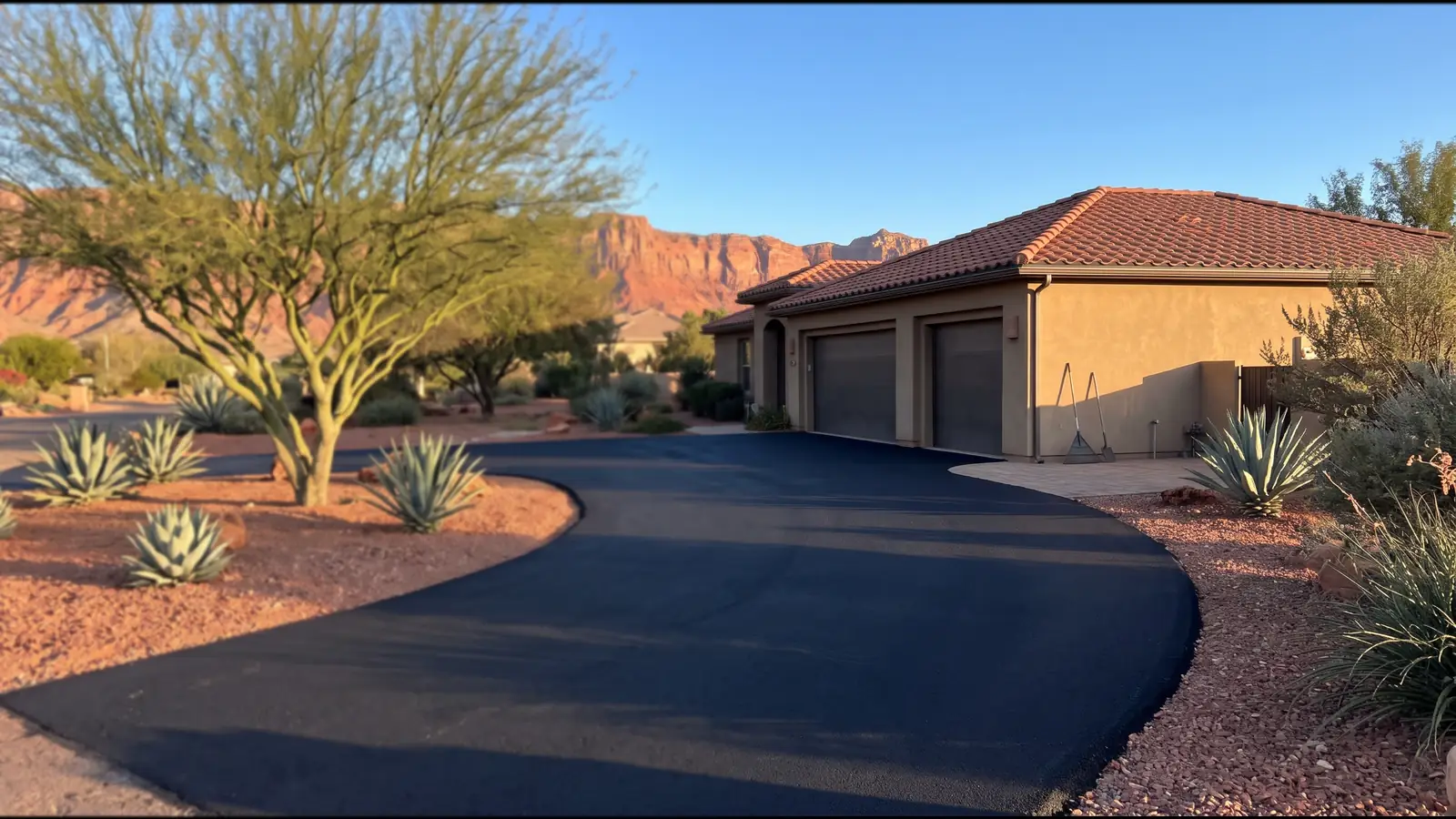
Single chip seal
A single chip seal is one layer of 3/8 to 3/4 inch stone set into a sprayed asphalt emulsion and rolled. It adds traction and keeps moisture out of what's underneath, and it is best for resurfacing a driveway that has few cracks. FHWA's chip seal checklist asks for chips close to one size and clean of excess fines, so ask what stone the contractor uses. Color depends on what local quarries supply, and most installers carry only a few choices; confirm yours before signing.
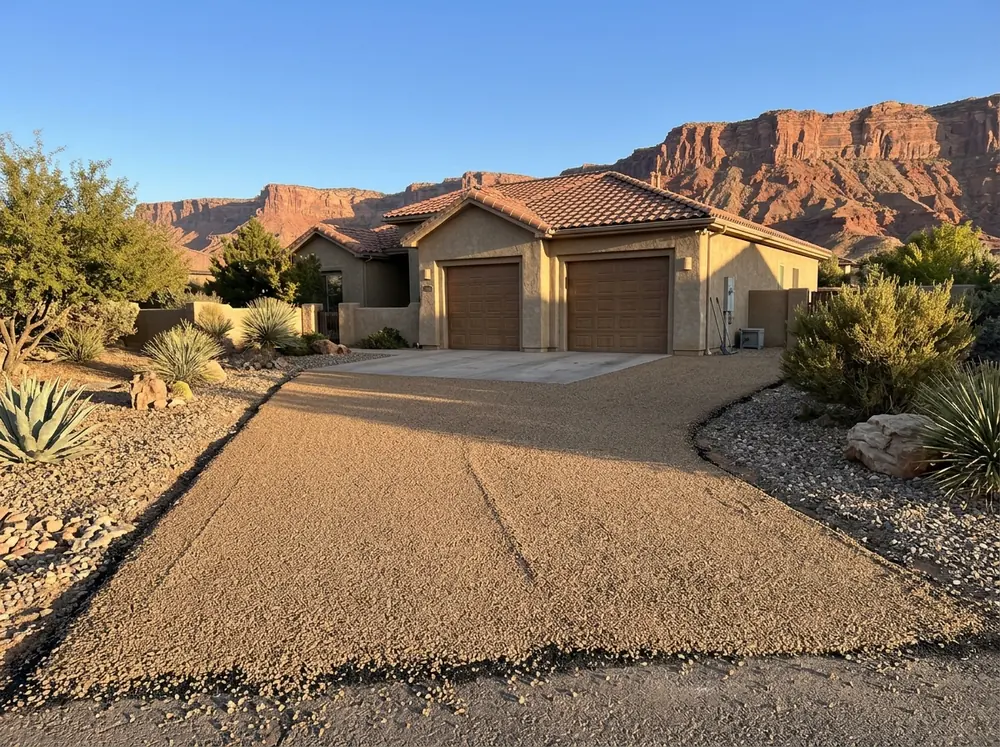
Double chip seal
A double chip seal adds a second shot of emulsion and a layer of smaller stone over the first. It costs about $3 to $5 per sq ft and lasts 12 to 15 years in HomeGuide's figures, against 7 to 10 for a single layer. HomeGuide lists it for new driveways as well as resurfacing, while a single layer suits resurfacing best. Kentucky's highway guide holds the second layer until three days after the first, so expect two visits.
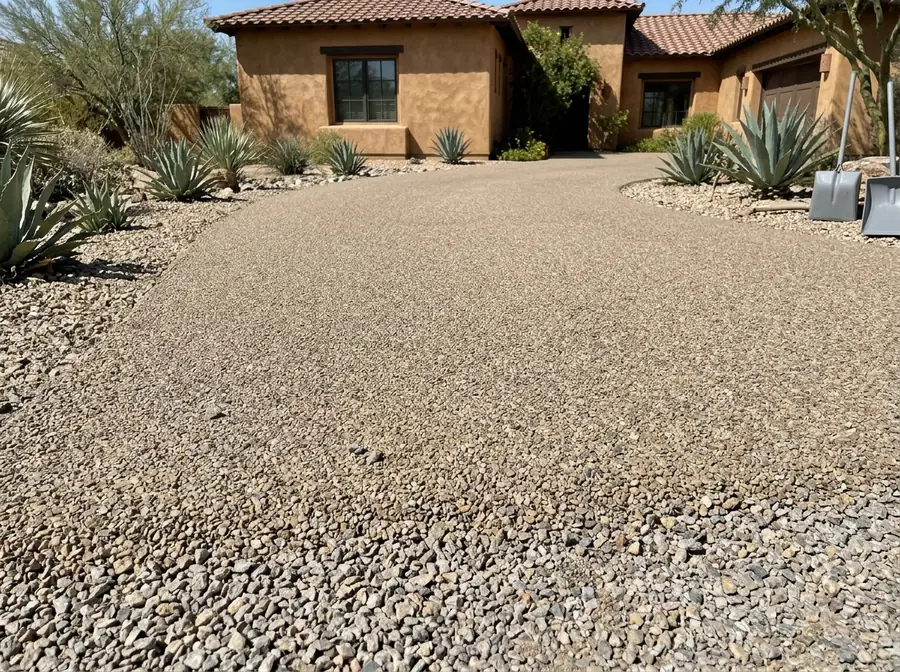
Chip seal over a gravel base
Gravel can't be sealcoated, but it can be chip sealed. The result is smoother, with less dust and loose stone. Potholes get filled and the gravel leveled before any emulsion goes down. On bare dirt, the installer lays a gravel base first. HomeGuide prices chip seal over an existing gravel or asphalt driveway at $1 to $3 per sq ft, below the cost of a new build. Local soil problems that affect the base are covered on grading and base preparation.
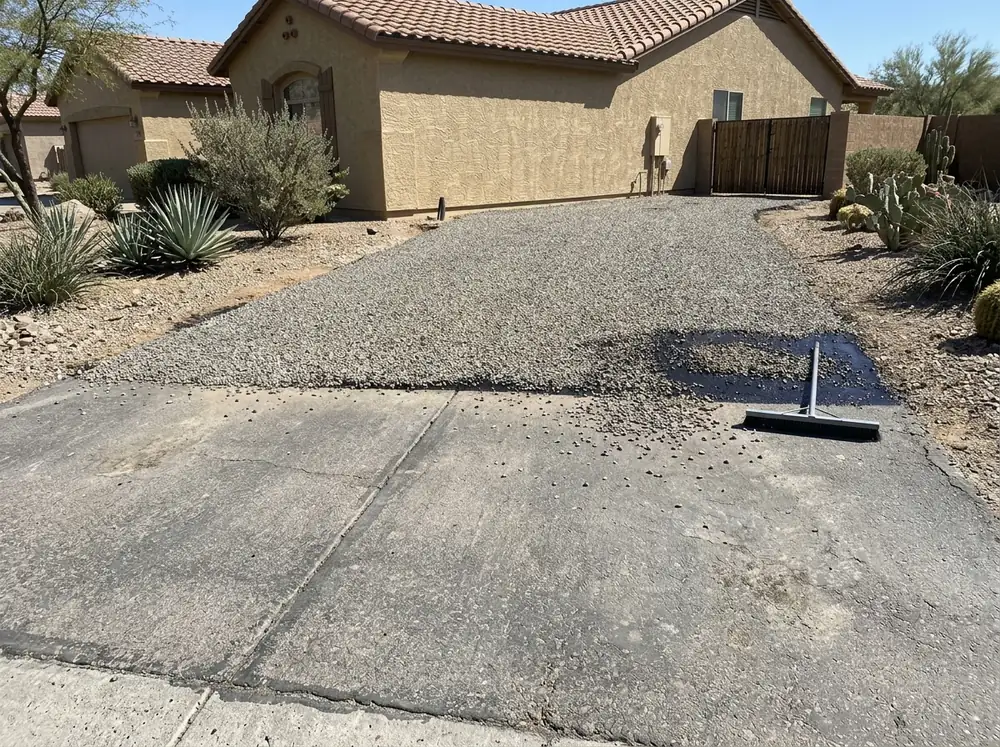
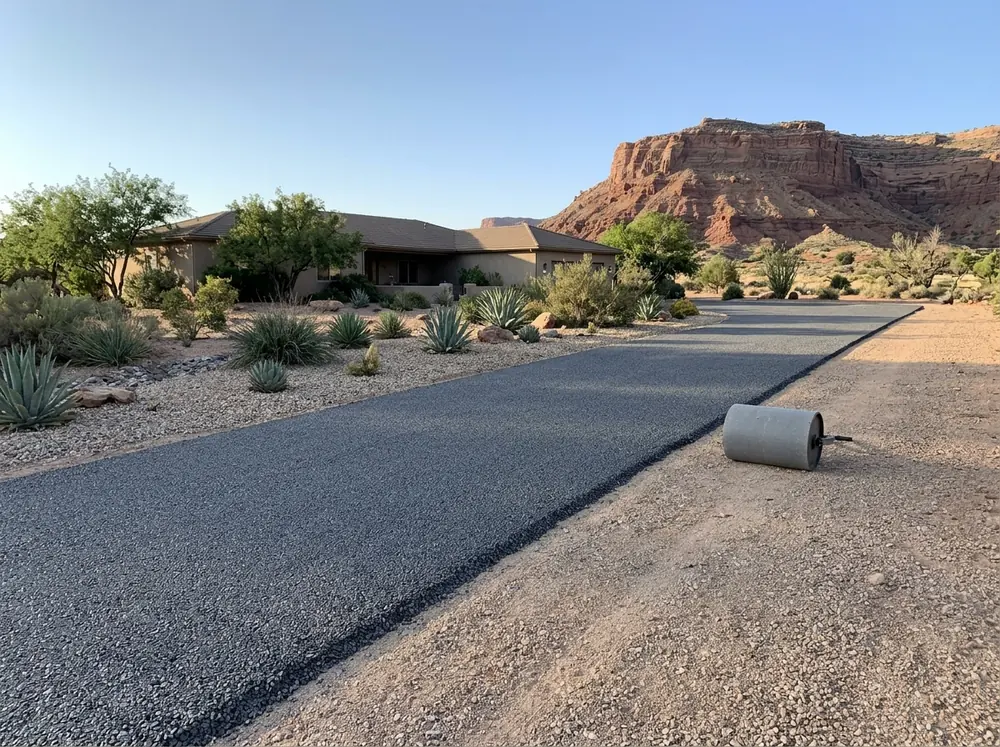
Chip seal over worn asphalt
Chip seal can extend an old asphalt driveway, with conditions: a sound base, light surface damage and asphalt that has never been sealcoated. Cracks wider than 1/4 inch, ruts and base failure rule it out. Chip seal is not a repair and adds no structural strength, so a driveway in that shape needs an overlay or more. Cracks are treated first; crack sealing explains how.
Why St. George homeowners and property managers call St. George Asphalt Co.
- The estimate costs you nothing and commits you to nothing
- Ask for thickness, base depth and tear-out on the written bid
- Your job goes to one paving contractor, never a lead auction
- Property owners pay nothing for the introduction
Chip Seal Timing in St. George Weather
Chip seal needs dry weather with air above 50°F, and HomeGuide says summer installs tend to cost less and cure stronger. The catch here is the summer storm pattern. Kentucky's guide stops spraying if rain is forecast within four hours, which can rule out a July or August afternoon when monsoon cells build; the rain pattern is on driveway drainage. Heat matters too. FHWA's checklist notes that high temperature, humidity and wind change how fast the emulsion breaks. In the heat, cost guides credit chip seal with two traits: a surface that runs cooler than plain asphalt, and small cracks that close on their own in warm weather.
How a Chip Seal Driveway Is Built
- STEP01
Prepare the base
The surface has to be clean and dry, with every pothole and crack repaired and drainage checked. On dirt, this step means building the gravel base.
- STEP02
Spray the binder
A distributor sprays hot liquid asphalt about 1/4 to 3/8 inch thick across the driveway.
- STEP03
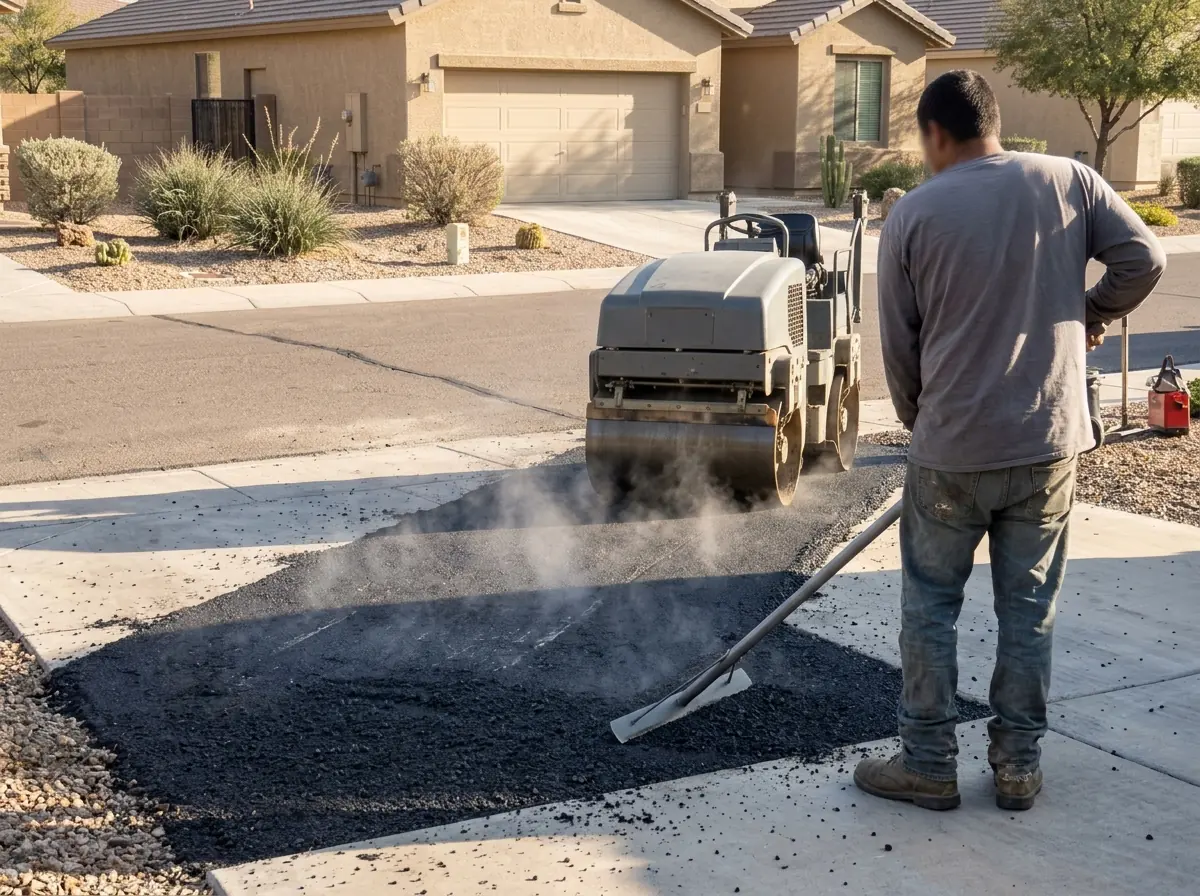
Spread and roll the stone
Stone goes down right behind the spray. FHWA recommends a pneumatic-tired roller. Kentucky's guide rolls within five minutes and wants the binder to reach about two-thirds of the stone's height afterward.
- STEP04
Sweep and drive slowly
Loose chips are swept off once the binder sets, and highway crews put up loose-gravel signs until then. FHWA's checklist leads traffic over fresh seals at 24 mph or less; on a driveway, creep in and out for the first days.
See asphalt millings driveways for the other budget surface, made from recycled pavement instead of stone.