
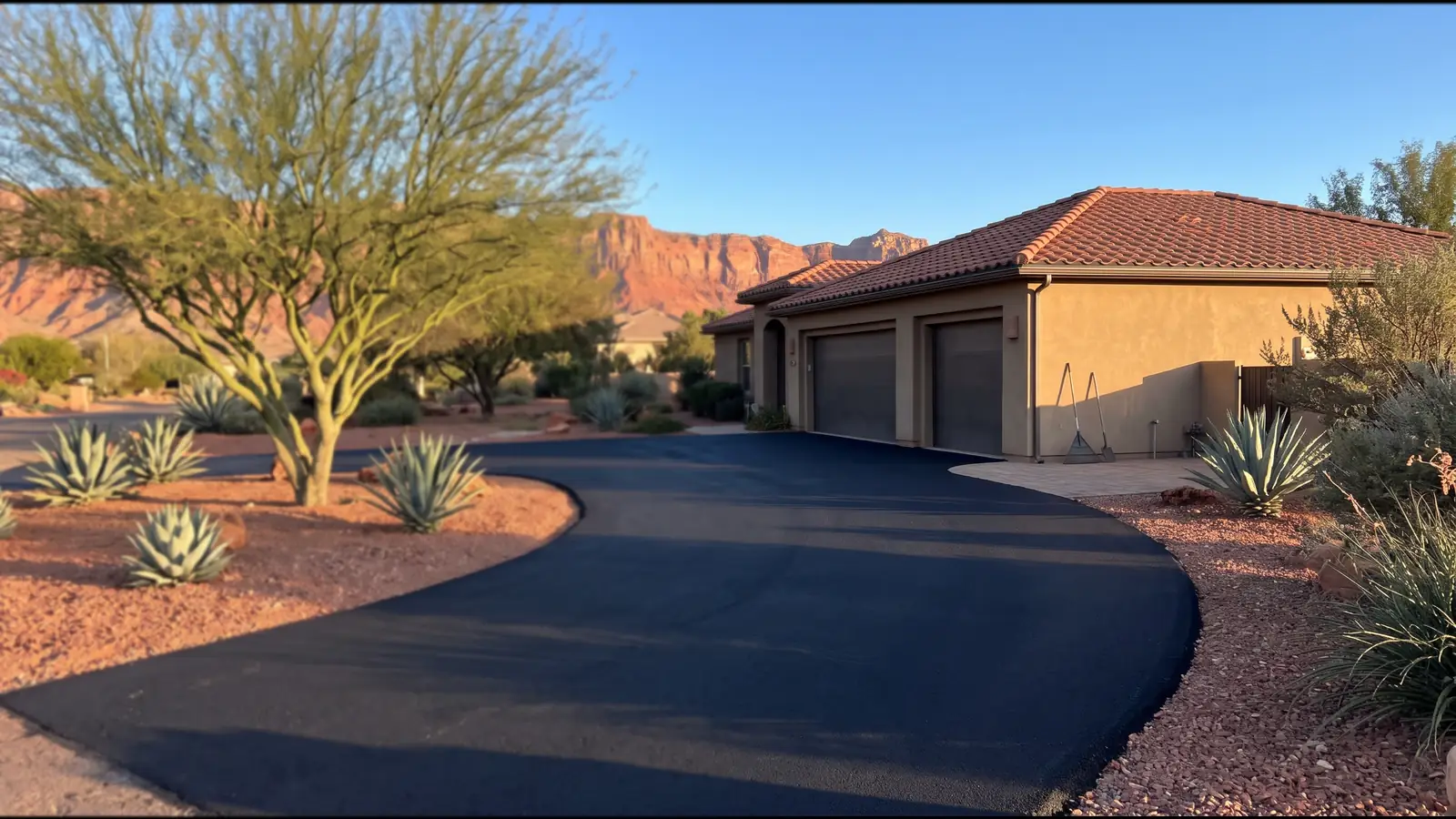
Driveway Drainage Fixes by Problem
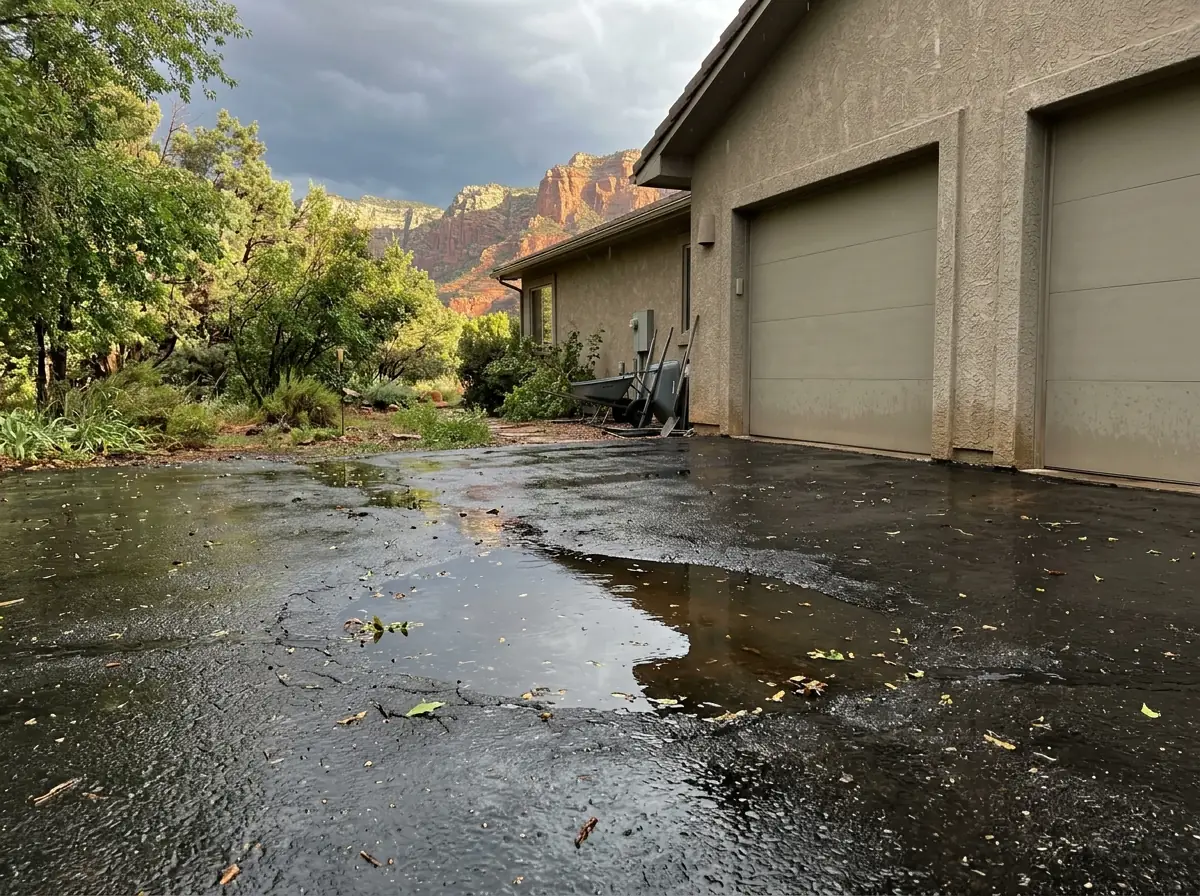
Low spots and ponding
Standing water is a slope problem. The Asphalt Institute recommends a cross slope of 1.5% to 3.0% on paved surfaces, and at least 1.5% on lots to stop ponding and birdbaths. The Asphalt Paving Association of Iowa sets its minimum at 2%, about 1/4 inch per foot. For a low spot, ask whether the bid cuts it out and rebuilds the base, or only skims new asphalt over the dip. Asphalt repair covers sunken areas that come from base failure.
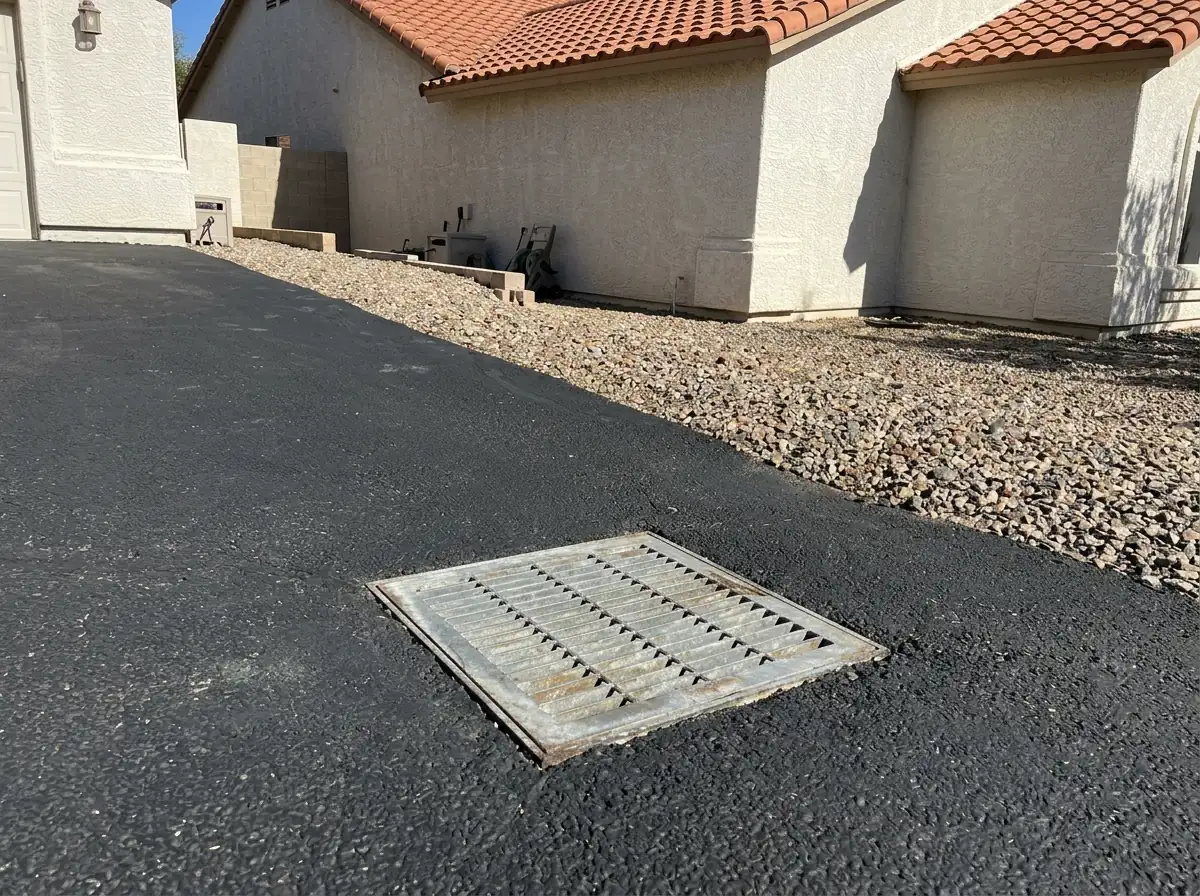
Catch basins and drop inlets
Where the slope can't be fixed, a catch basin collects water at the low point and pipes it away. Angi puts the basin itself at $50 to $200 and a typical installed project at $600 to $2,000. A wide driveway or one sloped toward the garage may need a trench drain across it instead, at about $30 to $70 per foot. Ask where the outlet pipe ends and whether it needs City approval to reach the street.
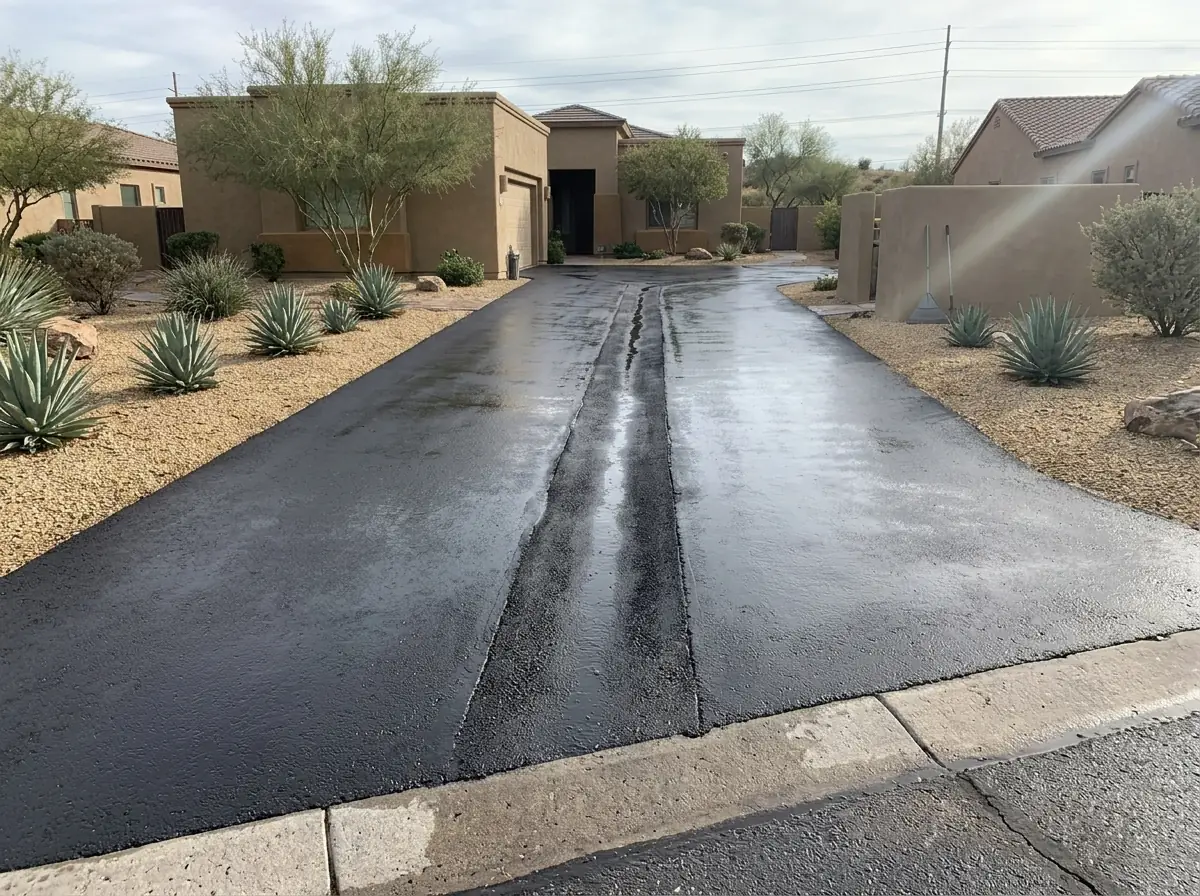
Valley gutters and asphalt swales
A swale is a shallow channel built into the asphalt to carry water where you want it. The Iowa paving guide describes inverting the crown on lots and play areas so water runs to a center swale with a grated inlet. A concrete valley gutter does the same job where the asphalt meets a garage slab or the street.
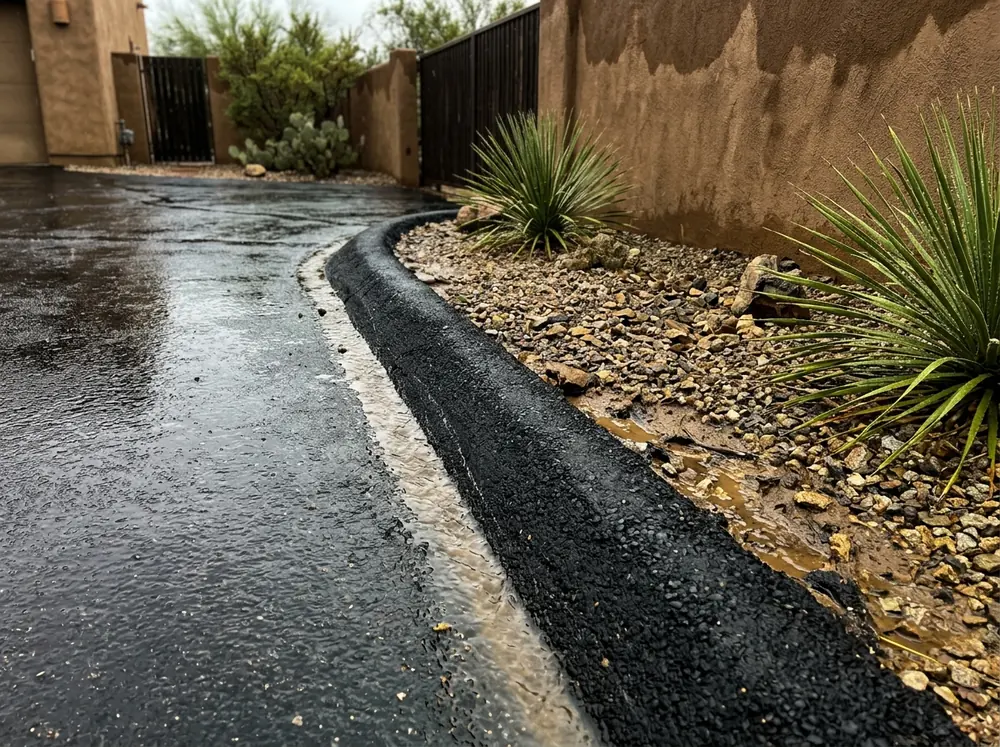
Asphalt curbs and berms
An asphalt berm is a low, rounded curb laid along the edge of the pavement. It keeps runoff on the asphalt and steers it to an outlet, instead of letting it spill off the edge and undercut the base. Ask how high it will be, where it ends and what happens to the water there, and whether it can go in on the same visit as any overlay or patching.
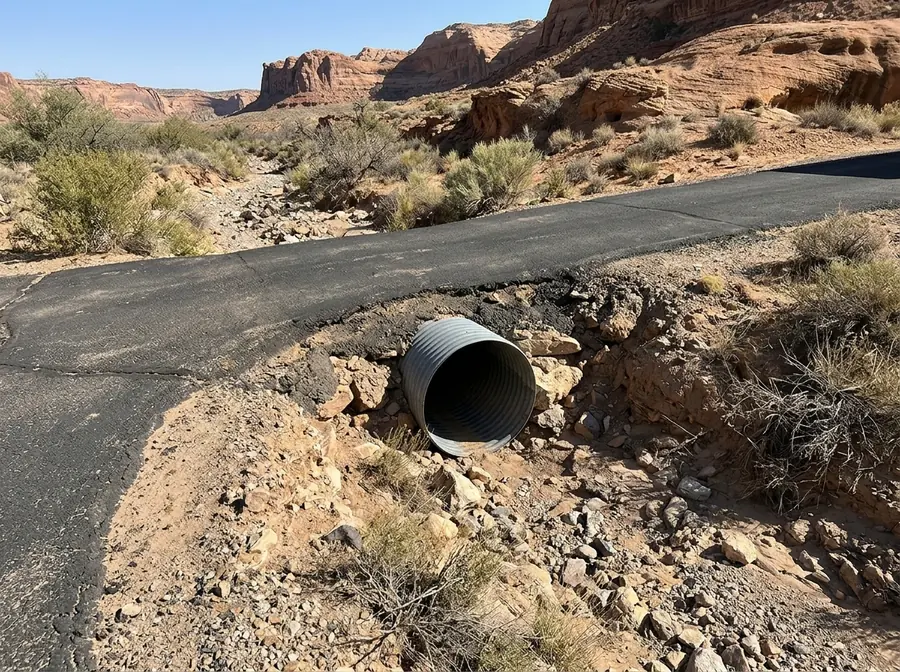
Culverts at washes and ditches
A driveway or private lane that crosses a wash or roadside ditch needs a pipe under it, or runoff in the wash goes over the drive and eats at its edges. Culvert size depends on how much water the wash carries, so it is a question for whoever designs the crossing. Ask the contractor who sized the pipe and how the ends are armored against scour. Work at the street edge may need a City excavation permit; driveway extensions explains it.
Why St. George homeowners and property managers call St. George Asphalt Co.
- The estimate costs you nothing and commits you to nothing
- Ask for thickness, base depth and tear-out on the written bid
- Your job goes to one paving contractor, never a lead auction
- Property owners pay nothing for the introduction
Driveway Runoff and St. George Monsoon Rain
St. George is dry most of the year, which makes drainage easy to forget until the first storm. The Western Regional Climate Center's long record puts the city at 8.18 inches of rain a year. June is the driest month at 0.19 inches. Then July (0.66) and August (0.74) jump back up as the summer storms arrive, and the wettest single day in that record dropped 2.40 inches on August 31, 1909.
In 2024 the city went 78 days without measurable rain, from April 28 into July, before monsoon storms broke the streak and the National Weather Service warned of rising flash flood risk. The federal drought.gov monsoon update gives the season as June 15 to September 30, with the actual arrival varying by year.
The ground makes it worse. The Utah Geological Survey calls flooding the most widespread and damaging geologic hazard in southwestern Utah, and maps collapsible soil and soil piping and erosion around St. George. Runoff that gets under the asphalt ends up in those soils, which is why grading and base preparation matters as much as the drain itself.
Driveway Drainage Repair Steps
- STEP01
Find the water's path
The contractor walks the site with your storm photos and checks the grades.
- STEP02
Pick the fix
Ask for each option (regrade, swale, berm, inlet, trench drain, culvert) priced separately.
- STEP03
Do it before the paving
Drainage goes in before any new asphalt or overlay, rather than being cut in afterward.
- STEP04
Test it
Ask for a hose test before the crew leaves, so you see where the water actually goes.
See grading and base preparation when the slope problem is the whole driveway, not one corner.