
Asphalt Patching Methods, Temporary to Permanent
Cold patch (temporary)
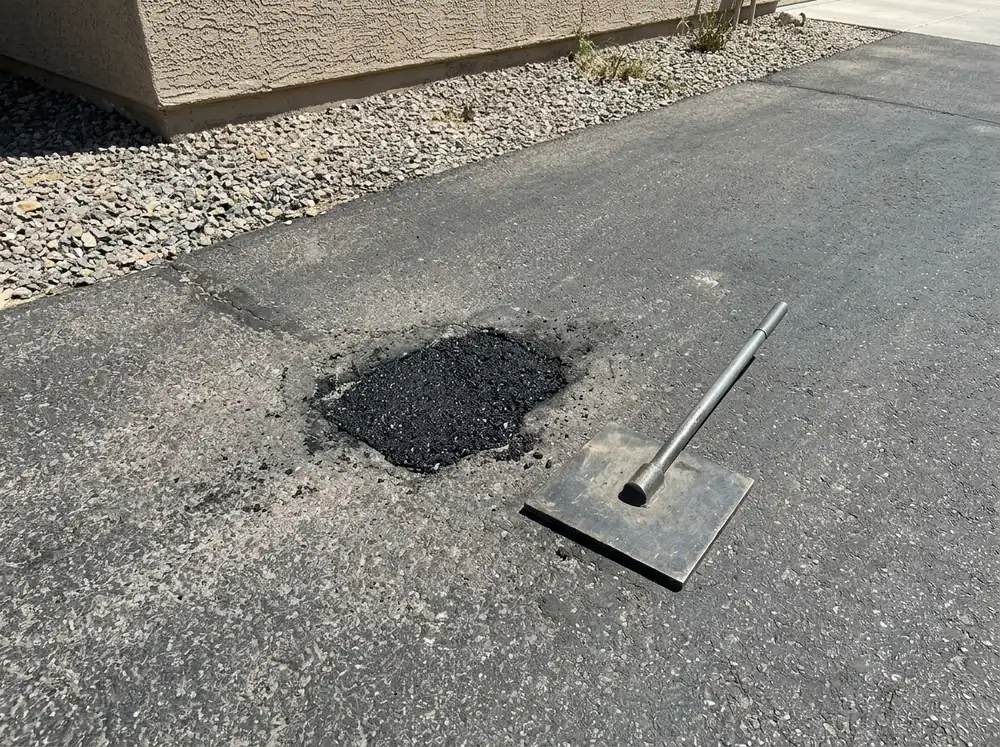
Cold patch is premixed asphalt that is poured into a hole and packed down. It is the cheapest patch, about $100 to $200, and the least durable. Cost guides treat it as a stopgap, the kind of patch crews use in winter when hot mix isn't available. It keeps a pothole from growing and keeps a tire out of it until a permanent patch goes in. If a contractor offers cold patch as the final fix, ask why.
Hot-mix throw-and-roll patches
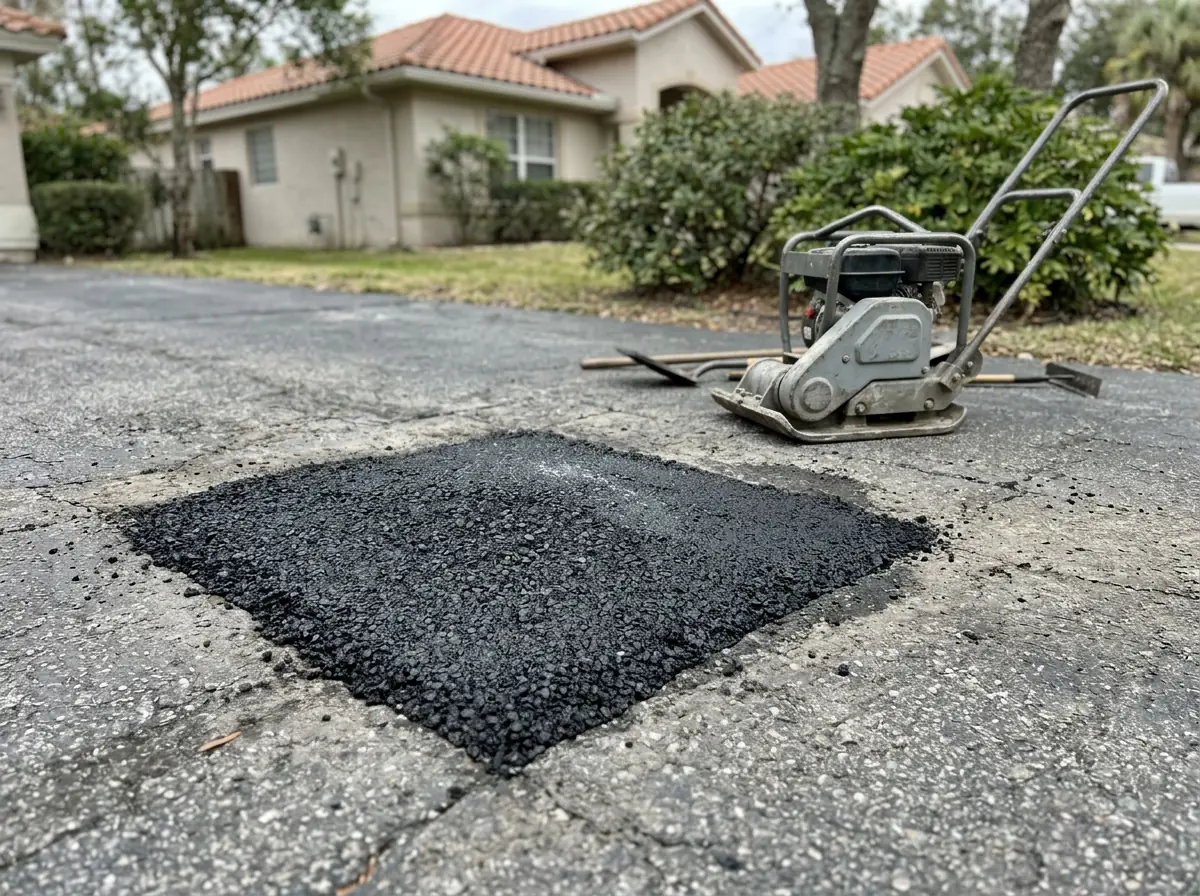
Hot-mix patches fill holes up to about 2 inches deep. Fixr prices them at $100 to $250, and HomeAdvisor at $250 to $500 for its version, which digs out around the hole first. The FHWA pothole manual calls the basic version throw-and-roll:
- Place: hot mix goes into the cleaned hole.
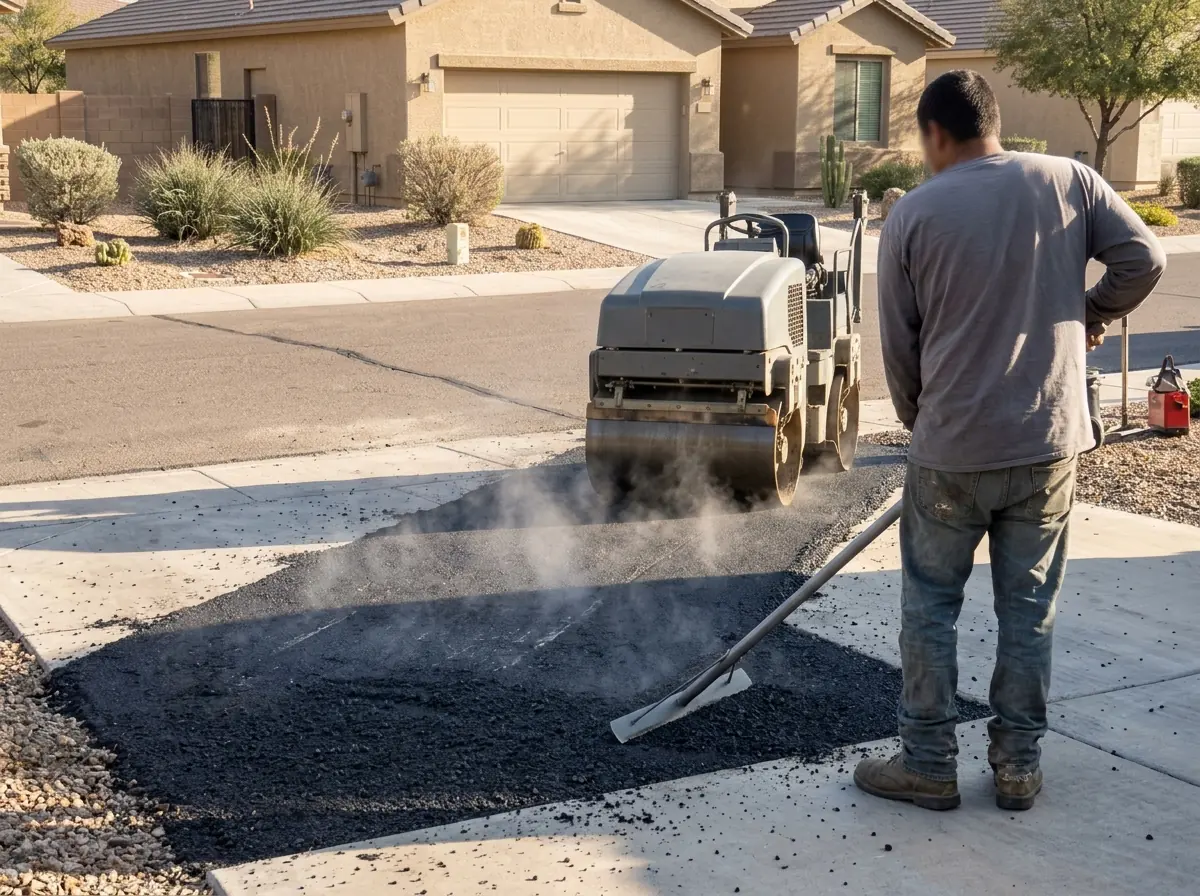
- Compact: the patch is rolled or driven over until tight. FHWA notes compaction gives a tighter patch than loose mix left on its own.
- Crown: the compacted patch should sit slightly high, about 1/8 to 1/4 inch (3 to 6 mm) above the surface around it.
Saw-cut full-depth patches
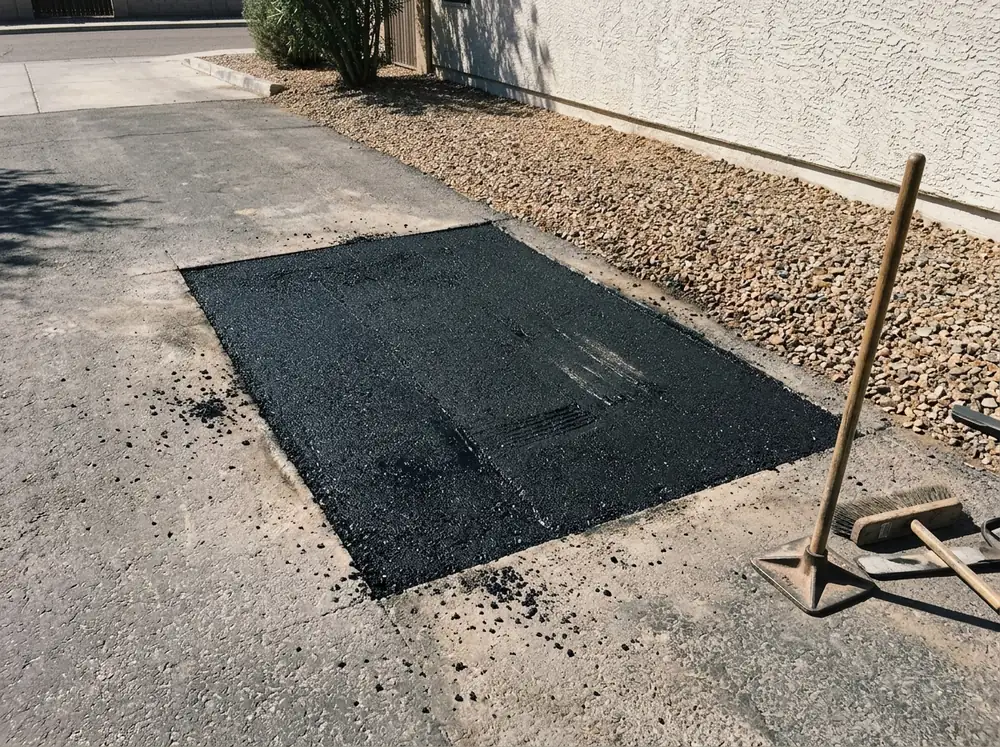
This is the patch for damage that goes below the surface. The crew saws a square around the broken area, removes it, puts in new base and hot mix, compacts it and seals the seams. Fixr calls it the most expensive patch at $150 to $400, and the best for a long-term repair with the smoothest finish. The FHWA manual describes the same idea: square the sides until they are vertical in sound pavement, then compact with a plate or small roller that fits inside the cut. Straight, solid edges give the new asphalt something to compact against.
Infrared patches
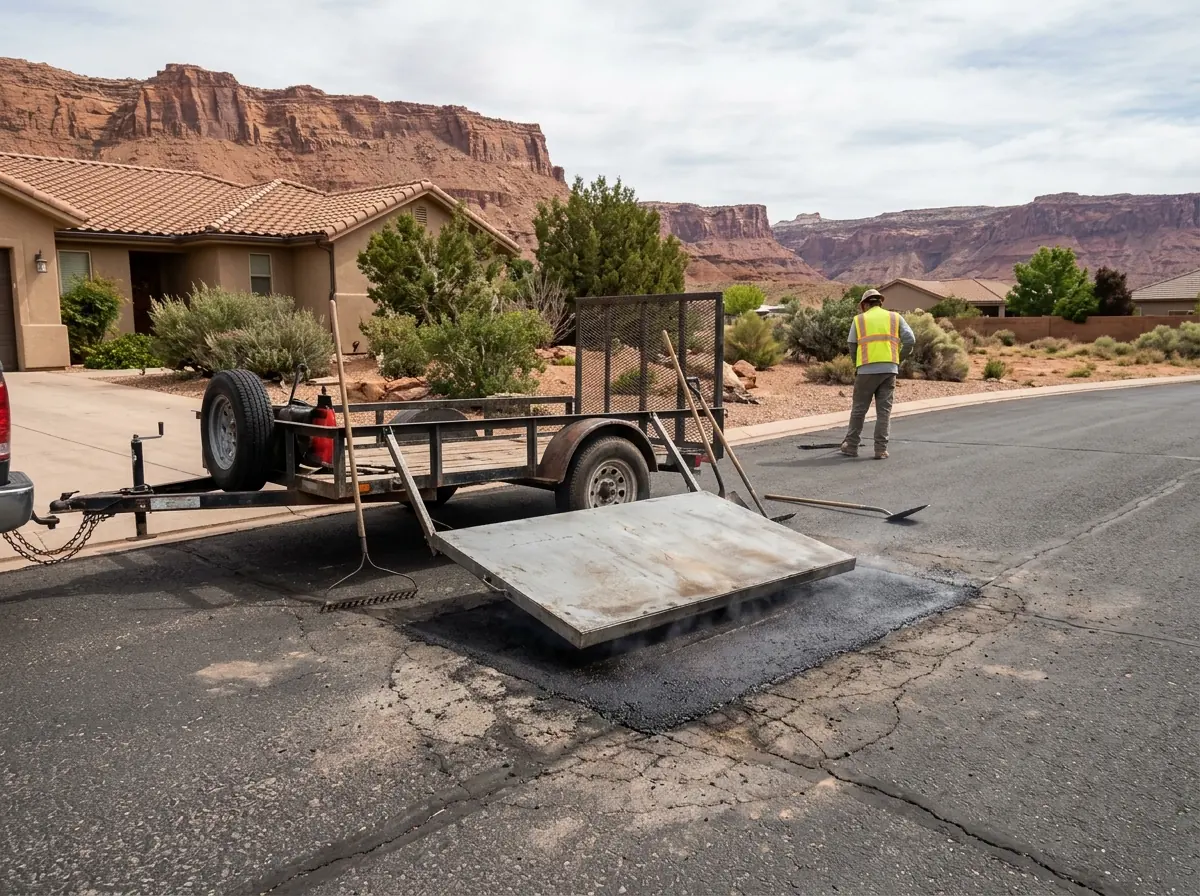
An infrared heater softens the existing asphalt around the damage so new material is easier to work into it. Fixr prices it at $100 to $300 and says most holes and cracks take under an hour, any time of year. It also notes the method can't be used on some types of cracks, so ask whether yours qualify.
Utility trench patches
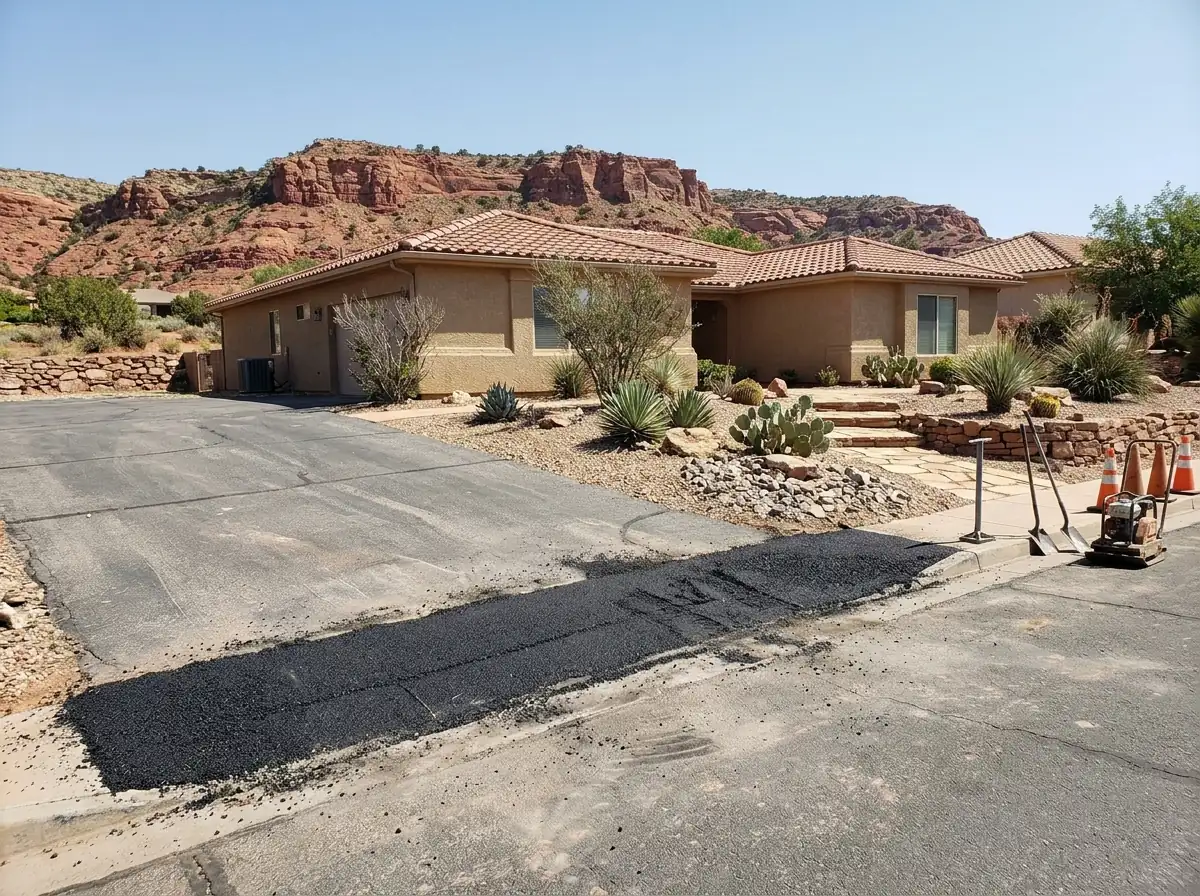
A trench cut for a water, sewer or power line leaves a long strip of disturbed ground under the asphalt. Treat the patch like a saw-cut patch: straight edges back to sound pavement on both sides and hot mix compacted in place. If an old trench patch has sunk, ask whether the backfill under it needs reworking before new asphalt goes on top. Digging in a city street, alley or other public place is a separate matter that needs a city permit; driveway extensions covers that permit.
Why St. George homeowners and property managers call St. George Asphalt Co.
- The estimate costs you nothing and commits you to nothing
- Ask for thickness, base depth and tear-out on the written bid
- Your job goes to one paving contractor, never a lead auction
- Property owners pay nothing for the introduction
When a Patch Is Enough and When It Isn't
Patching fits damage in one place: a pothole, a broken corner, a cut. HomeAdvisor puts it plainly: localized damage can be patched, but cracking spread over the whole surface may need full replacement. If the driveway has several soft or alligator-cracked areas, the asphalt repair page walks through repair, overlay and replacement.
It also helps to know where a pothole came from. Fixr traces most of them to poor drainage: a crack lets water in, and the hole grows as water keeps filling it. A patch alone leaves that cause in place. Sealing nearby cracks while they are small (crack sealing) and moving water off the slab (driveway drainage) protects the patch you pay for.
What to Ask Before a Patching Job
Which method, and why
Cold patch, throw-and-roll, saw-cut or infrared. A bid that names the method is easier to compare.Edges and depth
Will the crew cut back to sound pavement on every side? How thick is the new hot mix once compacted?Compaction
What compacts the patch: a plate, a roller, or truck tires?Price unit
Per patch or per sq ft. Cost guides put a single pothole at $150 to $400 and larger areas at $2 to $5 per sq ft.Drive-on time
Fixr says to wait 2 to 3 days before driving on new asphalt. Plan where the car goes meanwhile.
See asphalt repair when the damage covers most of the driveway rather than a few holes.