
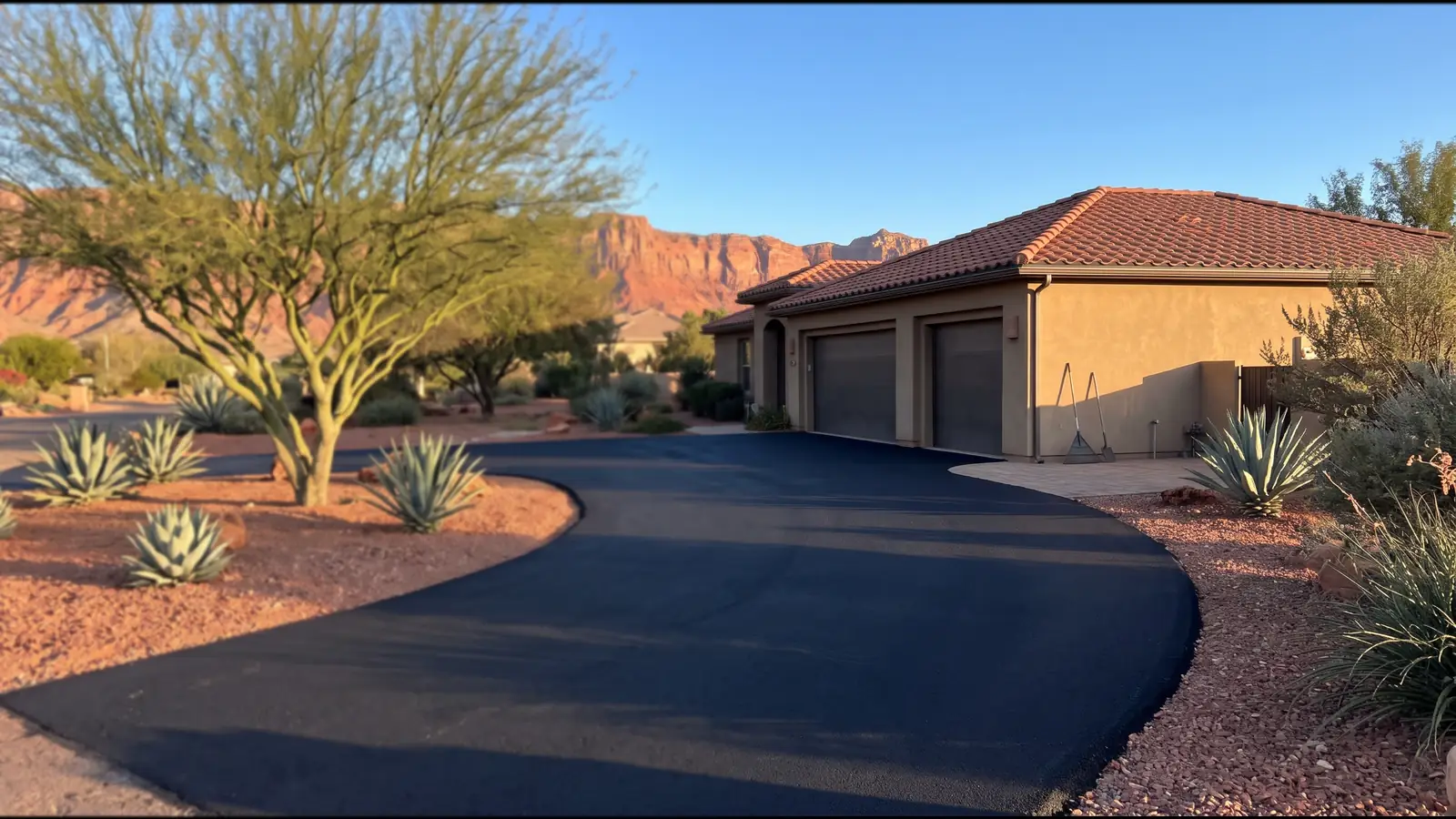
Asphalt Resurfacing Options for Worn Driveways
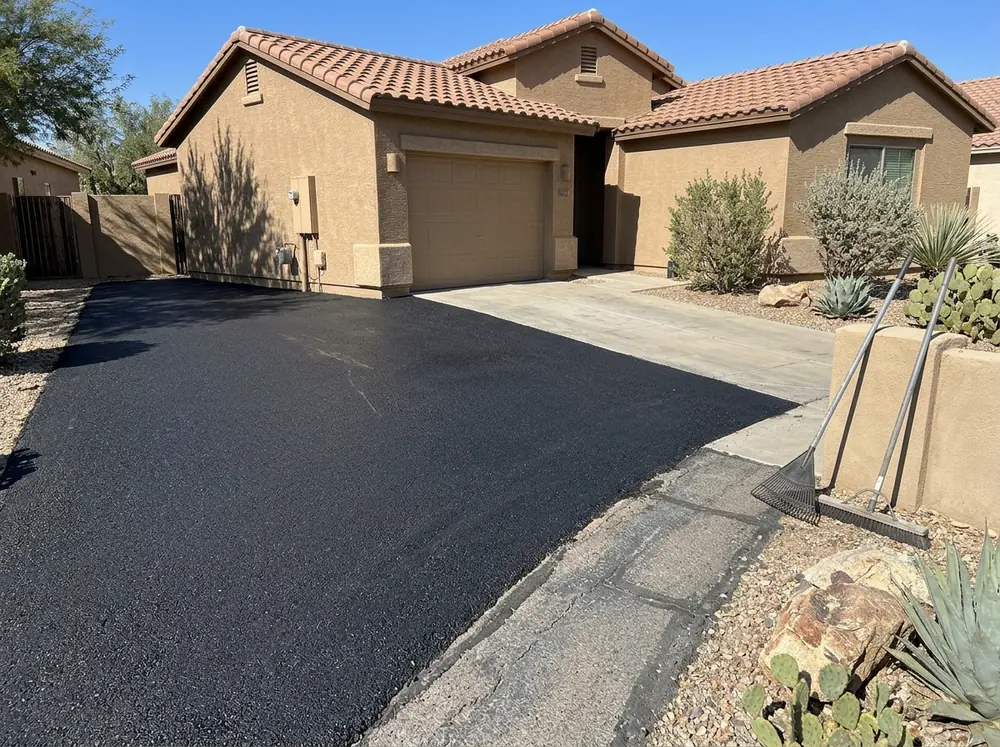
Standard overlay over sound asphalt
This is the plain version: the old driveway still drains and doesn't flex underfoot, but it has gone gray, rough and cracked on top. The crew cleans it, sprays a tack coat so the layers bond, and lays new asphalt over the whole surface. HomeAdvisor notes that new asphalt holds firmly to old once the tack coat goes down.
- New layer: 1.5 to 2 inches compacted
- Typical life of the overlay: up to 15 years
- National price: $1 to $3 per sq ft, $400 to $1,500 for a 20 x 20 ft driveway
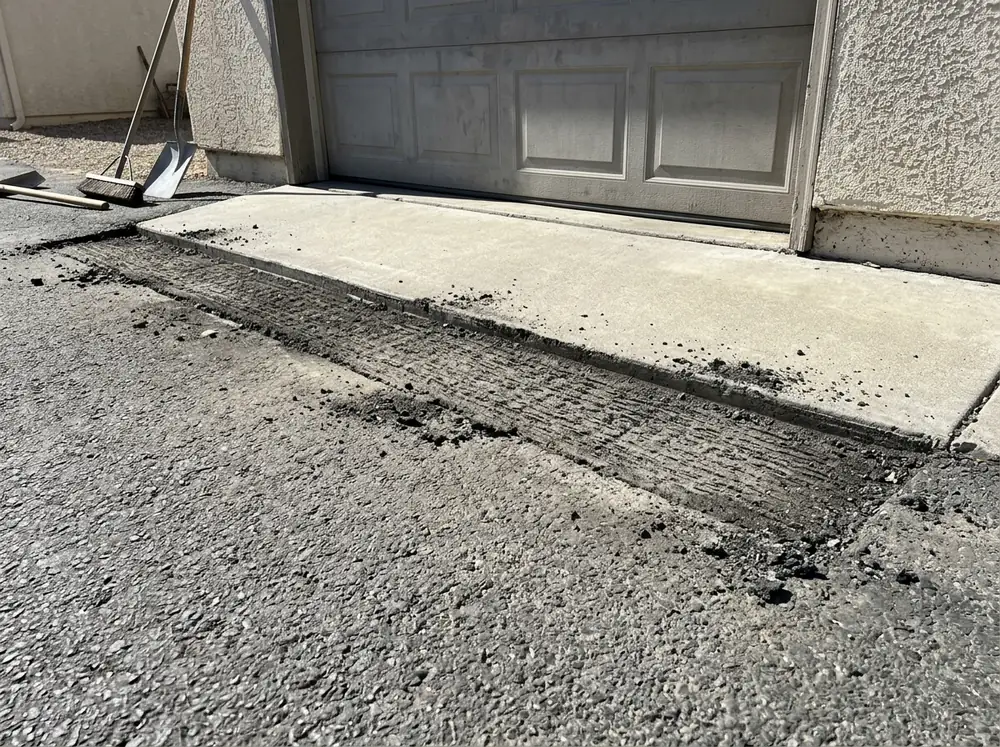
Overlays with milled edges at the garage and street
Two inches of new asphalt has to end somewhere. Laid straight over the old surface, it would stand proud of the garage slab, the sidewalk and the street apron. HomeGuide describes milling as the way to level new paving with the apron, sidewalk and garage transitions, at $0.25 to $0.75 per sq ft. Ask whether the bid mills those joints and how deep. Grinding off the whole surface is a bigger job; see asphalt milling.
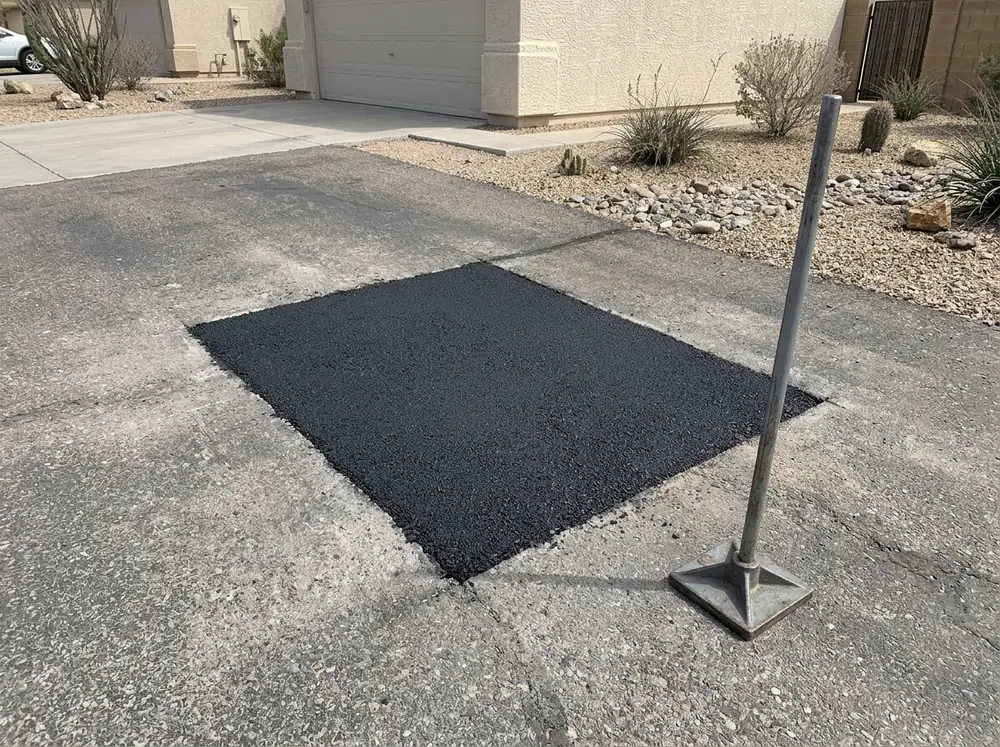
Overlays after spot base repairs
An overlay copies whatever is under it. HomeGuide says contractors fix cracks, potholes and failed sections before resurfacing, and that patching alone without an overlay is temporary because water gets between old and new material. Soft spots and alligator cracking point to a base problem, and Pavement Interactive's repair for small areas is to dig out the cracked pavement and the weak soil beneath it, then patch, before anything goes on top.
- Crack and pothole repair: $2 to $5 per sq ft
- Saw-cut section replacement: $4 to $12 per sq ft
The damage types and what each one means are on asphalt repair.
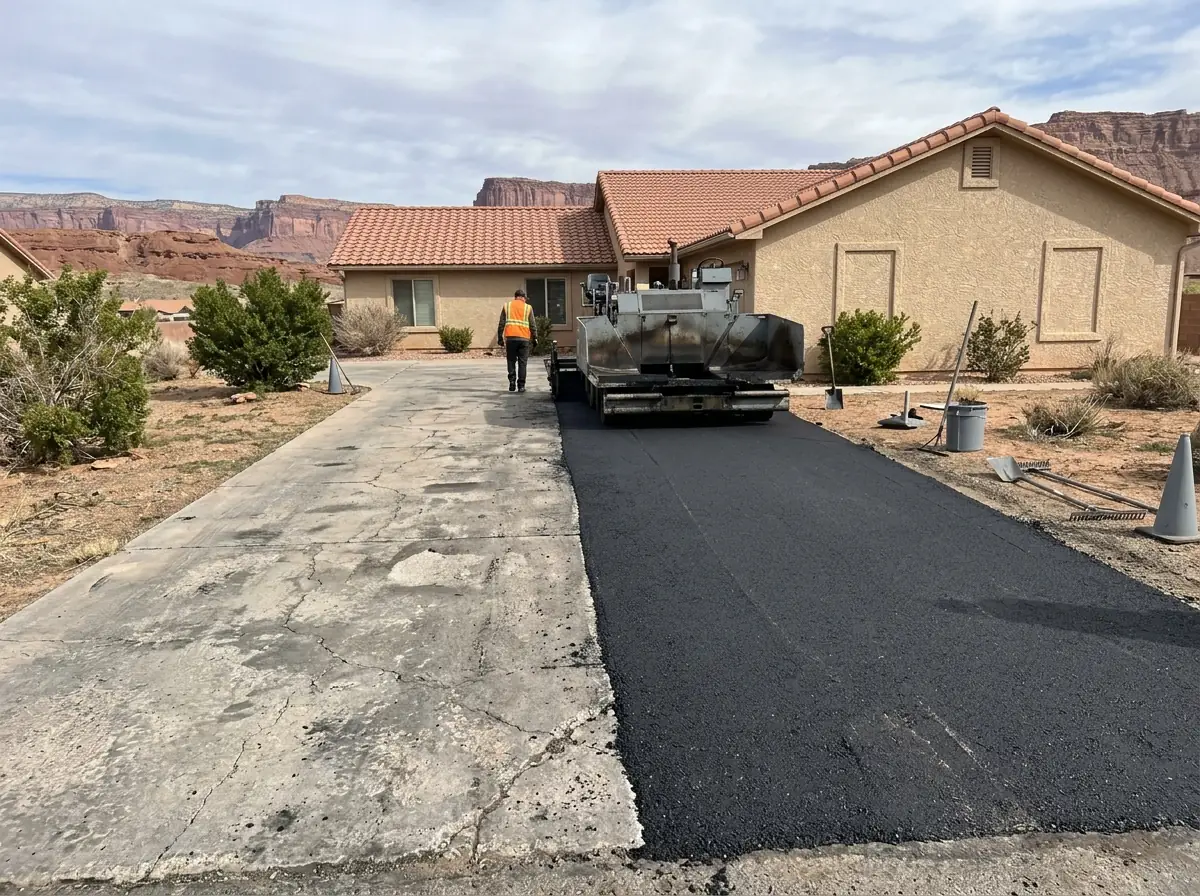
Asphalt over an old concrete driveway
Paving over a cracked concrete driveway is cheaper than breaking it out, about $1 to $3 per sq ft by HomeGuide's numbers. The catch is in the same sentence of that guide: it needs a stable concrete base and attention to the expansion joints. Concrete slabs move with temperature and moisture, and Pavement Interactive says those joints will eventually reflect up through an asphalt overlay without proper surface preparation. Ask how each joint and crack will be handled. The broader asphalt versus concrete question is covered on the St. George Asphalt Co. homepage.
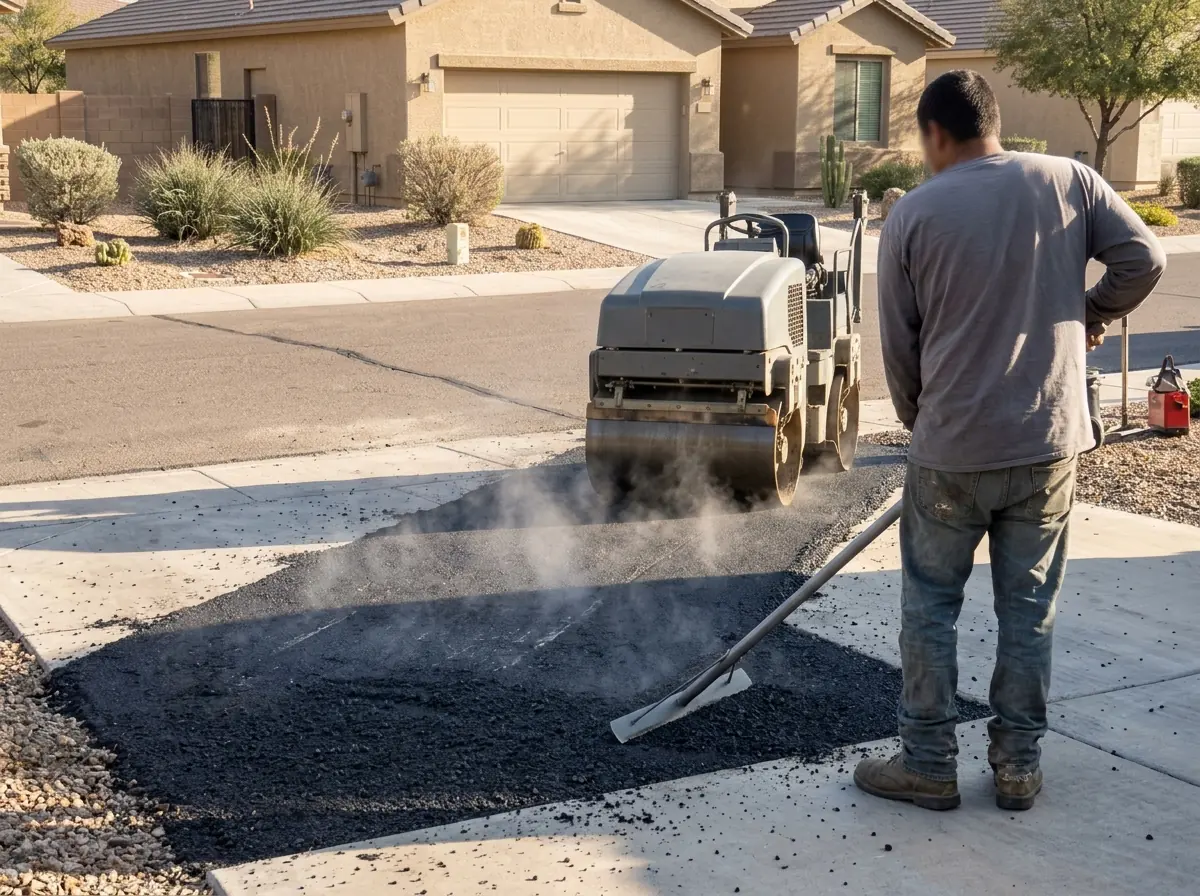
Why St. George homeowners and property managers call St. George Asphalt Co.
- The estimate costs you nothing and commits you to nothing
- Ask for thickness, base depth and tear-out on the written bid
- Your job goes to one paving contractor, never a lead auction
- Property owners pay nothing for the introduction
Is Your Driveway a Resurfacing Candidate?
HomeGuide's rule of thumb: resurface pavement under 15 to 20 years old, with a good foundation and damage on less than 30% of the surface. It also says driveways past 20 years with several deep potholes, cracks a quarter inch wide or foundation damage need replacing instead. Angi puts it more bluntly: widespread holes or spiderweb cracks mean a full replacement is the better path. Walk the driveway with these in mind:
Age
Under 15 to 20 years points to an overlay; older driveways need a closer look at the base.Share of damage
Patchy wear is fine. Cracking across a third of the surface or more is not.Crack width
Hairline cracks get sealed first. Cracks a quarter inch wide signal deeper trouble.Soft or sunken spots
Anything that flexes under a car has to be dug out and rebuilt before an overlay.Height at the garage
Check how much room there is between the old surface and the garage slab or sidewalk.
When the base is gone, an overlay just postpones the job. Driveway replacement covers tear-out pricing.
Asphalt Resurfacing Cost and How the Job Runs
Cost guides don't agree on one number, so read them as a band. HomeGuide gives $1 to $3 per sq ft, HomeAdvisor $1 to $4 ($500 to $2,000 for a driveway), and Angi $3 to $7. Small jobs often carry a minimum fee of $100 to $250, and HomeGuide lists permits at $20 to $60 in cities that require one. Repairs and milling are priced on top of the overlay, so ask for them as separate lines.
- STEP01
Repairs and cleaning
Cracks get sealed, failed spots are cut out and patched, and the surface is cleaned. The Colorado Asphalt Pavement Association's parking lot guide calls for cleaning each course before the next layer goes on.
- STEP02
Milling the tie-ins
Where the new layer meets the garage slab, sidewalk or street, the old asphalt is ground down so the finished surface comes out flush.
- STEP03
Tack coat
A tack coat of diluted emulsified asphalt goes on so the new layer bonds to the old one.
- STEP04
Paving and rolling
New hot-mix asphalt is spread and compacted to 1.5 to 2 inches. Wait times before driving are the same as for new paving; see asphalt driveway paving for those and for what St. George heat does to them.
See asphalt crack sealing if the driveway only needs its cracks closed for now.